The Higher Stakes of a Summer Storm
More intense storms and flooding from climate change put Marylanders at risk.
This is the second blog in a series of stories that highlights Maryland’s growing stormwater pollution challenges and what we can do about them. You can read the first blog here.
It was a normal summer night out for Sue and Tom Lewis. They were meeting friends in historic downtown Ellicott City for dinner and drinks. It was raining heavily, so Tom dropped Sue off in front of the restaurant to go find parking.
They’d both just ordered a drink when the panic started.
“It happened so fast,” Sue told me. “I’d never seen anything like it.”
It was July 30, 2016, when Howard County, Maryland got hit with over six inches of rain in less than two hours. Intense flash flooding followed, decimating the historic streets of Ellicott City, destroying buildings and businesses, and tragically taking two lives.
‘Historic Floods’ Become the New Normal
What used to feel like a common summer evening storm has quickly become dangerous and damaging. Increased development and more intense rainfall from climate change have been a tough combination for Maryland communities.
In Ellicott City, the water had nowhere to go. It tore up pavement and broke windows. Sue recalls watching merchandise from local shops flow down Main Street. The floodwater carried debris, oils, and any other pollutants that were on the road right into the nearby Patapsco River—and eventually the Chesapeake Bay. That contamination is called stormwater pollution, and it’s the fastest growing source of pollution in Maryland. The state has severely fallen behind on its stormwater regulations, and it’s hurting much more than our waterways—its threatening people’s health and wellbeing.
The Lewises count themselves extremely lucky. Although they were trapped inside the restaurant for several hours, they were able to find higher ground by cutting through the roof of the building, scrambling up steep rocks, and finally finding refuge thanks to a friendly resident. The car Tom parked down the street was totaled by the flood waters, like hundreds of others.
“We just lost a car,” Sue said. “Some people lost their livelihoods and their lives.”
About two years later, on May 27, 2018, Sue was watching the news, wondering why they were showing old footage of the flood. Then she realized it wasn’t old at all. It was happening again. A “thousand-year-flood” was crushing their community twice in two years.
I helped people with stormwater issues my whole career. But there’s nothing quite like experiencing it yourself to understand how scary it can be.
Sue Lewis
Climate change has made stormwater challenges much worse. Warmer air holds more water, which is why the quantity of rainfall is increasing. In Maryland, 30 percent of rainstorms experienced between 2007-2016 would have fallen into the top one percent of storm intensity compared to the 1950s. Overall, inland flooding in Maryland is projected to increase 50 percent by 2050.
“No Maryland community is immune to the threats of climate change,” said CBF’s Maryland Staff Scientist Gussie Maguire. “It’s becoming much more common and dangerous. And the time to prepare and mitigate these threats was yesterday.”
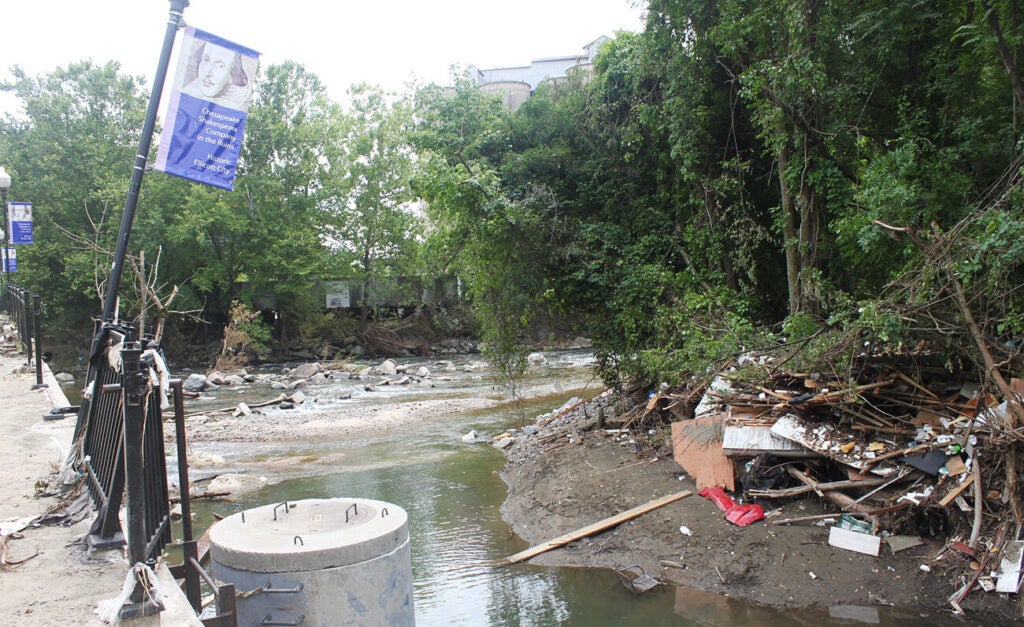 Preservation Maryland
A Pollution and Public Safety Problem
After the 2018 flood, Ellicott City implemented several new safety measures and rolled out a community alert system. Today, the town’s hilly streets are lined with bright yellow signs that read “this area is prone to flooding” and “higher ground this way.”
It’s a stark reminder that stormwater isn’t just a pollution problem, it’s a public safety problem. People’s lives are at stake, and state leaders need to do more to keep people safe. This exact devastation inspired the recently passed Mason’s Law, which now requires protective covers on all open storm drains after a young boy drowned during a flash flood event in Mount Airy, Maryland.
In addition to implementing safety protocols and flood mitigation in effected areas, state leaders also need to prioritize solutions upstream to reduce flooding at the source. The State of Maryland and Howard County have invested millions of dollars in several flood mitigation projects.
One project, completed in 2022, installed a flood mitigation pond about one mile upstream near a major intersection. While the pond will typically remain dry, it has the capacity to hold more than 4.2 million gallons of water, reverting flow away from Historic Ellicott City. The project also planted 110 new trees and 1,800 native plants to help absorb water and reduce flooding.
“Planting native trees, especially along rivers and streams, is one of the most effective ways that we can try and reduce flooding, erosion, and pollution,” added Maguire.
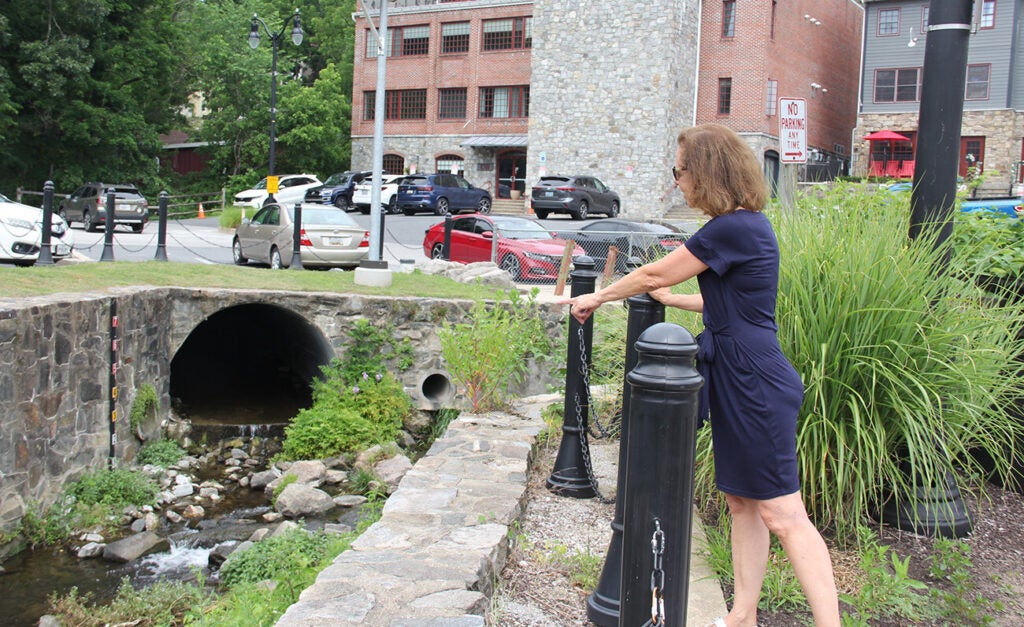 Valerie DiMarzio
Too Much at Stake
As I walked with the Lewises along the town’s quaint old streets, they showed me where they dined that night, and the most severely damaged storefronts from both the 2016 and 2018 floods. Most of them remain vacant or have since moved up the hill. The fear, and flood insurance, is just too much to take.
Sue, who had previously worked for the U.S. Army Corps of Engineers, also pointed out some of the new construction and solutions the city is implementing to help curb future flooding.
“I helped people with stormwater issues my whole career,” she said. “But there’s nothing quite like experiencing it yourself to understand how scary it can be.”
CBF is urging Maryland to step up on stormwater. It’s time our state’s stormwater regulations reflect reality. Maryland has made zero progress reducing stormwater pollution between 2009 and 2023. And its current stormwater regulations are simply not keeping pace with climate change. The state’s stormwater permits still don’t account for the latest rainfall data we’re experiencing. “Thousand-year-floods” are now a bi-annual occurrences, and the state’s stormwater requirements need to reflect that.
There’s just too much at stake.
Speak up now to protect Maryland from dangerous flooding and stormwater pollution!
Add your name to the growing list of Marylanders who demand smart stormwater solutions from the Maryland Department of the Environment in their upcoming permit process and state legislators.

Related Stories
-
 Blog Story
Pennsylvania Should Stand up for Stormwater
Pennsylvania has long rallied communities to protect our rivers and streams, which is why the President’s recent executive order aimed at reversing clean water protections is so hard to understand.
-
 Blog Story
More Than Rain: A Closer Look at Stormwater Pollution
Diandré Richie, the Dr. Beth McGee Science Fellow at CBF, shares takeaways from his research into one of the fastest growing and most harmful sources of pollution in the Chesapeake Bay region.
