From Washington, D.C. to the Chesapeake: Why Your Voice Matters
Recent decisions in the nation’s capital will have lasting impacts on restoration work across the watershed. Find out the latest news and how you can help.
As summer fades and a new season begins, we’re also seeing significant changes to the policies and programs critical to the Chesapeake Bay watershed and the communities that depend on it. From regulatory rollbacks that threaten our progress in reducing pollution to major clean water wins in Congress, there is a lot to keep up with ahead of election day. And your vote this election is critical in ensuring our elected officials continue working as partners in restoring and protecting the Chesapeake Bay.
As we continue to advocate for the rivers, streams, and communities across the Chesapeake Bay watershed, here are a few key issues that have been in the news lately that we’re keeping an eye on:
Attacks on Bay Restoration
On September 16, the administration issued an executive order that jeopardizes decades of Chesapeake Bay restoration progress. It repeals Executive Order 13508, which was a foundational order issued in 2009 and core to all the clean water progress we’ve seen over the last 17 years.
Repealing it weakens this historic federal-state partnership at exactly the moment we need greater accountability and collaboration. Its replacement undermines the federal government’s role while eroding the ability of states and local governments to fix problems ranging from pollution to flooding. This is not the time to step back.
Now is the time for leaders in Congress, the states, and local communities to step up and defend the Chesapeake Bay movement. Join us in urging Congress to provide strong funding for federal agencies in fiscal year 2027, ensuring they can uphold their commitments to restore and protect the Bay and its waterways, habitats, fisheries, and wildlife.
Threats to Waters of the United States (WOTUS)
Earlier in September, the administration proposed a disastrous rule that would further gut federal protections for streams, wetlands, and other waters critical to the Chesapeake Bay. This proposal builds on previous efforts to narrow the definition of Waters of the United States (WOTUS), reducing federal protections and leaving waterways more vulnerable to pollution and destruction.
This latest rollback reflects the administration’s disregard for the critical role wetlands and waterways play in reducing polluted runoff, improving flood resilience, and providing habitat for ecologically and economically important fish and wildlife. Without federal protections, only state regulations, which vary widely across the Bay watershed, would remain to prevent the development or destruction of these valuable waterways.
Rollbacks on Greenhouse Gas Emissions
The EPA announced it is finalizing the repeal of most limits on pollutants from coal- and gas-fired power plants. This is the latest move in this administration’s effort to dismantle climate and clean air protections. Announced on September 14, this rollback overturns standards established in 2024 that aimed to reduce planet-warming pollution from power plants, the nation’s second-largest source of climate pollution.
The administration also announced plans to repeal the longstanding finding that these emissions threaten public health. This decision ignores the overwhelming scientific evidence showing that climate change is already affecting communities, and that power plant emissions are a major contributor.
Across the Chesapeake Bay region, climate impacts are threatening waterways and communities through increased flooding, dangerous heat waves, and stronger storms that wash more pollution into local rivers and streams.
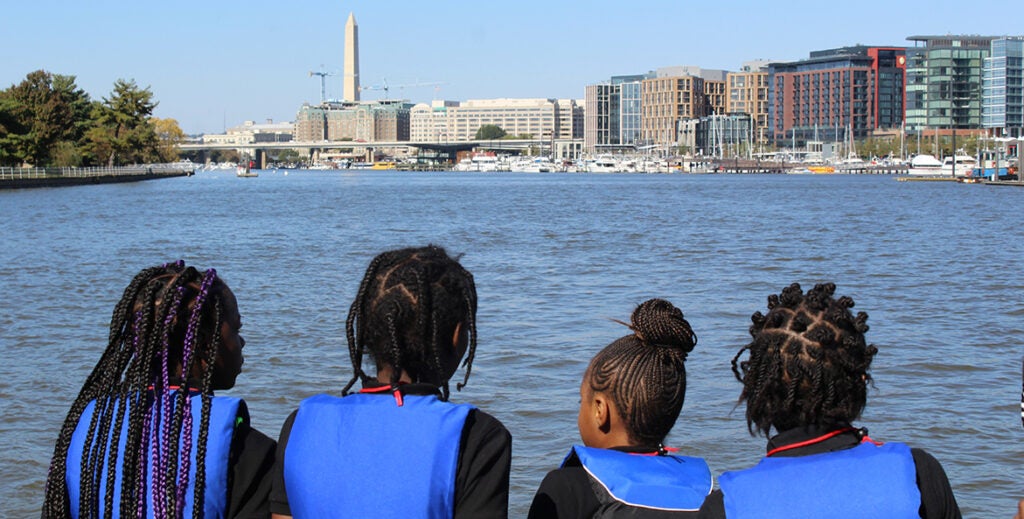 Andrew Overton
Hope in the Chesapeake Bay WATERS Act
Recently, bipartisan congressional leaders passed the Chesapeake Bay Watershed Advancement for Training, Education, Restoration, and Science (WATERS) Act through the House of Representatives, reauthorizing key programs at the National Oceanic and Atmospheric Administration’s (NOAA) Chesapeake Bay Office. This is a big win for the Bay in Congress!
NOAA’s Chesapeake Bay Office leads research and restoration efforts that help create cleaner waterways, support fisheries and local economies, and build resilience to climate change. The bill also reauthorizes NOAA’s Bay Watershed Education and Training (B-WET) grants, which provide thousands of students with hands-on outdoor learning experiences that help develop the next generation of environmental stewards and leaders.
Thanks to bipartisan leadership in Congress, this bill is one step closer to becoming law.
Looking Ahead
Policies and programs that support clean water, strong economies, and vibrant communities do not happen by accident. They are the result of electing leaders at all levels of government that are committed to taking strong action for our waterways. Your voice matters in this process, and the upcoming elections are critical to clean air and water.
The Bay can’t vote, but YOU can! Check out our Vote for the Bay page for more information including voter resources, and pledge to vote for the Bay!
