Legacy of a Green Building
Reflecting on the impact of CBF’s Philip Merrill Environmental Center, 25 years after it earned the world’s first LEED Platinum certification.
Even 25 years after first setting a new standard for green buildings, CBF’s Philip Merrill Center continues to be recognized for its significant impact. In June 2026, it was recognized with the prestigious AIA Twenty-five Year Award for its enduring legacy as the world’s first LEED Platinum-certified building.
On this anniversary, we look back at why the Philip Merrill Environmental Center continues to shine today.
 Chesapeake Bay Foundation
What Are the Innovative Green Features of CBF’s Philip Merrill Environmental Center?
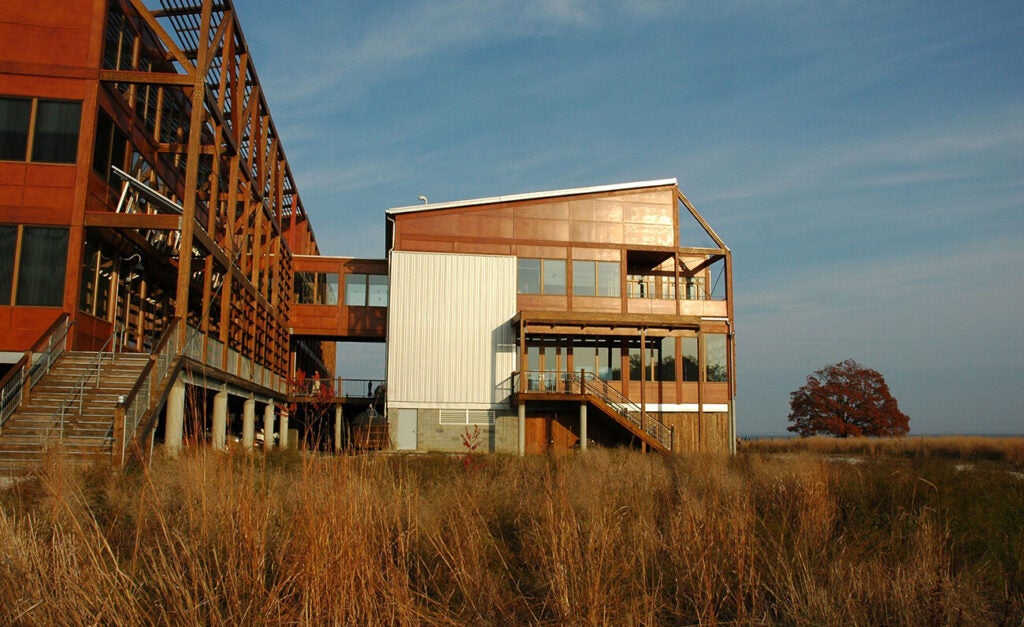
When CBF set out to build a new headquarters in Annapolis, Maryland, a quarter century ago, we dreamed big. CBF decided to craft a building that was beautiful and functional, but also as green as possible. The result was a 32,000 square foot facility that:
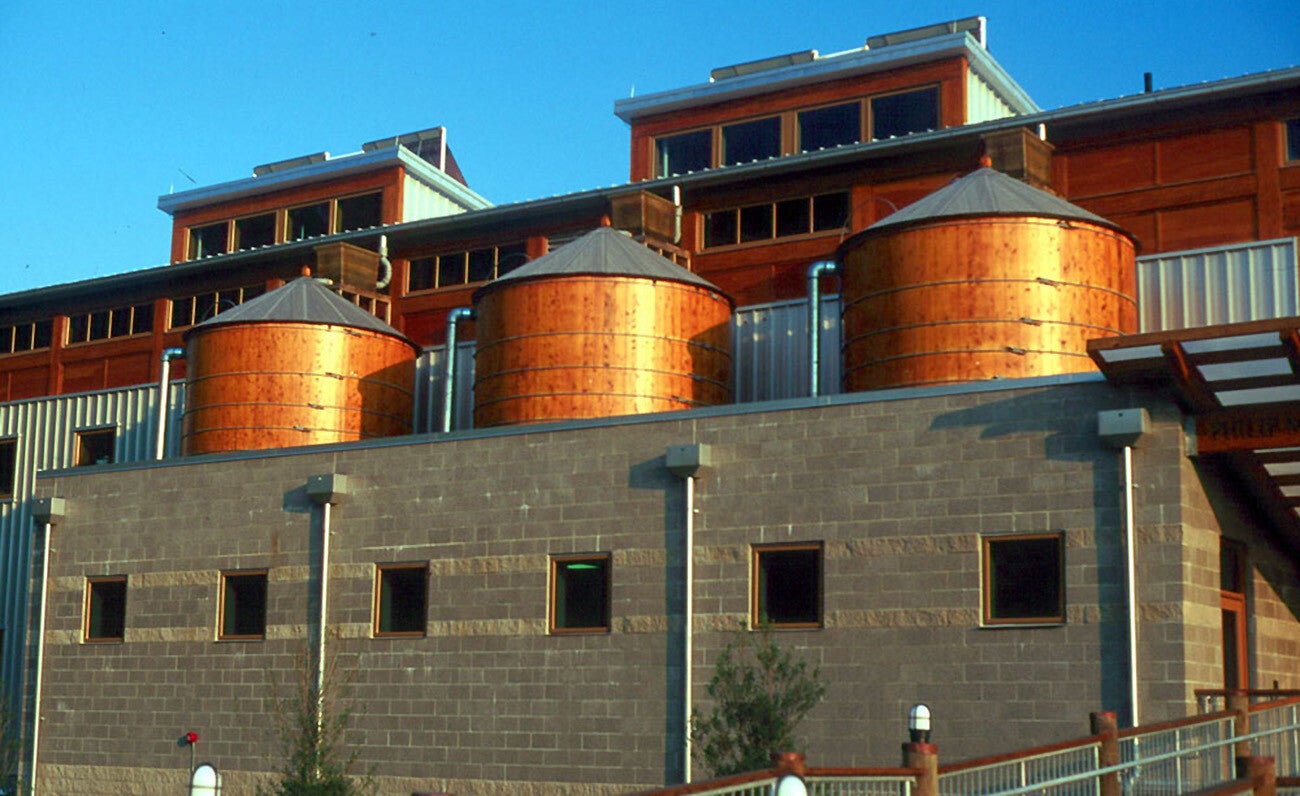
- Utilizes 90 percent less water than a typical office building thanks to composting toilets and a rainwater catchment system;
- Incorporated recycled materials in its construction, such as parallel strand lumber and galvanized recycled steel siding;
- Uses renewable energy, including solar and geothermal, to heat, cool, and power the building; and
- Takes advantage of location and abundant windows to utilize natural light and Bay breezes, reducing energy consumption.
 CBF Staff
How the Center Serves as the Blueprint for Platinum LEED Standards
Perhaps the biggest impact that the Philip Merrill Environmental Center had was the new standard it set. After construction concluded, CBF submitted the application to have the facility certified as a Leadership in Energy and Environmental Design (LEED) building.
It showcases how thinking big can not only have an impact on the environment in your backyard, but across the world.
LEED is one of the most globally recognized green building rating systems, employing a scorecard that examines numerous criteria, from energy and water usage, to building materials and location, to rate the eco-friendliness of a building.
At the time, CBF hoped to receive a Gold certification, the highest level possible. Instead, the U.S. Green Building Council, which administers the LEED program, created a new standard just for CBF’s Philip Merrill Environmental Center: Platinum certification. As a result, it became the first LEED Platinum building in the world, setting a new standard for green building design and performance.
How the Phillip Merrill Environmental Center Had A World-wide Effect
When you set the bar high, you challenge others to jump over it with you.
Twenty-five years later, the impact of the Philip Merrill Center can be felt not just in Annapolis, but across the Chesapeake Bay watershed. There are nearly 800 LEED Platinum buildings across the six Bay watershed states and the District of Columbia.
But that impact extends even further. Across the United States, there are over 8,100 buildings with LEED Platinum certification. Worldwide, that number climbs to over 13,000 LEED Platinum certifications. All of those buildings incorporate better energy efficiency, use less water and electricity, are built adjacent to public transportation, and have a much lower impact on the environment.
The Philip Merrill Center also inspired an even greener building, CBF’s Brock Environmental Center, which met all the criteria for the prestigious Living Building Challenge certification. (Learn more about what makes CBF green.)
What seemed like just a building at the time has become a decades-old inspiration. The Philip Merrill Center proves you don’t have to sacrifice beauty and design to make it resource efficient. It showcases how thinking big can not only have an impact on the environment in your backyard, but across the world.
