The Big Meeting for a Little Fish: Atlantic States Will Decide on Menhaden
Amid intensifying warning signs in the Chesapeake Bay and along the Atlantic Coast, the Atlantic States Marine Fisheries Commission, representatives of fifteen Atlantic states, will meet in Rhode Island next week to decide whether or not to protect more of “the most important fish in the sea.” Here’s what’s at stake.
In just a few days, fishery regulators will meet in Newport, Rhode Island, to consider major changes to how they manage menhaden—a critical fish that is foundational to the food web in the Chesapeake Bay and along the entire Atlantic Coast.
How many menhaden can be caught? When? And Where? These fundamental questions are on the table at the Atlantic States Marine Fisheries Commission’s (ASMFC) 2026 Annual Meeting, which kicks off Nov. 9. Amid intensifying warning signs for the fish and a groundswell of public concern, the 15-state commission is devoting two days to deliberate about menhaden.
The decisions it makes will be the greatest test yet of the commission’s resolve to manage menhaden in a way that supports the other species that depend on it.
If commissioners follow the latest scientific analysis of what’s needed to leave enough menhaden in the water for the broader ecosystem, it could mean a 39 percent cut in the coastwide catch. If, in addition, they pass the most protective conservation measures on the table for the Chesapeake Bay—as public comments overwhelmingly support—the two actions could ultimately substantially lower the industrial reduction menhaden catch allowed in the Chesapeake Bay so far. They could also do far less, or nothing at all.
No matter where they land, it will have major implications for the future of fish, wildlife, and communities in the Chesapeake Bay and beyond.
What’s at Stake for the Chesapeake Bay
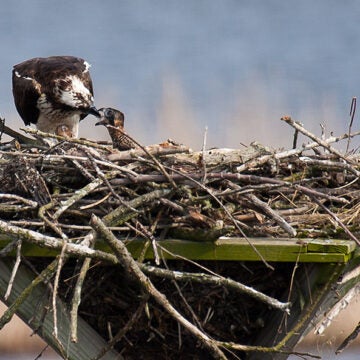
The Chesapeake Bay is at the center of it all. Chesapeake Bay watermen are reporting historically low menhaden catches, making an important source of blue crab bait harder to find and more expensive. Researchers also reported that 2026 is the worst year on record for osprey breeding success in the Bay, where the birds rely on menhaden for food. These are serious signs that point to potential issues with the number of menhaden in the Bay.
Meanwhile, the only remaining industrial fishery on the coast—which catches the vast majority of Atlantic menhaden using massive purse seine nets and grinds them into products like fish meal and oil—is based in Reedville, Virginia and fishes both within and outside of the Bay. This industrial reduction fishery in 2025 saw very low catches both in the Bay and throughout the Atlantic coast—the industrial reduction fishery, for example, only caught roughly 68% of the Bay Cap and 60 percent of its total quota.
But science about how menhaden are faring in the Bay remains “woefully inadequate,” according to the Virginia Institute of Marine Science, which concluded that the wisest course of action is “to take a precautionary approach and give serious consideration to reducing purse seine fishing in Chesapeake Bay.”
What Commissioners Will Vote On
During this week’s meeting, ASMFC has the chance to take action. Commissioners will consider two major issues:
- The Chesapeake Bay catch limit. This is known as the Chesapeake Bay fishing cap and governs how many menhaden can be caught within the Bay itself. Changes to the cap are the subject of the “Draft Addendum II” proposals that menhaden managers will consider.
- The coastwide catch limit. This is known as the Total Allowable Catch (TAC) and governs how many menhaden can be caught overall along the Atlantic Coast, including in the Chesapeake Bay.
Both offer opportunities to strengthen conservation and bring menhaden management in line with the best available science. Let’s break them down one at a time:
What Is Draft Addendum II?
Draft Addendum II is the technical name for a series of options that would change how menhaden are managed within the Chesapeake Bay. Specifically, the proposed changes could significantly reduce the amount of menhaden harvested by the industrial reduction fishery inside the Bay.
CBF, along with tens of thousands of concerned advocates, supported the most conservation-focused options. These would leave more menhaden in the Bay to support struggling wildlife, fisheries, and communities.
Our primary recommendations include the options that:
- Reduce the Chesapeake Bay fishing cap by 50 percent, then set it at 13.6 percent of the coastwide catch. This approach would provide substantial conservation benefits while linking the Bay’s fishing limit to the coastwide catch limit, making it so the Bay wouldn’t bear a disproportionate brunt of fishing.
- Divide the Bay fishing cap into three equal-length periods—allowing only 25 percent of the catch to occur in the first two parts of the fishing season, and the remaining 50 percent later in the year. This approach would better protect menhaden during critical early-season periods when ospreys and other predators depend on them, and allow more menhaden to reach Maryland waters.
CBF also supported several additional technical measures to strengthen conservation. You can read our official comment letter to learn more about our position.
The public overwhelmingly supports significant conservation reforms to protect Chesapeake Bay menhaden, according to the summary of public comments on Draft Addendum II that ASMFC recently released.
Many commenters raised concerns about the effects of menhaden fishing on ospreys, striped bass, and other predators. They described seeing fewer menhaden in recent years and reported economic consequences for recreational fishing and charter businesses as predator populations and fishing opportunities declined.
Coastwide Total Allowable Catch (TAC): The Need for Stronger Atlantic Coast Protections
The commission must also consider and approve the Total Allowable Catch (TAC) for the entire Atlantic Coast for the upcoming fishing season. They face an important decision: will they make the cuts necessary to follow the science and uphold their commitment to keeping enough menhaden in the water to support the broader ecosystem?
Updated data and improvements to the assessment model showed that the amount of menhaden in the water was actually 37 percent lower than previously estimated.
Since 2020, the ASMFC has managed menhaden using Ecological Reference Points (ERPs). Traditional fishery management focuses on making sure there are enough fish of a single species to support fishing. But ERP management takes into account menhaden’s role as a food source for other predator species, such as striped bass. It aims to make sure there are enough fish to support fishing and those other species.
Adopting this ecosystem-based approach has been one of the commission’s most significant management accomplishments. It is now being tested.
In fall 2025, the ASMFC released an updated assessment that significantly changed our understanding of the menhaden population. Updated data and improvements to the assessment model showed that the amount of menhaden in the water was actually 37 percent lower than previously estimated. As a result, it concluded that a 54 percent reduction in the coastwide catch would be needed to meet the ASMFC’s target for supporting the ecosystem.
Despite the updated scientific advice, the ASMFC approved only a 20 percent cut for the 2026 fishing season. That decision raised concerns about whether it was following its own ecosystem-based management framework.
This year, updated projections again point toward the need for substantial reductions to leave enough menhaden for the ecosystem. A 39 percent cut in the coastwide catch, specifically, would give managers a projected 50/50 chance of keeping enough menhaden available for the coastal population of striped bass and other predators.
Little Fish, Big Decisions
In sum, the decisions coming out of this week’s meeting will have major implications for the these small fish that play an enormous role in sustaining a healthy Chesapeake Bay and a productive Atlantic Coast ecosystem. The science is raising serious concerns, the public is calling for action, and the consequences of inaction could reach far beyond the menhaden fishery.
We must respond to these warning signs by strengthening menhaden protections in the Chesapeake Bay and along the Atlantic Coast.
Stay tuned for more updates and continue spreading the word about the need for menhaden conservation. And if you haven’t already, take action now to stand up for menhaden!
Related Stories
-
 Blog Story
How Many More Osprey Chicks Must Starve to Death?
Some of the Chesapeake Bay’s best fishermen—osprey—are sending a loud warning: There aren’t enough fish in the Bay. It’s time to act.
-
 Blog Story
Coming Up Empty: Commercial Watermen in Maryland are Finding Fewer Menhaden
Commercial bait fishermen, who supply menhaden to other fisheries like blue crabs, are stretched thin as it gets harder to find fish.
