Press Statement
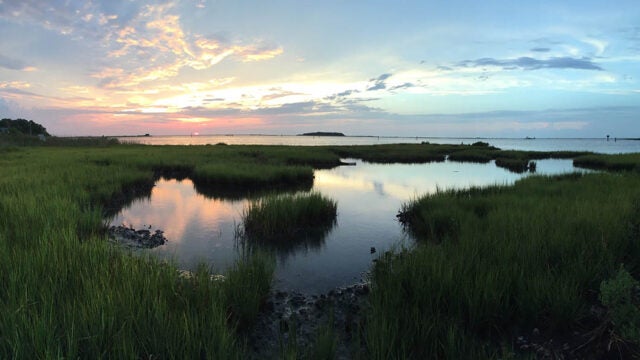
The new wetlands definition the Trump administration proposed today would further gut federal protections for wetlands and other waters essential for a healthy Chesapeake Bay.
The Bay region’s roughly 1.5 million acres of wetlands trap and filter pollution, absorb storm surges, and provide valuable habitat for the region’s fish and wildlife. They protect low-lying communities from flooding and erosion. Wetlands also fight climate change by storing carbon.
The proposed rule would codify the Supreme Court’s 2023 decision in Sackett v. EPA, which dramatically limited the scope of Clean Water Act safeguards for wetlands not directly connected to a nearby waterway and wetlands that don’t flow all year round.
This Bay region is home to thousands of isolated wetlands, called Delmarva Bays and pocosins, and more than 118,000 linear miles of streams that flow intermittently or only during certain seasons. Without federal protection, only state regulations would be left to prevent development or destruction of these valuable natural resources.
Maryland, New York, Pennsylvania, Virginia, and the District of Columbia have their own wetlands rules. However, loopholes, waivers, and limited enforcement would leave many of these ecologically important wetlands at risk.
But Delaware, where Delmarva Bays are plentiful, and West Virginia, where the mountainous terrain can accelerate flooding, both rely solely on the federal definition to protect wetlands and intermittent and seasonal streams in their jurisdiction.
Chesapeake Bay Foundation Senior Policy Director Keisha Sedlacek issued the following statement:
“EPA’s plan to further strip wetlands protections would deal a serious blow to Bay restoration.
“Wetlands, including those isolated from other waters, and streams that don’t flow continuously all year are critical to clean water in the Bay and its local rivers and streams.
“They also provide habitat and spawning grounds for fish, waterfowl, and wildlife important to our region’s seafood and outdoor recreation industries. And they’re invaluable for softening the blow of extreme weather on low-lying communities like Annapolis and Norfolk.
“Absent robust federal protections, the Bay states and D.C. must fill the gaps or risk losing wetlands and streams that help save the Bay to short-sighted and irresponsible development and destruction.”
With legislation to end the government shutdown and fund the U.S. Department of Agriculture (USDA) through fiscal year 2026, government agencies and employees key to saving the Bay can finally get back to work.
The record-breaking six-week shutdown forced them to set aside important efforts like monitoring pollution levels, conducting research on challenges to Bay restoration, and funding conservation projects that promote clean water, healthy soil, and restore fish and wildlife habitat.
USDA is among a handful of agencies that will get final spending plans for fiscal 2026, which began October 1. That means experts with USDA’s Natural Resources Conservation Service (NRCS) can now get back in the field helping farmers implement projects that reduce pollution to rivers and streams that flow into the Chesapeake Bay.
But they’ll have a smaller budget than last year. The bill cuts funding for NRCS work by $65 million to $850 million from $915 million. But it does provide $2 million in grant funds to processors of invasive wild-caught blue catfish. These voracious predators are wreaking havoc on native species like blue crabs and striped bass. Grants to process them for commercial sale can help reduce their numbers and the damage they’re doing to the Bay ecosystem.
The shutdown-ending bill will continue to fund the rest of the government agencies, including EPA, the National Oceanic and Atmospheric Administration (NOAA), the U.S. Geological Survey (USGS) and the Fish and Wildlife Service, at fiscal 2025 levels through January 30.
That gives Congress less than 12 weeks to finish the remaining nine appropriations bills. Otherwise, agencies and programs covered by bills Congress fails to pass by the end of January will be forced to shut down again.
Chesapeake Bay Foundation (CBF) Senior Policy Director Keisha Sedlacek released the following statement:
“Now that this record-breaking shutdown is over, agencies and employees vital to saving the Bay can get back to this important work.
“The shutdown took a serious toll on Bay recovery efforts that includes six weeks of stalled conservation projects, farmers waiting to be reimbursed, crucial water quality data not being collected, and pollution inspectors sidelined.
“We’re not out of the woods yet. This deal only offers a 12-week reprieve for key Bay restoration agencies like EPA, NOAA, and USGS. There’s no time to waste. Congress must finish its job and negotiate fiscal 2026 budgets for all agencies.
“More importantly, congressional leaders and the president must break this destructive cycle of government shutdowns before the damage they do to the Bay and its waterways becomes irreversible.”
Momentum Builds for Clean Water As Climate and Community Resilience Are Left Behind
The Chesapeake Bay Foundation (CBF) is relieved that the months-long impasse over Pennsylvania’s new budget has been resolved and includes funding for conservation, but is also disappointed that it came at the expense of conceding a climate program that would have reduced carbon emissions.
Governor Josh Shapiro signed the Commonwealth’s $50.1 billion General Fund budget for fiscal year 2025-2026 on Wednesday.
The budget was negotiated at the expense of Pennsylvania’s potential for clean air and community investments through the abrogation that ends the Commonwealth’s participation in the Regional Greenhouse Gas Initiative (RGGI).
The RGGI is a coordinated effort between several Northeastern states that sets a regional limit on carbon dioxide emissions from power plants. The emissions cap lowers over time, leading to cleaner air and less pollution to waterways while reducing emissions that contribute to climate change.
In other words, RGGI would have reduced pollution in Pennsylvania and brought in billions of dollars to invest in local communities.
More favorably for Pennsylvania’s environment, the new budget includes an over 5.5 percent increase in funding for the Department of Environmental Protection, and a reinvestment of $10 million in the Agricultural Innovation Grant.
Also, the Clean Streams Fund, as part of the Pennsylvania Tax Code, continues to be allocated annually at $50 million, which includes over $35 million to the Agriculture Conservation Assistance Program (ACAP). This sustained allocation to ACAP will put more clean water projects on farms that reduce pollution and improve the health of local rivers and streams.
Julia Krall, CBF Pennsylvania Executive Director, said:
“Negotiating away an important program like the Regional Greenhouse Gas Initiative through the budget sets a bad precedent. Now this action threatens the health of Pennsylvania’s rivers, streams, and the Chesapeake Bay.
“Ending Pennsylvania’s participation in the RGGI is a move in the wrong direction. Greenhouse gases continue to pose significant threats to our personal and economic health, the quality of our local rivers and streams, and to climate stability. Carbon dioxide emissions know no boundaries.
“With our changing climate, increasingly common heavy rains, flooding, and overheated runoff will intensify pollution, erode productive farm soils, and destroy habitats vital to wildlife in Pennsylvania, like the eastern hellbender and native brook trout.”
The Chesapeake Bay Foundation (CBF) congratulates Virginia Governor-elect Abigail Spanberger and will work with the new administration to ensure clean water progress continues across the Commonwealth.
Governor-elect Spanberger will enter office at a pivotal moment for the environment in Virginia. Storms and flooding fueled by climate change are increasing, development is growing, and states in the region are entering a new phase in efforts to protect and restore the Chesapeake Bay.
We are encouraged by Governor-elect Spanberger’s prior work on Bay issues in Congress and we are hopeful she will continue to prioritize Chesapeake Bay restoration as governor.
As a member of Congress in 2021, Spanberger introduced bipartisan legislation that helps farmers participate in voluntary carbon markets by connecting them with resources. In 2024, she supported significant federal investment in protecting the Chesapeake Bay and its watershed. As the ranking member of the House Subcommittee on Conservation, Research, and Biotechnology, Spanberger focused on ensuring that conservation programs are protected and adequately funded, which benefits the Chesapeake Bay.
During her campaign, she expressed support for returning Virginia to the Regional Greenhouse Gas Initiative (RGGI), a multi-state program that reduced greenhouse gas emissions and supported flooding protection projects across the state.
CBF urges the new administration to prioritize five critical actions to ensure Virginia meets its clean water commitments:
- Restore and protect our waterways for fish, wildlife, and people: This includes continuing robust investments in wastewater, stormwater, and agricultural pollution reduction programs and expanding the restoration of wetlands and living shorelines.
- Create a safe and climate-resilient Virginia to secure our economy, environment, and communities: The administration must prioritize planning and funding for projects to enhance resilience against sea-level rise and extreme weather events.
- Safeguard Virginia’s diverse landscapes for future generations: We urge the Governor to expand the authority of local governments to allow communities to better conserve forests and stream buffers and modernize the Chesapeake Bay Preservation Act.
- Invest in Virginia farmers to both produce our food and keep waterways healthy: The state must maintain strong support for the agricultural cost-share program and focus funding on permanent practices like stream fencing and forested buffers.
- Stop toxics at their source, hold polluters accountable, and support our transition to clean energy: The administration must address emerging pollution challenges like PFAS, eliminate loopholes for bad actors, and speed up a strategic transition to clean energy.
CBF Virginia Executive Director Chris Moore issued the following statement:
“Healthy waterways are the lifeblood of a healthy economy. Investing in the environment is key to lowering energy bills, cooling cities, and protecting our communities from flooding and extreme weather.
“Governor-elect Spanberger supported Chesapeake Bay issues during her time in Congress, promoted farm conservation practices that benefit clean water and address climate change, and has picked up litter alongside our volunteers at Clean the Bay Day.
“We are hopeful that Governor-elect Spanberger and her Administration will take Virginia in the right direction when it comes to climate adaptation and Bay restoration.
“The Chesapeake Bay Foundation stands ready to work with the new Administration and the General Assembly to achieve our shared goal of a fully restored Bay for future generations.”
The future of the struggling striped bass population is in peril after the Atlantic States Marine Fisheries Commission (ASMFC) voted for “status quo” management on Oct. 29, neglecting alarming red flags for the species.
At its quarterly meeting in Dewey Beach, Delaware, members of ASMFC’s Striped Bass Management Board did not make any changes for the 2026 fishing season. Notably, the Board voted against a coastwide 12 percent reduction for commercial and recreational fishing removals. This decision makes it clear the striped bass population will not rebuild by 2029—a management plan requirement from when the species was declared overfished in 2019.
In 2024, ASMFC’s Technical Committee released an updated striped bass stock assessment. The study projected that the striped bass population is unlikely to rebuild to a healthy level without ASMFC action to reduce fishing by at least 12 percent. In response, the Board initiated draft Addendum III, which outlined various recreational and commercial fisheries management options along the Atlantic Coast and within the Chesapeake Bay.
According to the Maryland Department of Natural Resources’ (DNR) annual juvenile survey, striped bass experienced below average spawning success for the seventh consecutive year in 2025. The Chesapeake Bay is a critical nursery for striped bass, where more than 70 percent of striped bass spawn.
To provide striped bass the best possible chance of recovery, the Chesapeake Bay Foundation (CBF) urged ASMFC to implement the coastwide 12 percent reduction, as well as reform critical seasonal closures in the Chesapeake Bay.
However, despite overwhelming red flags, the Board voted to maintain status quo management for striped bass. Out of 16 votes, only Maine, Massachusetts, Rhode Island, Connecticut, and North Carolina voted to support the more conservative 12 percent reduction.
The Board did grant Maryland the opportunity to revisit its recreational fishing seasons through a state-level regulatory process, rather than selecting any of the Maryland fishing season options presented in Addendum III. This action will allow Maryland additional time to find a path forward to define new fishing seasons. The State will choose between maintaining current fishing seasons or instituting the proposed baseline “reset” for 2026.
CBF Maryland Executive Director Allison Colden issued the following statement:
“This is a concerning day for striped bass. ASMFC cast aside an important opportunity to meaningfully protect this iconic species. It’s clear the Board has no intention of rebuilding the striped bass population by 2029 and has chosen to deviate from its commitment to the fishery management plan. Now Maryland must step up to fill the gap and set fishing seasons that will best protect this species for future generations.”
CBF Virginia Executive Director Chris Moore issued the following statement:
“Our surveys in the Bay all point to a looming disaster, and our fishery in Virginia has all but dried up because there are so few striped bass around. Sadly, ASMFC is not listening to the science or anglers and continues to leave the future of striped bass up to chance.”
Bay Agreement Revisions Mark Improvements, But Fall Short of Advocates’ Ambitions
Officials yesterday took an important step toward updating the Chesapeake Bay Watershed Agreement, setting the stage for governors and federal leaders to formally recommit this December to Bay restoration goals for the next 15 years.
Since 1983, the Bay agreement has held together the federal-state Bay restoration partnership. This voluntary accord includes many goals, ranging from fisheries to clean water to land conservation. It has undergone several updates, with the last one signed in 2014. Separately, in 2010 states committed to legally binding goals to reduce nitrogen, phosphorus, and sediment pollution to the Chesapeake Bay.
The Bay restoration partnership includes Maryland, Virginia, Pennsylvania, West Virginia, Delaware, and New York, the District of Columbia, the Chesapeake Bay Commission, and leaders of federal agencies involved in the cleanup.
Last year, these partners committed to revising the agreement by the end of 2025. Leaders in July released an initial draft of the update that was lacking. This fall, state and federal officials further edited that draft, agreeing to key revisions at an Oct. 28 meeting. The government shutdown limited the participation of most federal partners this month, but the EPA participated using carryover funding.
The partners are expected to finalize the agreement at a December 2 Chesapeake Executive Council meeting in Baltimore.
Throughout the process, the Chesapeake Bay Foundation (CBF) has advocated for a strong agreement that:
The latest version has notable improvements over the July draft. Those include a uniform deadline of 2040, as well as a 2033 midpoint check in that offers a chance to adapt to the latest science. It also now reaffirms the legally-binding pollution reductions states must meet.
- Affirms state commitments to meet legally required pollution reductions;
- Provides accountability with a uniform deadline across goals and a midpoint assessment; and,
- Factors in growing challenges from climate change.
The agreement is still not as ambitious as what CBF and other advocates have called for. However, it remains critical that all state and federal partners commit to it. A lack of an agreement this year risks disintegrating the unparalleled decades-long partnership working for a healthier Chesapeake Bay.
Because pollution in the Chesapeake Bay watershed flows across state lines, states and the federal government must work together toward shared goals to see progress. Maintaining a strong partnership can lead to exceeding original goals—such as when Bay restoration partners recently announced the successful restoration of 11 rivers for oyster habitat.
CBF Senior Policy Director Keisha Sedlacek issued the following statement.
“This agreement isn’t perfect, but it is essential. For decades, we’ve seen time and again that progress only comes when we work together toward shared goals.
“The Bay restoration movement could have easily fizzled out in the current climate of division and uncertainty. Instead, everyone worked to find common ground, creating a vision for the next 15 years.
“We’re grateful for the leadership of Maryland Governor Wes Moore as chair of the Chesapeake Executive Council, as well as steps taken by Virginia and Pennsylvania toward a stronger agreement.”
“This December, the Bay states and federal partners must come together and formally renew their promise to restore the Bay, guided by the revised agreement. We will keep advocating for the policies, investments, and science to exceed goals for a healthy Bay—and hold leaders accountable if they fall short.”
Chesapeake Bay Menhaden Reform on the Horizon
Reacting to a new assessment that shows the menhaden population is significantly weaker than previously thought, fisheries regulators yesterday took a minor step to reduce the coastwide menhaden fishing quota along the Atlantic.
The action took place at the Atlantic States Marine Fisheries Commission’s (ASMFC) annual meeting in Dewey Beach, Delaware. After a series of competing motions, the ASMFC’s Menhaden Management Board adopted a 20 percent quota reduction for the 2026 fishing season. It put off adopting quotas for 2027 and 2028 until its next annual meeting in the fall of 2026.
This comes on the heels of an assessment ASMFC released earlier this month, which found that the menhaden population is 37 percent lower along the Atlantic Coast than previously thought. The ASMFC menhaden stock assessments resulted in forecasts indicating the need for a 54 percent cut to the menhaden harvest to meet the needs of predators like striped bass, osprey, and marine mammals.
Menhaden are a small fish that are an important food for many species. These fish are also the target of a major industrial reduction fishery concentrated in Virginia’s portion of Chesapeake Bay, where warning signs linked to menhaden are growing.
Menhaden are not making it to Maryland waters like they once did. Since 2017, Maryland has been unable to harvest even half of its small quota. In 2024, Maryland harvested less than 10 percent of its menhaden quota. The decline in local menhaden is directly impacting Maryland’s crab fishery due to increased bait costs, putting increased economic strain on Maryland watermen.
Additionally, osprey chicks are starving at unprecedented rates in parts of the Bay where menhaden are traditionally a staple of the bird’s diet, according to new research. Data also shows plummeting menhaden catches in Maryland and Virginia by local watermen who harvest the fish for bait—a much smaller separate fishery than the massive industrial reduction operation.
The new ASMFC assessments consider the menhaden population along the entire coast, from Maine to Florida. However, they do not specifically consider the effects of concentrating the menhaden fishery in and around the Chesapeake Bay, where science remains “woefully inadequate,” according to the Virginia Institute of Marine Science.
This week the ASMFC also initiated the process to develop new options to manage the menhaden reduction fishery in the Chesapeake Bay. The addendum will include options that consider potential reductions to the Chesapeake Bay menhaden reduction harvest, as well as distributing the harvest more evenly throughout the season.
Fishery managers will develop those options over the coming months, and the Menhaden Management Board could approve this addendum for public comment at the February 2026 ASMFC Meeting.
Chesapeake Bay Foundation Forage Campaign Manager Will Poston issued the following statement:
“This is nothing more than a performative nod to ecosystem-based fisheries management. The ASMFC failed to fully respond to the science, jeopardizing the ability of menhaden to fulfill their role in the food chain. This lack of meaningful action is not only risky for menhaden, but also the many fisheries and small businesses that depend on a thriving ecosystem.
“In a bright spot, the ASMFC did launch a longer process to address menhaden concerns in the Chesapeake Bay. We will continue working with our partners and the ASMFC to advocate for strong protections for menhaden in the Bay.”
Groups cite severe public health risks, environmental justice concerns, $88.5 million in annual health costs, and conflict with Virginia’s clean energy goals
The Chesapeake Bay Foundation (CBF) joined with the Southern Environmental Law Center (SELC) to submit formal comments to the Virginia Department of Environmental Quality (DEQ) on October 23 urging the agency to deny a draft air permit for Dominion Energy’s proposed new fossil fuel power plant in Chesterfield County.
The organizations argue that the new large-scale fossil fuel-fired power plant poses a grave threat to the health of nearby communities, where existing industry and minority populations create environmental justice concerns. The project threatens clean water, the health of the Chesapeake Bay, and directly undermines the Commonwealth’s commitment to clean energy.
Dominion plans to construct the Chesterfield Energy Reliability Center, a 944-megawatt fossil fuel-fired plant in Chesterfield County. It represents a massive new source of air pollution for a community already overburdened by industrial facilities and associated harmful emissions.
The proposed facility would emit pollutants including nitrogen oxides (NOx) and fine particulate matter (PM2.5). There is no safe level of exposure to PM2.5, which is linked to premature death, asthma, cardiovascular disease, and other serious health conditions.
An expert health analysis projects that CERC’s pollution could cause an average of 6.7 premature deaths and more than 14,600 illnesses every year in the region. The annual health costs from these emissions are estimated at $88.5 million, a financial burden that would be borne by surrounding communities.
While the State Corporation Commission is currently deliberating Dominion’s application for a Certificate of Public Convenience and Necessity, Dominion must also still obtain an air permit from DEQ. The DEQ has independent authority to deny the permit and prevent construction.
At a September 23 hearing, CBF and partners presented evidence that CERC is both unnecessary for energy demands and a direct threat to public health and the environment.
Taylor Lilley, Environmental Justice Staff Attorney with the Chesapeake Bay Foundation, issued the following statement:
“Independent expert analyses have shown the scope and cost of the health and environmental dangers that the community will face should this project move forward. DEQ should weigh these serious risks to both the public and the environment. Building this facility would only compound the burden borne by communities that have suffered from exposure to harmful emissions for generations.”
“Dominion has attempted to downplay the impacts of this proposal—a danger to the community’s right to breathe clean air and secure a healthy future—by relying on flawed analysis. CBF will continue to advocate for clean energy solutions that meet Virginia’s energy needs without sacrificing the health of its communities or the environment.”
Chesapeake Bay Foundation (CBF) experts urged the Trump administration to continue funding critical research and grant programs, remove barriers to managing invasive blue catfish, and promote shellfish exports to Europe in comments filed yesterday with the National Marine Fisheries Service (NMFS).
In August, NMFS requested input on fisheries regulations, management, science, and other priorities identified in the White House’s April executive order “Restoring America’s Seafood Competitiveness.”
The Chesapeake Bay is home to more than 348 species of finfish and 173 shellfish and a key driver our region’s economy. According to the NMFS 2022 report on U.S. fisheries, the seafood industry in Maryland and Virginia contributed $7.9 billion in sales, $1.8 million in income, and more than 60 thousand jobs to the regional economy.
Yet the Trump administration has targeted the National Oceanic and Atmospheric Administration (NOAA), which houses NMFS, for massive budget cuts and staff reductions that threaten to devastate efforts to restore the Bay and strengthen its climate restoration efforts.
CBF specifically recommended that the administration:
- Continue funding NOAA grant programs that support waterfront communities, build the next generation of American watermen, and conduct research that benefits aquaculture and other fisheries.
- Keep funding NOAA’s work to identify the cause of Sudden, Unusual Mortality Syndrome (SUMS) in farmed oysters, a major threat to expanding oyster aquaculture on the East and Gulf coasts. This research will allow oyster growers and scientists to forecast conditions and rear more resilient oysters in hatcheries.
- Rescind federal seafood processing regulations that have stymied the commercial harvest of blue catfish, an invasive non-native species and voracious predator that threatens the Bay’s valuable blue crab and striped bass fisheries.
- Preserve NOAA’s critical work tracking and evaluating weather and ocean conditions, water quality, and how climate change is affecting commercial fisheries.
- Expand access to the European Union (EU) shellfish market, which under EU food safety regulations is only open to exports from Massachusetts and Washington. The export market represents a critical opportunity for many Bay region shellfish producers, many of which are family-owned businesses.
CBF Federal Policy Coordinator Annabelle Harvey issued the following statement:
“From blue crabs to oysters to striped bass, the Chesapeake Bay’s fisheries power this region’s economy and define its identity. It’s essential that NOAA has the resources and tools to restore the fisheries habitats and species that make the Bay one of the most productive estuaries in the country.
“CBF urges the Trump administration to invest in NOAA research, data collection, and grants that promote the long-term viability of Bay fisheries and coastal communities; rescind needless regulatory barriers to managing invasive blue catfish; and work on opening the European market to our shellfish producers.
“We appreciate the opportunity to share our ideas for improving fisheries management and science. Our fisheries and policy experts stand ready to help achieve these important goals.”
CBF urges ASMFC to take strong action now to rebuild this critical fishery
The future of Chesapeake Bay’s striped bass population continues to be in peril, as seen by today’s results from Virginia Institute of Marine Science (VIMS) and Maryland Department of Natural Resources (DNR)’s annual juvenile striped bass survey. For the seventh consecutive year in Maryland and fourth consecutive year in Virginia, young striped bass numbers are well below the long-term average.
This annual survey estimates striped bass recruitment, which includes reproductive success and early survival rates, and offers a window into the future of adult striped bass numbers. Consistent, record-low levels of recruitment, combined with past overfishing of striped bass, are extremely concerning for the iconic species.
Not enough young fish are surviving the many challenges in the region, including warmer water temperatures, food availability, and invasive predators like blue catfish. That means far fewer fish will grow up to become large, adult trophy fish that anglers seek in the Bay and are extremely important to rebuilding the population. This could delay or jeopardize rebuilding the striped bass population by the 2029 target—a goal set by fisheries managers at the Atlantic States Marine Fisheries Commission (ASMFC).
According to the survey, the 2025 young-of-year index for Maryland was 4.0 fish per sample. This is slightly higher than last year’s index of 2.0, but significantly lower than the state’s long-term average of 11.0. In Virginia, the index was 5.12 fish per sample. This is slightly higher than last year’s index of 3.43, but still below the state’s historic average of 7.77.
To address concerns for striped bass, ASMFC is currently considering stronger protections for the species. At their next meeting on October 29, ASMFC’s Striped Bass Management Board will vote to approve Addendum III—a response to the 2024 striped bass stock assessment and recommendations made by ASMFC’s Technical Committee. The analysis determined that striped bass are overfished, and that without additional action, it’s unlikely the species will rebuild to their target numbers by 2029.
To help increase the likelihood that we’re able to rebuild the striped bass fishery, Chesapeake Bay Foundation (CBF) urges ASMFC to adopt the protective measures laid out in Addendum III. Immediate, strong action is needed if we want a chance to rebuild the striped bass fishery by 2029.
Allison Colden, CBF Maryland Executive Director, issued the following statement:
“This annual survey gives us an important sneak peek into the status of the striped bass population in Chesapeake Bay. And for nearly a decade that picture’s been bleak.”
“This alarming trend could seriously jeopardize our chances of rebuilding the striped bass stock to the target level. CBF urges ASMFC to take strong action now to protect this iconic Bay species and rebuild by the end of this decade.”
Chris Moore, CBF Virginia Executive Director, issued the following statement:
“This year’s results make it clear that rebuilding the striped bass population is not guaranteed. We’ve advocated for a host of actions over the years to get striped bass back on the right track. We need to do more to ensure striped bass can reproduce and young can grow up, both through both habitat improvements and fisheries management actions.
“We urge ASMFC not to delay and take action now to help this iconic species. There’s just too much at stake.”
