Press Statement
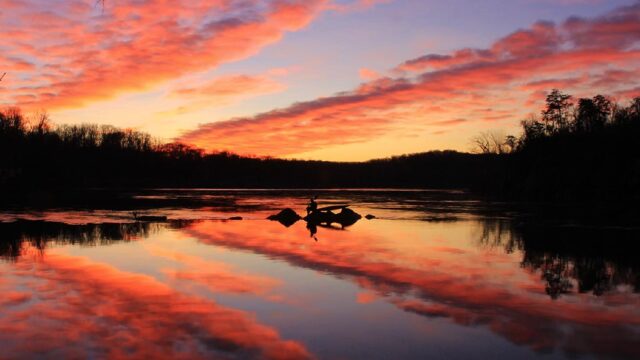
Legislation introduced in the Senate today would renew several federal programs essential to restoring the Bay and increasing public access to this natural wonder.
The Bay-related provisions are part of a larger bill to reauthorize the America’s Conservation Enhancement (ACE) Act. The historic, bipartisan conservation law was enacted in 2020.
The America’s Conservation Enhancement (ACE) Reauthorization Act would extend and renew funding for:
- the EPA Chesapeake Bay Program, which coordinates the federal-state partnership to clean up the Bay and its tributaries, at $100 million annually through fiscal year 2030. The Program is currently funded at $92 million.
- the Chesapeake Watershed Investments for Landscape Defense (WILD) matching grant program at $15 million annually. The program was created in the 2020 law and is currently funded at $8 million. It is administered by the U.S. Fish and Wildlife Service.
- the National Park Service’s Chesapeake Bay Gateways and Water Trails program at its current annual funding level of $3 million for the next five years. The program works with state and local partners to promote access to a network of historic sites, trails, parks, wildlife refuges, and museums across the watershed.
- the National Fish and Wildlife Foundation (NFWF), a competitive grant program that supports local communities’ efforts to clean up and restore waterways and wildlife habitat.
Projects recently funded by these programs include restoring ancestral lands of Virginia’s Upper Mattaponi Indian Tribe; converting a contaminated lot in East Baltimore into a community-friendly urban garden; helping the Lebanon County, Pa., Conservation District develop water quality improvement plans for the Little Swatara and Swatara Creek watersheds; and improving eastern brook trout populations in West Virginia’s Spruce Knob Seneca Rocks National Recreation Area.
The bill was introduced by Senate Environment and Public Works Committee Chairman Tom Carper (D-Del.), ranking member Shelley Moore Capito (R-W.Va.), and Bay state Sens. Ben Cardin (D-Md.) and Chris Van Hollen (D-Md.).
CBF Federal Director Keisha Sedlacek issued the following statement:
“The Chesapeake Bay Foundation welcomes the Committee’s timely bill to renew the America’s Conservation Enhancement Act. This historic law supports several federal programs crucial to restoring the Bay, its waterways, its fisheries, and its wildlife.
“EPA, the Fish and Wildlife Service, the National Park Service, and the National Fish and Wildlife Foundation are key partners in the federal-state Bay cleanup effort. As we enter the next phase of the partnership, it is essential they have the critical authority the bill would provide to help Bay states meet the challenges of the future.
“CBF enthusiastically endorses this important legislation. We urge the Committee to act on it quickly and call on Bay champions in the House to act as well.”
The Chesapeake Bay Foundation (CBF) issued the following statement from Pennsylvania Executive Director Julia Krall, in response to Governor Josh Shapiro’s $48.3 billion General Fund budget proposal for fiscal year 2024-25.
As a final budget continues to take shape in the coming months, CBF is specifically calling for funding that could extend the Agricultural Conservation Assistance Program (ACAP), passed by the Pennsylvania legislature and signed by former Governor Tom Wolf in 2022.
The ACAP cost-share is part of the new Clean Streams Fund (CSF), with a comprehensive spending package of $220 million from the federal American Rescue Plan. The CSF dedicated $154 million to ACAP as investments to be passed through conservation districts and authorized conservation partners for local agricultural practices to reduce pollution to local rivers and streams.
The design of the legislation that created ACAP was a collaborative effort between CBF, the Pennsylvania Farm Bureau, and the Penn State College of Agricultural Sciences. The CSF and ACAP were introduced by State Senator Gene Yaw (R-Lycoming).
In response to Governor Shapiro’s General Fund budget proposal for fiscal year 2024-25, Ms. Krall said:
“The final General Fund budget that reaches the Governor’s desk needs to include funding that will extend the Agricultural Conservation Assistance Program (ACAP) that is helping family farmers design and install conservation practices that keep soils and nutrients on the farm and out of the water.
“CBF is concerned that ACAP might dissolve if the initial investment of $154 million in federal American Rescue Plan funds through the Clean Streams Fund are spent by the end of 2026 and not replenished. It would be a horrible loss of opportunity and momentum for meeting Pennsylvania’s clean water goals.
“The ACAP cost-share is working. According to the State Conservation Commission in December, 66 conservation districts signed ACAP agreements and roughly $151 million has been committed to the critical work.
“Additional funding in the 2024-25 General Fund budget would extend ACAP and allow it to seamlessly enter a new phase.
“Increased and sustained investments of financial and technical resources in ACAP are essential to help farmers reduce pollution from agriculture. The health, economic wellbeing, and quality of life of all Pennsylvanians depend on it.”
Chesapeake Bay Foundation Supports Analysis Backed by Diverse Stakeholders
Following opposition by Virginia’s industrial menhaden fishery, the Commonwealth is facing yet another delay in letting science answer one of the Chesapeake Bay’s most longstanding and controversial questions.
The House of Delegates Studies Subcommittee unanimously pushed consideration of House Bill 19 into next year. HB 19, introduced by Delegate R. Lee Ware, would have funded a robust study of the population of menhaden—the small, silvery fish that’s a crucial part of the larger Chesapeake Bay food web and the target of Omega Protein, one of the largest fisheries on the Atlantic Coast.
The subcommittee’s vote halts progress following months-long, state-directed efforts by a broad group of stakeholders to study the health of one of the Bay’s most essential creatures.
Omega Protein previously backed the development of a scientific framework for a local menhaden population study. But as the 2024 legislative session progressed, the company’s lobbying efforts paved the way for lawmakers to punt funding the study into next year.
Omega Protein, a Canadian company, and their affiliate Ocean Harvesters take tens of thousands of metric tons of menhaden annually from the Chesapeake and Virginia’s ocean waters to grind up for industrial uses in what’s called a reduction fishery.
During last year’s General Assembly session, Omega’s lobbying helped significantly weaken a Senate bill calling for a comprehensive menhaden study. Lawmakers from both parties instead passed legislation charging the Virginia Institute of Marine Science with developing a process to understand the factors that may be impacting the local menhaden population. Omega Protein backed that legislation.
Over the summer, without additional funding, staff from the Virginia Institute of Marine Science and Virginia Marine Resources Commission gathered a diverse coalition including Omega Protein, Chesapeake Bay Foundation and others, that produced nine consensus recommendations on what should be included in a menhaden study.
HB 19 would have funded that research and help resolve pressing questions shared by anglers and scientists: What’s the health of the Chesapeake Bay’s menhaden population and how are factors such as climate change and industrial fishing affecting menhaden?
Menhaden serve as a nutrient-rich food for a variety of creatures including osprey, striped bass, and whales.
Anglers, conservationists and scientists have long been concerned that the scale of the fishery concentrated in the Chesapeake Bay could lead to a lack of sufficient menhaden, causing ripple effects throughout the food chain for commercially and recreationally important species such as striped bass, bluefish, and weakfish.
Virginia is the only state along the Atlantic Coast to still allow reduction fishing for menhaden in its waters. All other states have banned the practice.
The Bay’s population has been suffering from low menhaden recruitment for over 20 years, meaning fewer young fish survive to adulthood. In addition, many of the Bay’s historically iconic species are moving northward as the Bay’s waters warm.
Currently, annual limits on menhaden are based on data on the coastwide population, counting fish from New England to the Carolinas. That does not take into account potential concerns many have expressed here in the Chesapeake Bay region. More local data is vitally needed.
Chesapeake Bay Foundation Virginia Executive Director Chris Moore issued the following statement.
“This is supremely disappointing.
“In the Virginia Way, representatives from the conservation community, Omega Protein, and VIMS hammered out an agreement last year on how to proceed to develop more science on menhaden in both a timely and cost-effective manner. Omega’s lack of support for funding the study is unfortunately not the Virginia Way.
“The lack of a menhaden study leaves far too many questions unanswered and far too many of the Commonwealth’s resources expended over the last year wasted. The bill simply asks the General Assembly to start the work of funding the consensus- based research recommendations. By opposing funding for these important research questions, Omega Protein once again proves they are not acting in good faith for the Chesapeake Bay, but rather only for their own pockets.
“Decision makers need more data to make science-backed and sound decisions to ensure a robust population of menhaden for generations to come.”
After 38 years of distinguished public service, including more than 20 years in Congress, U.S. Rep. C.A. “Dutch” Ruppersberger announced he will not seek reelection when his current term ends in January 2025.
Chesapeake Bay Foundation Vice President for Environmental Protection and Restoration Alison Prost issued this statement:
“Representative Ruppersberger has been a stalwart champion of the Chesapeake Bay cleanup. As a senior member of the powerful House Appropriations Committee, Representative Ruppersberger has been instrumental in helping direct millions of dollars to local projects to restore and conserve the Bay and its fisheries.
“Whether securing funds to restore oysters in the Bay or upgrade Baltimore’s troubled Back River sewage treatment plant, Rep Ruppersberger has worked tirelessly to benefit the Bay, its waterways, and the people of Maryland’s second congressional district.
“The Chesapeake Bay Foundation is deeply grateful for Representative Ruppersberger’s dedication to revitalizing the economic engine and natural wonder we all hold so dear.”
Commercial and Recreational Fisheries Changes Coming to Address Low Fish Numbers
Aiming to rebuild the East Coast’s striped bass population, an Atlantic States Marine Fisheries Commission (ASMFC) panel yesterday approved an update to its fisheries management plan. The action, known as Addendum II, was designed to reduce striped bass mortality through changes in recreational and commercial fisheries for all Atlantic Coast states. This follows an ASMFC emergency action last year that decreased the maximum size limit in the recreational fishery to 31 inches.
Notably, the final version of the plan approved by ASMFC includes:
- Recreational fishery changes, including the following:
- In the Chesapeake Bay, a one-fish limit and a slot limit only allowing fish between 19 inches and 24 inches to be kept;
- For fisheries along the Atlantic Coast, a one-fish limit and a slot limit only allowing fish between 28 inches and 31 inches to be kept;
- A 7 percent reduction in the commercial harvest quotas;
- The ability for the Board to quickly implement new conservation measures if the upcoming stock assessment shows the need for such action; and,
- Both the commercial and recreational measures in the Addendum must be implemented by May 1, 2024.
The Atlantic striped bass population has struggled in recent years due to a several factors, including fishing above sustainable levels, water quality and habitat challenges, and climate change.
Poor striped bass reproduction is also a major concern. Last year, surveys in key nursery areas along much of the Atlantic Coast showed low numbers of juvenile striped bass. This indicates that there will be fewer large fish in the future for reproduction of the species, as well as fewer fish for anglers to catch.
The 2023 survey of juvenile striped bass in the Chesapeake Bay showed numbers far below average in Maryland for the fifth year in a row, as well as below average numbers in Virginia. Surveys last year in New York’s Hudson River, another striped bass nursery area, showed juvenile striped bass numbers near an all-time low since the survey began in the mid-1980s.
CBF Maryland Executive Director Allison Colden issued the following statement.
“The low numbers of young striped bass were an alarm bell for immediate action. From the Chesapeake to the Hudson, last year’s scarcity of juvenile striped bass mean spawning fish will be rare in years to come. To ensure a viable fishery in the future, enough of today’s large striped bass must survive to reproduce.
“The ASMFC’s striped bass fisheries management plan update takes important action toward achieving the fishing rate target in 2024. This is a critical step to ensuring rebuilding of the population by 2029 remains on track.
“The recreational fishery reductions are expected to achieve necessary striped bass population levels. But the Board stopped short of implementing the recommended 14.5 percent reduction for commercial fisheries, opting instead to reduce commercial quotas by 7 percent.
“It is now up to East Coast states to institute additional limits to protect spawning striped bass and limit fishing during the hottest months when fish are most vulnerable. Moving quickly to implement the new ASMFC management measures, as well as adopting additional summer fishery closures currently being considered by Maryland’s Department of Natural Resources, are the most important next steps.”
This Week’s Rain Could Cause Rapid Runoff of Built-up Road Salt
Maryland waterways should prepare for an influx of road salt in the coming days. Last week’s snowfall and abundant road salt application, combined with this week’s rain will be a perfect storm for excess salt entering streams and rivers.
Rapid increases in salinity levels from road treatment can harm or kill freshwater aquatic species and contaminate our region’s drinking water sources.
Maryland Department of the Environment has been working to implement a new training program meant to reduce road salt usage. The program would benefit the state’s streams, drinking water reservoirs, and wildlife. The Chesapeake Bay Foundation has encouraged more conscious usage of salt and chemical de-icers across the watershed, especially in Pennsylvania, which typically experiences more snowfall.
With less predictable weather in the face of climate change, Maryland must remain vigilant.
Gussie Maguire, Maryland Staff Scientist at the Chesapeake Bay Foundation, said in a statement:
“Maryland streams are about to get a lot saltier. As temperatures rise and rain falls, all the salt that’s been built up on roadways, sidewalks, and industrial lots will be flushed into the nearest waterway.
“Some de-icing chemicals include nitrates which can feed harmful algal blooms that lead to dead zones. Salt can kill vegetation on the side of roads and harm wildlife. Many of our region’s iconic freshwater species like native brook trout need healthy, clean groundwater to thrive. Too much salinity could cause a major disturbance.
“Climate change has completely altered how we experience winter weather. We urge Maryland residents to exercise caution when applying salt, to avoid overapplying, and to consider salt alternatives such as calcium magnesium acetate (CMA)-based products or even sand, whenever possible. Your local rivers, streams, and the Bay will thank you.”
The Chesapeake Bay Foundation (CBF) filed comments this week stressing the importance of involving environmental justice communities early in the rulemaking process and considering the cumulative impact of climate change and multiple sources of pollution. CBF’s comments, submitted January 15, address EPA’s draft guidelines for how federal agencies assess environmental justice concerns when writing regulations.
CBF expressed support for EPA’s efforts to update the federal agency guidelines and outlined ways EPA can strengthen the final version. CBF based its comments on its work fighting environmental injustices together with watershed communities disproportionately burdened by environmental harm, lack of green space, and vulnerability to excess heat, intense storms, regular flooding, and other hazards exacerbated by climate change.
To foster early and meaningful engagement with affected communities, CBF recommended extending comment periods, actively advertising public meetings, and providing adequate resources, such as fact sheets in multiple languages and formats, to make it easier for community members to participate in the regulatory process.
CBF cited its work with local partners in Petersburg, Va., opposing a proposed natural gas compressor station as an example of learning directly from residents about their specific concerns and needs.
CBF emphasized the value of addressing the cumulative and local environmental stressors that communities like Portsmouth, Va., face. Portsmouth is a majority Black, low-income community exposed to extreme concentrations of toxic waste and hazardous air pollutants from nine Superfund sites within a 15-mile radius.
CBF applauded EPA for pushing federal agencies to analyze the uneven distribution of climate change impacts. A 2019 federal government study found that the hottest neighborhoods in Richmond, Baltimore, and Washington, D.C., were the same neighborhoods once redlined under the racially discriminatory home-lending practices of the mid-20th century.
Another EPA proposal CBF supported calls for agencies to assess the varied effects of a regulation on different populations within an affected community, rather than only looking at the average effects. Dirty air does the most damage to people’s health in areas, such as the District of Columbia’s Anacostia neighborhood, located closest to roads, industrial facilities, and other sources of harmful emissions, according to a recent University of Maryland study.
CBF encouraged EPA to lean on CBF and other partners to connect with communities without access to federal decision-makers. CBF also urged EPA to include a framework for holding the federal government accountable for how its regulatory decisions affect environmental justice communities.
CBF Environmental Justice Staff Attorney Taylor Lilley issued the following statement:
“It is long past time for federal agencies to meaningfully engage marginalized communities when making decisions that affect them. Communities like Portsmouth, Va., and Washington, D.C.’s, Anacostia neighborhood have waited too long for agencies to consider the cumulative effect of multiple environmental and climate stressors they disproportionately bear.
“CBF supports EPA’s efforts to improve how the federal government assesses the impact of regulations on environmental justice communities. It is essential that these guidelines reduce the barriers to participation communities face and ensure the government thoroughly analyzes the varied and cumulative effects of regulations on overburdened communities.
“Clean air, clean water, and a healthy environment are rights we share, regardless of our ethnicity, identity, economic status and race. CBF looks forward to continuing to work with the Biden administration to advance equity, inclusion, and justice in the Bay watershed.”
The Chesapeake Bay Commission this week announced that it has elected Virginia Delegate David Bulova as its next chair. Bulova takes over from the outgoing chair, Pennsylvania Senator Scott Martin.
The Chesapeake Bay Commission is a tri-state legislative body that works with state legislatures in Pennsylvania, Maryland, and Virginia on Chesapeake Bay restoration policy.
Del. Bulova represents parts of Fairfax County and Fairfax City in the Virginia General Assembly. As a leader on environmental issues, he has worked closely with the Chesapeake Bay Foundation (CBF) during his tenure. In 2019, CBF named him Virginia Legislator of the Year.
The Bay Commission also announced this week that it elected Pennsylvania Senator Gene Yaw to chair the Pennsylvania Delegation and Maryland Del. Dana Stein to chair the Maryland Delegation of the Commission.
CBF President and CEO Hilary Harp Falk issued the following statement.
“As we approach the next phase of Bay restoration, strong leadership, fruitful partnerships across states, and innovative approaches will be more important than ever.
“We congratulate Delegate Bulova, Delegate Stein, and Senator Yaw, and look forward to working closely with them to ensure a Chesapeake Bay that can be enjoyed by all. Their leadership and experience will be invaluable to the Bay Commission.”
Today, communities across the Chesapeake Bay watershed are experiencing severe coastal flooding. Strong onshore flow, mixed with heavy rainfall and high winds, is resulting in significant flooding and erosion along the coast, streams, and creeks in Maryland, Virginia, and Washington, D.C. School delays and road closures have followed.
We must take action to protect people, homes, businesses, and livelihoods from severe storms. Extreme flooding demonstrates the need for long-term sustainable solutions for tidal flooding across the Bay watershed, including strategic initiatives like increasing resiliency funding for flood preparedness and implementing living shorelines and stormwater volume controls wherever possible.
Natural solutions like living shorelines, which consist of native wetland plants, grasses, shrubs, and trees along the tidal water line, allow water to slowly, naturally rise and mitigate intense flooding events.
Reducing impervious surfaces directly inland from the shoreline reduces the amount of runoff the shoreline must absorb, store, and treat, which alleviates floodwaters and protects critical infrastructure until the tide goes down.
General Assembly sessions in both Maryland and Virginia begin this week. Legislation is expected to be introduced in both states regarding flooding concerns—specifically regarding living shorelines in Maryland and an overhaul of Maryland’s Critical Area Program to better incorporate climate preparedness. Resiliency funding is being considered in Virginia, including investment in the Community Flood Preparedness Fund.
Allison Colden, the Chesapeake Bay Foundation’s Maryland Executive Director said in a statement:
“This event exposes the fallacy that floodwalls are a solution to sea level rise. We can’t pave our way out of flooding. Once waters rise over a floodwall or hard barrier, everything behind it becomes flooded. The magnitude of tidal flooding we’re seeing will overwhelm stormwater systems in low lying areas and prevent any rainfall from draining for several hours.
“Climate change is leading to more frequent severe storms. Our new flooding reality should make us question existing mitigation plans that rely heavily on seawalls and bulkheads.
“These are not sustainable solutions that will last against climate change and sea level rise in the long-term. Prioritizing living shorelines, planting trees, and removing excess impervious surfaces are proven and future-thinking approaches to protecting communities from flooding and sea level rise.”
Chris Moore, the Chesapeake Bay Foundation’s Virginia Executive Director said in a statement:
“Today’s weather underscores the need for permanent investment to ensure Virginia’s resilience against sea level rise and climate change. In this upcoming legislative session, lawmakers should invest in the Community Flood Preparedness Fund, ensuring support for community-scale and nature-based projects already underway across the state.”
“Hampton Roads has the highest rate of sea level rise on the East Coast, but Tuesday’s weather demonstrates how climate change is affecting communities, schools, and businesses across Virginia. This severe flooding comes on the eve of the start of the Virginia General Assembly, and continuing to protect Virginians from these flooding events in the long-term with dedicated funding should be a priority for legislators.”
“The impacts of today’s weather show that climate change is only becoming a more and more pressing issue. It is critical Virginia rejoin the Regional Greenhouse Gas Initiative and important for Virginia lawmakers to dedicate funding to the Community Flood Preparedness Fund, which prioritizes nature-based, sustainable resiliency solutions.”
The Maryland Department of Natural Resources announced the results of its fall oyster survey, recording another strong year for juvenile oysters in Maryland. The survey measures the population status of oysters in the Chesapeake Bay, specifically spatfall intensity and reproductive success. This marks the fourth consecutive year of above-average results for oysters in Maryland.
The 2023 survey found spat was broadly distributed, including in parts of the Bay that are typically too brackish for strong oyster reproduction. This is likely due to the year’s below average rainfall.
Allison Colden, the Chesapeake Bay Foundation (CBF)’s Maryland Executive Director, said in a statement:
“CBF is encouraged by this year’s above average spat set, especially given this is the fourth year in a row.
“The trend in recovery is likely linked to below average rainfall, which is associated with higher salinity and better oyster reproduction. However, long-term, extensive restoration efforts by state and federal partners can also contribute to cleaner water and increased oyster reproduction throughout the state.
“While optimistic, we urge the state to continue closely monitoring disease-related mortality in oysters, which can increase with higher salinity. We also encourage responsible management of the oyster fishery, including ensuring these population gains are not undermined by overfishing, particularly in areas of the Bay where chronic overfishing is rampant.”
