Press Statement
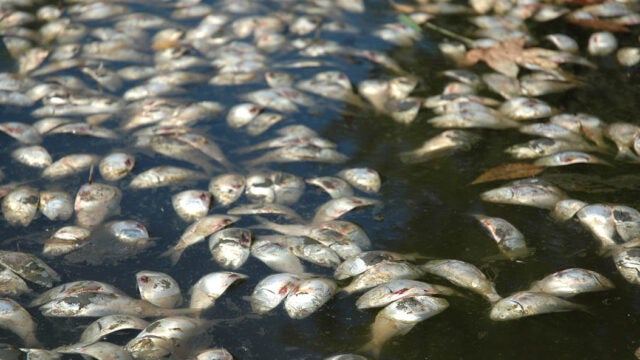
A new report predicts that this summer the Chesapeake Bay’s dead zone will be 33 percent smaller than average. Researchers from the Chesapeake Bay Program, the University of Maryland Center for Environmental Science, the University of Michigan, and the U.S. Geological Survey attribute the forecasted decline to the below average amount of water entering the Bay from the watershed’s tributaries this past spring, as well as decreased nitrogen and phosphorus pollution from jurisdictions within the watershed.
As a result of the Bay’s dead zone, areas of the Bay and its rivers do not have enough oxygen to support healthy aquatic life, including fish, blue crabs, and oysters. The algae blooms that cause the dead zone also cloud the water, damaging underwater grasses. In recent years, only a third or less of the Bay and its rivers have met water quality standards for dissolved oxygen, water clarity/SAV, and chlorophyll a.
Following the release of the prediction, Chesapeake Bay Foundation (CBF) Virginia Senior Scientist Joseph Wood issued this statement.
“A smaller dead zone is good news for the Bay’s living resources, but a large portion of the Bay will still lack enough oxygen to support healthy aquatic life. While the dead zone has been trending down over time, the primary driver behind the prediction of a smaller dead zone this summer is the amount of rainfall from January through May.
“Pollution from sewage treatment plants has been significantly reduced but reducing pollution from agriculture and urban/suburban runoff has been woefully inadequate. A recent report from leading Bay scientists identifies several reasons our efforts to reduce pollution from agriculture and urban/suburban stormwater have not met expectations, and strategies that can accelerate improving water quality and the health of the living resources in our rivers, streams, and the Bay. Bay leaders, Congressmen, Governors, legislators, and those working to restore the Bay must take this opportunity to heed the science and chart a new course for Bay restoration. The health of our rivers and the Bay should not depend on the amount of rain we are getting, which will only increase as a result of climate change.”
On Tuesday evening, Maryland Department of Natural Resources (DNR) released updates to the state’s oyster stock assessment that revealed the overall oyster population in Maryland waters increased due to recent boosts in oyster productivity. The abundance of market-sized oysters, those larger than 3 inches, was the second highest observed since 1999, with the highest concentrations found in the Choptank River region.
Despite this positive news, DNR noted that nine areas of the Bay continue to experience overfishing, harvesting at unsustainable rates that, over time, could lead to the decline or loss of oysters in those regions. This is an uptick from the 2021 assessment which indicated that four regions of the Bay were experiencing overfishing at the time. In addition, five regions are considered depleted, with the lowest oyster population levels recorded since 1999.
The stock assessment found that overfishing was continuing to occur in Tangier Sound, on the lower Eastern Shore. More than 90% of the 2022-2023 public oyster harvest was pulled from just 10 harvest areas in Maryland, with more than 60% coming from Tangier Sound and the lower Patuxent River alone.
In response, DNR officials put forth a proposal which would maintain the current oyster fishing regulations, pending the results of the upcoming fall oyster dredge survey which estimates oyster productivity and survival annually. This in-season management approach would be new for Maryland where oyster fishery regulations typically have not changed from year to year.
DNR must finalize the new management options prior to July 1.
The new assessment results come after scientists have recorded two years of above average spat set for oysters, which have improved the overall oyster abundance in the Bay. However, the increased abundance of oysters attracted increased fishing pressure, resulting in the two largest oyster harvests in the past 35 years. In the 2022-23 season, watermen harvested 620,000 bushels of oysters from public fishing areas, which was the largest recorded harvest since the 1986-87 season when watermen harvested 976,000 bushels.
Even with recent gains in oyster abundance, the number of oysters in Maryland’s portion of the Bay remains at a small fraction of the population before industrialization in the late 1890s.
CBF’s Maryland Executive Director Allison Colden issued the following statement in response to the stock assessment update:
“The dramatic increase in oyster harvests during the past two years comes as no surprise after several record years of oyster reproduction. We’ve seen this pattern before – without adequate controls on fishing effort, increases in the oyster population are quickly followed by increases in harvest and then declines in years where environmental conditions are less conducive for oyster productivity. Unfortunately, these boom-and-bust cycles undermine the long-term recovery of the species, by wiping out years of good productivity with increased harvest.
“However, fishing effort has not increased uniformly across the Bay. Of concern is a significant increase in fishing effort on Maryland’s most productive public oyster grounds, including Tangier Sound. In this region, the assessment indicated overfishing occurring for more than three years.
“Our best available science indicates that fishing rates like those seen in Tangier Sound, St. Mary’s, and the lower Patuxent River, are not sustainable. We are encouraged that DNR has proposed a more responsive approach to oyster management, based on the fall dredge survey, and urge them to consider further regulations that aim to end overfishing in the regions where it is occurring.
“It is critical to protect the oyster population gains made from strong spat sets during the past three years if we are to reverse the long-term trajectory of oyster decline. Oysters are a vital component of the Bay ecosystem that filter water and provide habitat and nursery grounds for fish and crabs. Despite the recent increases in oyster abundance, the current population remains far below levels needed to deliver these critical ecosystem functions.”
The Virginia State Air Pollution Control Board today approved the Youngkin Administration’s proposal to repeal the regulations that govern Virginia’s participation in the Regional Greenhouse Gas Initiative (RGGI). The proposal will now go through an executive review process by Gov. Youngkin before being published in the Virginia Register.
In 2020 Virginia joined RGGI as authorized by legislation passed in the General Assembly. This program, implemented in 12 Eastern states, sets a regional limit on carbon dioxide emissions from power plants. Each power plant must pay for each ton of CO2 it emits at quarterly auctions. The emissions cap lowers over time, leading to cleaner air and less pollution to waterways while reducing emissions that contribute to climate change.
The proceeds from RGGI’s auctions directly benefit Virginia’s residents: 45 percent of the revenue in Virginia from RGGI goes to the Community Flood Preparedness Fund, which supports resilience efforts from the Eastern Shore to southwest Virginia. The fund makes possible local resilience planning and dozens of local projects that prevent flooding and also reduce pollution to waterways by prioritizing nature-based resilience solutions. Additionally, 50 percent of the revenue in Virginia is dedicated to upgrading energy efficiency in the homes of Virginia families.
Chesapeake Bay Foundation Virginia Policy and Grassroots Advisor Jay Ford issued the following statement.
“Repealing RGGI will set back efforts to protect Virginia homes and businesses from flooding and slow down work to restore our rivers and streams.
“In just a few short years, RGGI is already working across Virginia to defend communities from flooding while reducing pollution to our air and water. Investment from RGGI is prioritized to nature-based projects that also filter pollution and create wildlife habitat.
“Participation in RGGI is more important than ever as climate change adds new challenges to Chesapeake Bay restoration. About one-third of the nitrogen pollution in the Chesapeake Bay comes from air pollution that eventually falls to the ground or water. Over time RGGI reduces the air pollution from power plants, which also reduces pollution to Virginia’s waterways.
“We are disappointed and considering all possible options for next steps.”
The University of Maryland Center for Environmental Science has released its 2022 Chesapeake Bay Watershed Report Card, which rated the overall health of the Chesapeake watershed with a grade of B-. While the report noted improvement in the health of Chesapeake Bay, scoring it a C, it also noted that “most tributaries scored poorly.”
The new Environmental Justice Index in this year’s report found “strong disparities,” with cities and rural areas experiencing higher impacts than suburban areas.
In response to the report, Chesapeake Bay Foundation President Hilary Harp Falk issued the following statement:
“While we are making progress, far too much pollution still reaches our waterways and climate change is only making matters worse. To accelerate the Bay cleanup, jurisdictions need to increase investments that address both pollution and climate change. Investing in regenerative agriculture, planting more trees and forest buffers, and expanding green infrastructure such as rain gardens and bioswales in urban areas are essential to long-term success and local quality of life.
“The disparities pointed out in the Environmental Justice Index are a stark reminder that the burden of pollution and its impact on human health and our quality of life are not borne equitably. It is essential that this information be used to address environmental injustices.
“Across the region, the majority of the pollution reduction necessary must come from agriculture. While it is critical that the U.S. Department of Agriculture increase conservation funding and technical assistance, a recent study from the Bay Program’s Scientific and Technical Advisory Committee has reinforced that more funding alone will not be enough. We can still leave clean water and a healthy environment to the next generation, but only if Bay leaders listen to the science, target efforts more strategically, and begin paying for the outcomes that matter most to local communities and the Bay downstream.”
On Thursday, the Maryland Department of Agriculture (MDA) announced plans to shift the process of creating nutrient management plans with farmers from one mostly under the agency’s control to a system based on private companies and farm entities.
The agency said it would prefer to use cost-share funds to pay industry professionals for nutrient management plan writing services and provide educational opportunities to train farmers to write their own plans.
At the Chesapeake Bay Foundation (CBF), we hope the agency will use this shift in the nutrient management process to improve environmental outcomes for local waterways, the Chesapeake Bay, and Maryland communities.
Nutrient management plans are intended to help farmers understand how much fertilizer they need to apply to meet crop-yield goals. The plans are designed to prevent fertilizer overapplication, which harms waterways when chemical fertilizers and animal manure containing nitrogen and phosphorus are washed into streams and rivers due to rainfall. Runoff from agricultural fields and urban areas is the primary obstacle to achieving Maryland’s Bay clean-up goals.
Maryland law requires farmers to adhere to the application limits prescribed by nutrient management plans, however there are few penalties for failing to do so and punitive penalties such as fines or judicial actions by regulatory agencies are rare. Due to privacy requirements, it’s very difficult for organizations outside state government to review nutrient management plans or their implementation.
In waterways, nitrogen and phosphorus pollution fuels algal blooms that reduce water clarity and remove dissolved oxygen, making waterways inhospitable to marine life. Algal blooms also limit residents’ ability to safely fish and swim in streams, rivers, and the Bay.
Agricultural activities in Maryland contributed an estimated 22.2 million pounds of nitrogen to the Bay, about 44 percent of the total amount of nitrogen that reached the Bay in the state. That amount was more than double any other nitrogen source, such as wastewater or runoff from urban and suburban development.
Agriculture has also been among the most difficult sources of pollution for governments and farmers to reduce. Since 2010, Maryland has reduced nitrogen pollution from agriculture by just 1.6 million pounds. Meanwhile, nitrogen pollution loads from wastewater treatment plants have nearly been halved, from 14 million pounds in 2010 to 8 million pounds in 2021, according to Maryland’s 2021 Chesapeake Bay Annual Progress report.
The ongoing struggles to reduce polluted runoff from farm fields illustrate potential problems with nutrient management plans that CBF believes MDA should address. The resulting effort from MDA, if done correctly, could be used elsewhere in other watershed states where agricultural pollution issues are even more intractable and have threatened the overall success of the Bay cleanup.
Chesapeake Bay Foundation’s Maryland Senior Scientist Doug Myers issued the following statement:
“We hope by shifting the creation of nutrient management plans to a more privatized system that MDA can focus on ensuring farmers are complying with the plans and connecting fertilizer use to water quality improvement goals for communities. The agency should use its authority under state law to enforce nutrient management plan violations to ensure compliance.”
“CBF also encourages MDA to examine loopholes that enable farms to apply polluting substances removed from permitted waste treatment facilities. These include solids removed from municipal wastewater plants and poultry processing facilities. MDA provides little transparency about what’s in these biosolids, which are classified as ‘soil amendments’. They are stored and applied to farm fields with no accountability.
“To remove potential conflicts from the process, CBF urges MDA to ensure that private operators creating nutrient management plans for farmers have no financial connection or affiliations with fertilizer companies or their subsidiaries. MDA’s continued oversight and expertise will be key to successful implementation of this new approach.”
“Ideally, nutrient management plans should assist farmers with reducing fertilizer use, which would benefit water quality and help farmers save money. However, water quality monitoring in areas dominated by agricultural use in Maryland has shown an increase in nitrogen and phosphorus pollution to the Bay. Throughout Maryland and the rest of the Bay watershed, the many policies aimed at reducing fertilizer use and preventing polluted farm runoff either aren’t being fully implemented or aren’t effective enough to improve water quality in nearby streams or rivers. It’s a major reason state and federal officials no longer believe Bay pollution-reduction goals can be met by 2025.
“This shift by MDA presents an opportunity to improve farm fertilizer management and develop a new model to address the intractable agricultural pollution problems harming Chesapeake Bay water quality.”
Today the United States Supreme Court released its decision in Sackett v. EPA. By significantly narrowing the definition of which wetlands and other waters are protected by the Clean Water Act, the decision could damage the decades-long effort to restore the Chesapeake Bay and its waterways.
Written by Justice Samuel Alito, the opinion rejects EPA’s authority to regulate wetlands unless they have a continuous connection to “navigable” surface waters such as a creek, stream, or river.
The decision means wetlands that are adjacent to surface waters but only directly connected underground, including thousands of isolated wetlands unique to the Bay watershed, lose protection from being dredged and filled without a permit. While the decision’s reasoning is unclear, wetlands that only flow during certain seasons of the year or after it snows or rains may have lost federal protection.
The ruling contradicts the definition of protected waters the Biden administration finalized in January. That definition restored protections for isolated wetlands and wetlands that do not flow year-round that the Trump administration repealed in 2020. The Biden administration’s definition also updated wetlands protections to reflect relevant Supreme Court case law and the latest science.
The watershed’s roughly 1.5 million acres of wetlands are critical to restoring the Bay and its tributaries across six states and the District of Columbia. Wetlands trap pollutants running off farmland, suburban parking lots, and city streets before they can reach the 111,000 miles of local streams, creeks, and rivers that empty into the Bay.
By absorbing storm surges and flood waters like sponges, wetlands protect coastal and flood-prone communities from climate change effects like sea-level rise and “sunny day” flooding that threaten lives, businesses, and property.
Maryland, Pennsylvania, and Virginia have state regulations that could offer some coverage for wetlands EPA can no longer regulate. But loopholes, waivers, and limited enforcement by state officials would leave many of these ecologically important wetlands at risk.
The danger is greater in Delaware and West Virginia, which both follow the federal definition of covered waters in lieu of establishing their own state protections.
Chesapeake Bay Foundation Vice President of Litigation Jon Mueller issued the following statement about the decision:
“This dangerous decision risks damaging decades-long efforts by multiple states, federal agencies, and local jurisdictions to restore the Bay and its waterways. States without strong wetlands protections could now abandon their Chesapeake Clean Water Blueprint responsibility to reduce nitrogen, phosphorus, and sediment pollution in those areas because they are no longer covered by the Clean Water Act.
“The Sackett ruling also ignores accepted science on the interconnected nature of wetlands. Isolated wetlands and wetlands that don’t flow continuously are among the wetlands critical to restoring and protecting water quality across the Bay ecosystem, protecting vulnerable communities from extreme weather, and improving our region’s climate resilience.
“Far from clarifying which waters are protected by the Clean Water Act, this ruling only sets us up for continued litigation and uncertainty while limiting our ability to protect and preserve the natural wonder we all treasure. The Bay, its tributaries, and the 18 million people living in its watershed deserve better.”
After reaching record low numbers last year, the Chesapeake Bay blue crab population is showing some signs of improvement in the 2023 Blue Crab Winter Dredge Survey results released today.
This year’s survey estimated total crab abundance at 323 million. That compares to the 227 million estimated in 2022, the lowest in the survey’s 33-year history.
The adult female crab population increased when compared with last year. While juvenile crab numbers improved slightly when compared to 2022, the juvenile population remained below average for the fourth year in a row. Male crab numbers showed only a slight improvement from last year’s all-time low numbers. Harvest levels for male crabs exceeded the conservation benchmark for the second consecutive year, raising concerns about whether such levels of exploitation could be sustained.
The Virginia Institute of Marine Science and Maryland Department of Natural Resources conduct this annual survey of the population of blue crabs in the Chesapeake Bay and its tributaries. Covering more than1,500 locations, the winter dredge survey is one of the most comprehensive studies of any species in the Bay, dating back to 1990. It is conducted jointly by Maryland and Virginia from December through March.
Chesapeake Bay Foundation Senior Regional Ecosystem Scientist Chris Moore issued this statement:
“While this year’s numbers show some signs of recovery in the Bay’s blue crab population, there is still plenty of cause for caution. Because the blue crab population fluctuates annually due to a variety of factors, we hope the improvements observed this year continue over the long term.
“The recent decline in the Bay’s underwater grasses is likely contributing to low blue crab numbers, as well as pollution and predation by invasive blue catfish. Long-term recovery of the Bay’s blue crab population will only be possible through continued wise management of the fishery, combined with actions to improve water quality and address predation from invasive species in the Bay.
“Due to continued low numbers of male crabs, both states should, at a minimum, maintain measures put in place last year that sought to protect male crabs. States should also consider additional actions, including pot tagging, which assists in the enforcement of blue crab fishery regulations. Although both states currently have limits on the number of pots watermen can set, these numbers are largely unenforceable, leading to numerous concerns about the amount of crabbing gear in the water. Pot tagging would help the states enforce these limits.”
Editor’s Note: The new 31-inch maximum size limit for striped bass will take effect by July 2. The action will not change limits during Maryland’s 2023 spring trophy season for striped bass. This is due to challenges in immediately implementing a new limit for a season already underway.
Recreational fishing pressure on striped bass increased in 2022 along the Atlantic Coast even as the population is struggling to recover from a dramatic decline, according to the latest update from the Atlantic States Marine Fisheries Commission (ASMFC). Increased fishing effort significantly decreased the probability of striped bass numbers reaching the target for a healthy population by the 2029 rebuilding deadline.
In response, ASMFC today took two actions that seek to reduce fishing effort and get striped bass rebuilding back on track. First, the ASMFC Atlantic Striped Bass Management Board voted unanimously to initiate a new Addendum intended to reduce mortality in both the recreational and commercial fisheries by considering changes to recreational size limits, season closures, and maximum size limits. The ASMFC is expected to take up the addendum later this year.
In the second action, the Board voted to implement an emergency action to decrease the maximum size limit for most striped bass fisheries to 31 inches for the next 180 days. After 180 days, the Board will have the option to end or extend the emergency action.
The Chesapeake Bay Foundation (CBF) supports these actions by ASMFC to ensure the comeback of this iconic fishery.
Due to a significant decline in adult female striped bass numbers, an indicator of the overall health of the population, the ASMFC sought to reduce the striped bass mortality along the Atlantic Coast by 18 percent beginning in the 2020 fishing season. Despite this action, the ASMFC technical report presented today showed increased recreational fishing pressure on striped bass up and down the Atlantic Coast.
This action comes after last year’s annual survey of the juvenile striped bass population in the Chesapeake Bay showed below average numbers in Maryland for the fourth consecutive year and average numbers in Virginia.
CBF Senior Regional Ecosystem Scientist Chris Moore issued the following statement.
“Recreational fishing pressure on striped bass is increasing just as the population is struggling to recover. Fish that are caught and released can die, especially if released in the summer when water temperatures are high and oxygen levels are low.
“The ASMFC’s actions come after four consecutive years of poor spawning for striped bass. Based on this year’s warm, dry spring, we are on track for similar results in 2023. Invasive species proliferating in the Bay watershed, including blue catfish and Northern snakeheads, add to the challenge by preying on young striped bass.
“Given the increased fishing pressure and sluggish recovery of the striped bass population, CBF supports the immediate and mid-term actions ASMFC is taking to reduce striped bass mortality and get rebuilding back on track.”
Chesapeake Bay Foundation (CBF) President and CEO Hilary Harp Falk praised Sen. Ben Cardin’s unparalleled record of success fighting for a cleaner, healthier Chesapeake Bay ecosystem. Maryland’s senior senator today announced his plans to retire next year rather than run for a fourth Senate term.
Sen. Cardin has been a champion for the region’s greatest national resource since he began his public service career in 1967 in the Maryland House of Delegates, the same year CBF was founded. In 1987, he was elected to represent the state’s third congressional district in the U.S. House of Representatives. In 2006, he was elected to represent Maryland in the U.S. Senate.
From his work on the original Chesapeake Bay Agreement in the early 1980s to his recent success securing reauthorization and historic increase in funding for the federal Chesapeake Bay Program, Sen. Cardin has never wavered in his commitment to saving the Bay and its tributaries.
Sen. Cardin has worked tirelessly to boost funding to restore oyster populations in the Bay and major Maryland tributaries such as the Tred Avon River. He also has been an enthusiastic supporter of education programs that give students the chance to learn about the Bay through hands-on, outdoor experiences.
In more than 35 years in Congress, Sen. Cardin has helped steer tens of millions in federal funds to Bay research and restoration efforts as well as federal clean water initiatives. He recognizes that saving the Bay requires a multi-state effort and has worked tirelessly to collaborate with other elected officials in the watershed to advocate policies to benefit the entire region.
As a senior member of the Senate Environment and Public Works Committee, Sen. Cardin has led the fight to increase federal investment in modernizing the nation’s deteriorating wastewater, drinking water, and stormwater treatment infrastructure.
Chesapeake Bay Foundation President and CEO Hilary Harp Falk issued the following statement praising Sen. Cardin’s decades of advocacy for the Bay, its waterways, and clean water for the nation:
“Sen. Cardin has been a fierce advocate for the Bay and the people who love and depend on it for more than fifty-five years. His career has been one important legislative victory for clean water after another.
“Whether advocating for Maryland fisheries, promoting environmental education, or ensuring federal support for Bay research and restoration, Sen. Cardin is a true Chesapeake Bay champion.
“The Chesapeake Bay Foundation salutes his enduring commitment to restoring and protecting this national treasure and economic engine. We will be forever grateful for his leadership and dedication to our beloved Bay.”
Virginia menhaden industry officials last week signed a non-enforceable agreement with the Virginia Marine Resources Commission (VMRC). Under the memorandum of understanding, the menhaden fishery would limit fishing operations on summer weekends and holidays and within one mile of the shore in some of Virginia’s portion of the Chesapeake Bay.
This follows VMRC’s failure to approve proposed regulations on Virginia’s menhaden purse seine fisheries last December, opting instead to propose the agreement that was signed last week.
Omega Protein is the primary harvester of menhaden in the region. Spills sometimes occur when purse seine nets snag, tear, or otherwise malfunction, sending dead fish into the water and sometimes onto nearby shorelines and beaches.
Last year several net spills by Omega Protein resulted in thousands of dead menhaden and about 12,000 pounds of red drum fouling beaches on Virginia’s Eastern Shore. Net spills before busy holiday weekends have hurt the tourism economy in Coastal Virginia communities.
Chesapeake Bay Foundation Senior Regional Ecosystem Scientist Chris Moore issued the following statement.
“Omega Protein has time and again fought against a commonsense approach to the management of this fishery. Omega Protein violated the Chesapeake Bay harvest cap in 2019, opposed legislation this past General Assembly Session that would have provided much-needed data on the menhaden population, and successfully lobbied against enforceable regulations last fall that would have reduced user conflicts and net spills.
“Omega Protein’s net spills of menhaden are an alarming waste of a precious food source for striped bass, dolphins, osprey, and other wildlife. Science on the menhaden population in the Bay is still lacking, and more data is needed to better manage Virginia’s menhaden fishery.
“We appreciate this step by the Youngkin Administration and VMRC towards addressing the threats caused by Omega Protein’s net spills. CBF will continue to advocate for protecting the enormous ecological value of Virginia’s menhaden population.”
