A Mixed Bag for Menhaden, but More Opportunities Ahead
A debrief on efforts to protect the Bay’s most important fish in the 2026 Virginia legislative session.
The coordinated influence of the Atlantic Coast’s largest industrial fishery once again prevented the Virginia legislature from passing meaningful conservation measures for menhaden, a small fish that is a foundational part of the Chesapeake Bay ecosystem. But as warning signs mount for both menhaden and the species that depend on them, the narrative is starting to shift—even if the votes haven’t.
For a quick refresher, menhaden are a key prey for species like striped bass, red drum, osprey, dolphins, and humpback whales. They are also the target of Omega Protein, the Atlantic Coast’s only remaining reduction fishing operation, a type of fishing that catches and grinds down millions of wild menhaden into fishmeal and fish oil for use in other industries. A number of warning signs suggest the population is under stress, including:
- Small scale watermen who catch menhaden for bait have seen their catches decline by more than 80 percent, negatively impacting the Bay’s blue crab fishery.
- New coastwide science found the population of menhaden is nearly 40 percent smaller than previously estimated.
- Osprey chicks in parts of the Bay where the birds depend on menhaden are starving to death, and reproduction rates are worse than the height of the DDT crisis.
- Despite this, scientific research to understand menhaden in the Bay has repeatedly been delayed by Omega Protein and their Richmond lobbying firm, McGuireWoods.
Numerous bills aimed at improving menhaden management were introduced during the 2026 Virginia legislative session. Industry influence defeated most of them. Fortunately, though, prospects for Chesapeake Bay menhaden research remain a possibility, and support for reforms is growing.
The Menhaden Bills CBF Advocated for in 2026
The Chesapeake Bay Foundation supported three pieces of legislation and a budget amendment focused on protecting the Bay ecosystem and the economies that depend on it.
- HB1048 would have closed the Chesapeake Bay to industrial reduction fishing until science can confirm there are no negative impacts on the ecosystem or other fisheries. The measure still allowed for reduction fishing in the ocean, with no decrease to what the industry could catch and process, but the Chesapeake Subcommittee rejected it after substantial industry opposition.
- HB1049 proposed more moderate reforms by creating seasonal quota periods in the Bay and requiring independent observers on 10 percent of reduction fishing trips. The bill did not reduce the overall harvest quota; it simply aimed to prevent concentrated industrial extraction in the Bay by spreading the fishing pressure more evenly throughout the season and to improve fishery monitoring and data collection. The bill passed the House Chesapeake Subcommittee with a 7–3 vote and the full House Natural Resources Committee 12–10, marking the first time a menhaden bill advanced this far since 2020. To our frustration, HB1049 was ultimately left in the House Appropriations Committee without even a hearing before the crossover deadline.
However, during the committee meeting, Chairman Alfonso Lopez shared a refreshing comment: “This body takes action when problems appear,” he said. “We asked VIMS [the Virginia Institute of Marine Science] to study this issue, and we believe it was blocked for several different reasons . . . that’s why it’s here now.” - SB474, which would have established an Atlantic Menhaden Research Fund, was unanimously punted to the 2027 session by the Senate Finance Committee. It would have set up a fund for future menhaden research and to protect workers in the menhaden industry in Reedville.
- Budget Amendment 145 #2h is the one surviving measure. It allocates $2 million for menhaden research needed to inform sustainable management in the Chesapeake Bay specifically. Research will be led by VIMS in partnership with the Virginia Marine Resources Commission. Studies may examine menhaden abundance, movement between the Bay and ocean, predator demand, fishing patterns, and potential localized depletion. Virginia’s workforce and economic development departments will also analyze potential future economic impacts of changing menhaden dynamics—i.e. what happens to the workers of Reedville if menhaden trends worsen.
This body takes action when problems appear. We asked VIMS to study this issue, and we believe it was blocked for several different reasons . . . that’s why it’s here now.
Alfonso Lopez, Chairman of the House Agriculture, Chesapeake, and Natural Resources Committee
The General Assembly will reconvene later in April to finalize a budget for the Commonwealth. In a recent interview, Virginia Speaker Don Scott indicated his support for menhaden research to inform policy decisions. CBF is working to ensure the menhaden research funding survives negotiations.
What’s Next for Menhaden?
There are more than enough indicators that the Chesapeake Bay ecosystem needs more menhaden in the water to flourish. That’s why CBF still believes the safest course of action is to pause industrial reduction fishing inside the Bay until science determines whether concentrated, high-volume menhaden extraction is negatively impacting the Bay.
Despite the legislative setbacks this session, momentum is growing. According to bipartisan public opinion research, Virginians overwhelmingly support menhaden conservation; it found 92 percent of voters want more menhaden left in the Bay. And there was a noticeable shift in legislator and stakeholder interest in this critical issue.
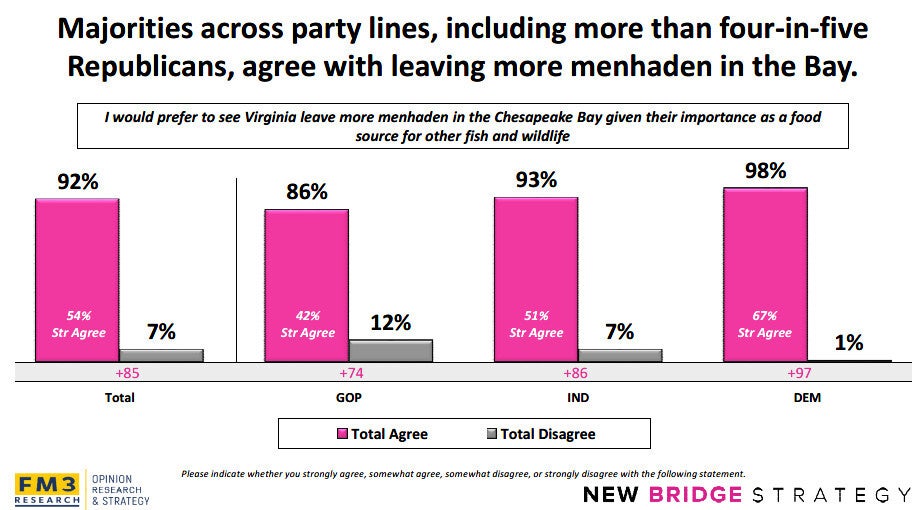 FM3 Research and New Bridge Strategy
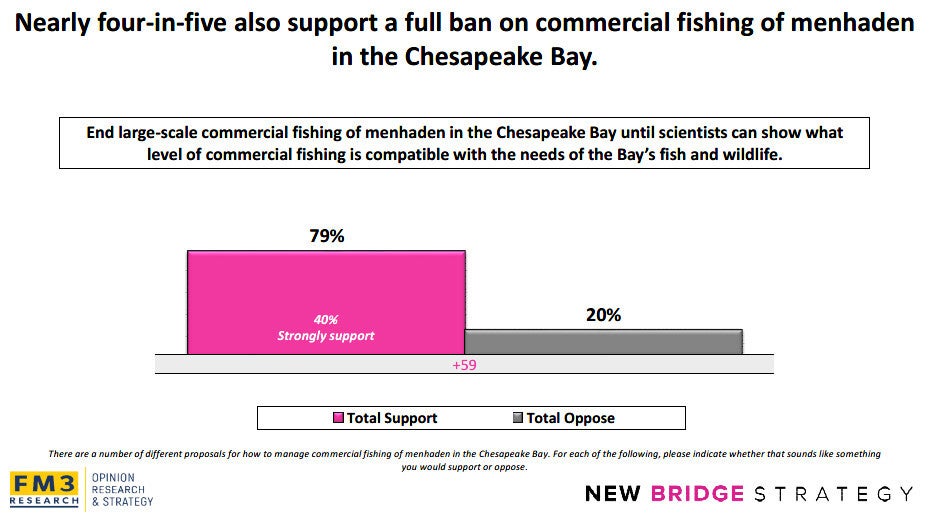 FM3 Research and New Bridge Strategy
A couple of promising opportunities are still on the table in 2026, including:
- Funding for menhaden research. Virginia funding for Bay-focused menhaden science remains uncertain until the budget is finalized, but a January 2026 federal appropriations bill included funding for Atlantic menhaden research. That funding will flow to the Atlantic States Marine Fisheries Commission (ASMFC), but the details and timelines are not yet clear. Virginia funding, however, is still critical because it will be deployed to research faster, and the federal funding is not enough to complete the scope of research needed.
- Menhaden management reforms through ASMFC. Draft Addendum II, initiated in October 2025, will address Chesapeake Bay menhaden management concerns and is expected to be approved for public comment at the May meeting of the ASMFC, which manages menhaden coastwide. This management action could reduce the Chesapeake Bay reduction fishery catch limit (the “Bay Cap”) by up to 50 percent and implement quota periods to better distribute fishing effort throughout the year. Modifying the Bay Cap does not affect the industry’s coastwide catch limit, a common point of confusion and misinformation.
Here in the Chesapeake Bay, where menhaden science remains “woefully inadequate,” according to VIMS, these reforms represent a risk-averse strategy in response to intensifying ecologic warning signs.
CBF will share advocacy materials and more information for Draft Addendum II later this spring. So stay tuned on how to get involved and support a healthier Bay with more menhaden!
Find out more about menhaden, their importance, and the challenges they face at savemenhaden.org.
Related Stories
-
 Blog Story
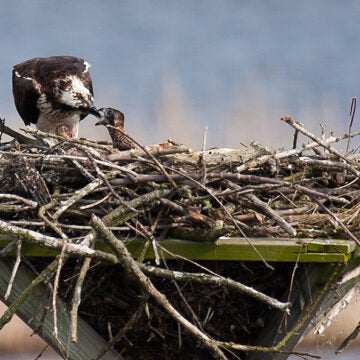
How Many More Osprey Chicks Must Starve to Death?
Some of the Chesapeake Bay’s best fishermen—osprey—are sending a loud warning: There aren’t enough fish in the Bay. It’s time to act.
-
 Blog Story
Coming Up Empty: Commercial Watermen in Maryland are Finding Fewer Menhaden
Commercial bait fishermen, who supply menhaden to other fisheries like blue crabs, are stretched thin as it gets harder to find fish.
