Chesapeake Bay Advocates Urge Maryland Leaders to Support Bay Funding and Policies While Serving Fresh-Shucked Oysters
Event attendees were urged to protect oyster sanctuaries and restoration funding this General Assembly session.
This week, advocates demonstrated the multiple benefits of clean water for seafood, local jobs, and healthy communities by serving fresh oysters to Maryland legislators on Lawyers Mall in Annapolis. Legislators are currently considering agency budgets and proposed legislation that are critical to our progress to restore and clean up the Chesapeake Bay.
At the event, dozens of lawmakers and members of the Moore/Miller administration enjoyed both raw and roasted oysters grown by Maryland aquaculture company, Fallen Pine Oyster Co., and shucked by Chesapeake Bay Foundation (CBF) staff and partners.
“Protecting oysters are a big part of having a healthy Bay,” said Captain Iris Robertson, a CBF advocate who attended the event. “I’m here to lend my voice and encourage legislators to do the right thing and vote for our environment. Being pro-environment is also being pro-health, not only for the Bay but for the people who live here.”
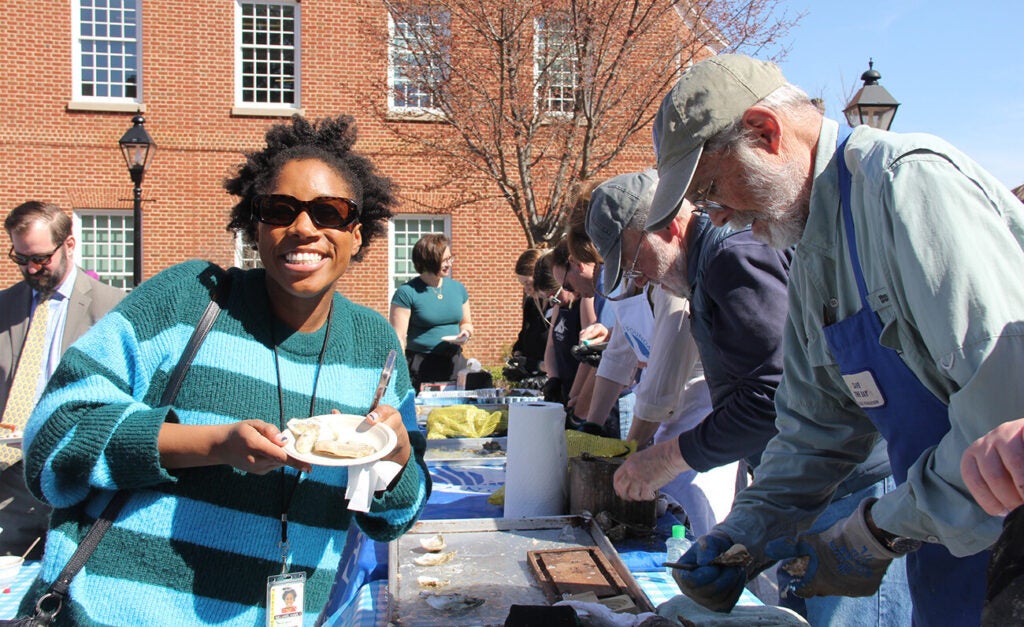 CBF Staff
On March 9, the state announced another strong year of oyster reproduction — the second highest spat count since 1985. These results show that oyster restoration is working and Maryland should continue its momentum and build off its proven success.
Oysters have both ecological and economic benefits to the state. A single adult oyster can filter up to 50 gallons of water a day. Meanwhile, Maryland’s seafood industry contributes roughly $600 million annually to the state’s economy and sustains thousands of jobs. Maryland’s recreational fishing industry contributes nearly $20 billion total economic impact annually. Protected and restored oyster reefs strengthen these industries by improving water quality, increasing biodiversity, and providing habitat for beloved species like blue crabs and striped bass.
“We cannot risk backsliding on Maryland’s promise to the Bay,” said Allison Colden, CBF Maryland Executive Director. “Oysters protect clean water, coastal communities, and local economies. That’s why legislators must reject cuts to restoration funding and harmful proposals to allow harvest on protected oyster sanctuary reefs.”
While serving oysters at the event, advocates urged legislators to:
- Fully fund key environmental programs and agencies budgets that help reduce pollution from entering the Bay. Programs such as the Chesapeake and Atlantic Coastal Bays 2010 Trust Fund and Clean Water Commerce program directly support oyster growers, farmers, and other businesses;
- Reject a potential 41% reduction to oyster restoration in the Department of Natural Resources (DNR)’s capital budget. These state investments are essential to protecting Maryland’s coastal communities, economy, and to meet our Chesapeake Bay clean up goals;
- Oppose legislation that would weaken protections for oysters, including a proposal (HB1388/SB0875) to allow harvesting of over 50,000 acres of protected oyster sanctuaries, including sanctuaries that are slated to receive significant state restoration investment;
- Oppose legislation that could jeopardize key fish species such as striped bass, including a bill to allow blue and flathead catfishing with gill nets (HB947/SB0610), which can capture and kill other species that encounter them, as well as a bill that would counteract DNR’s efforts to improve the state’s striped bass fishing seasons (SB755).
Oysters were provided by Fallen Pine Oyster Company, an aquaculture operation based out of Chincoteague, Maryland.
Related Stories
-
 Blog Story
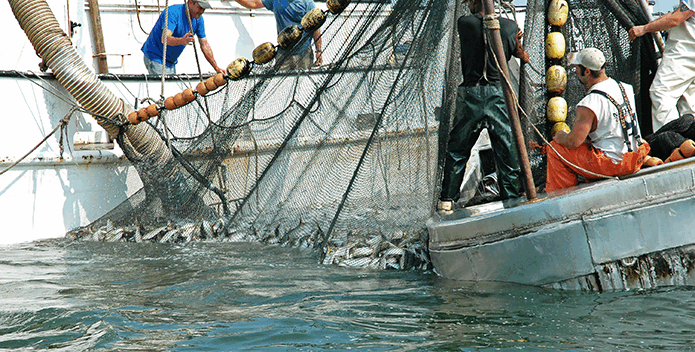
To Save the Chesapeake Bay, Save This Fish
Saving menhaden helps save the bay. Now, evidence of a crisis is impossible to ignore.
-
 Blog Story
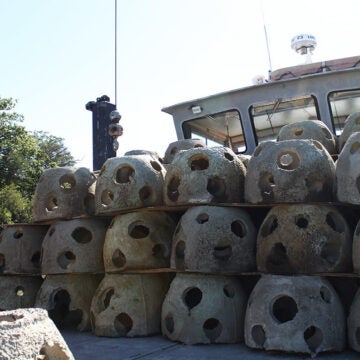
Field Notes: Building an Oyster Reef
Over the course of the summer, CBF built an oyster reef as part of a larger project to restore and protect an eroding shoreline along Maryland's South River.
