Press Statement
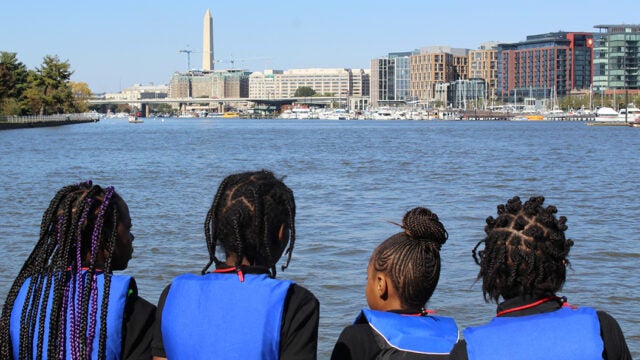
President Trump today proposed a fiscal year 2026 budget that would devastate the federal government’s ability to lead efforts to restore the Chesapeake Bay and its rivers and streams.
For decades, restoring the Chesapeake Bay has relied on resources and strong leadership from multiple federal agencies working in partnership with the six watershed states and Washington, D.C.
The president’s proposed fiscal year 2026 “skinny” budget—which he is expected to provide further details on in the coming weeks—would gut funding for key federal agencies involved in Chesapeake Bay restoration, and eliminate resources that support joint state and federal cleanup efforts.
The proposed budget also targets cuts towards many programs focused on climate change research, environmental injustices, and diversity, equity, and inclusion (DEI) efforts.
The budget would slash the Environmental Protection Agency’s (EPA) funding by $5 billion, or 54.5 percent—reducing it from $9.1 billion this year to $4.2 billion in fiscal year 2026.
Roughly half of the cuts—about $2.46 billion—would cripple loan programs that help states upgrade water treatment infrastructure to reduce nitrogen and other pollutants harmful to the Bay and its rivers and streams.
An additional $1 billion in cuts would eliminate numerous state grant programs, including those that Bay states rely on to improve local water quality, reduce polluted runoff, and meet their Bay cleanup commitments.
The Trump Administration’s fiscal year 2026 budget would eliminate $1.3 billion in National Oceanic and Atmospheric Administration (NOAA) grants and research, targeting climate and education programs.
These funds help NOAA’s Chesapeake Bay Office conduct work and research that restores and protects native species like oysters, blue crabs, and striped bass, and improve climate resilience in the region. They also fund hands-on environmental education through the Chesapeake Bay Watershed and Training (B-WET) program, helping to cultivate the next generation of Bay stewards.
Also slated for major cuts is funding for the U.S. Geological Survey (USGS). Trump’s fiscal year 2026 budget calls for slashing $564 million from USGS surveys, investigations, and research programs—eliminating climate-related work “to instead focus on achieving dominance in energy and critical minerals.” The Bay states and the federal government rely on USGS’s data to meet water quality goals and inform strategies for protecting the Bay region’s lands, waterways, fish, and wildlife.
The budget also cuts technical assistance and personnel at the U.S. Department of Agriculture (USDA) who work with farmers to implement conservation practices. Many USDA conservation programs have waitlists, as farmers seek to implement practices like planting trees along streams, rotating grazing land, and fencing livestock out of streams. Cutting these programs would be detrimental to state and federal restoration efforts.
Chesapeake Bay Foundation (CBF) President and CEO Hilary Harp Falk issued the following statement:
“The White House’s proposed budget would unravel decades of partnership and progress restoring the Bay and local waterways. The federal government must lead Bay cleanup efforts and support state restoration work—not undermine it.
“These proposed cuts would leave already-strapped states struggling to meet their clean water commitments and manage natural resources. The budget would choke off essential restoration funding—including efforts to rebuild oyster populations and help farmers reduce polluted runoff. It would also virtually eliminate cutting-edge research and data collection critical for restoring water quality and building climate resilience.
“It’s not too late to stop these draconian cuts. Everyone who loves the Bay should tell Congress to reject the dangerous rollbacks in the White House budget. The Bay, its waterways, and the nearly 19 million people living in the Chesapeake region deserve better.”
The Trump administration plans to propose deep budget cuts and program closures at the National Oceanic and Atmospheric Administration (NOAA) in its budget for next year. This would devastate NOAA’s work helping to restore the Chesapeake Bay, manage the Bay’s fisheries, and educate the next generation of Bay stewards.
The plan, outlined in a leaked White House memo and press reports, would slash NOAA’s total budget by $1.7 billion, or 27 percent, from the current level of $6.1 billion to $4.5 billion in fiscal year 2026.
The budget for the National Marine Fisheries Service (NMFS), the NOAA agency that manages fisheries and protects marine ecosystems, would be cut roughly 30 percent, from $1.1 billion currently to $789.3 million in fiscal 2026.
The White House would move NMFS fisheries and marine species protection functions to the Interior Department’s Fish and Wildlife Service and direct what remains of NMFS to prioritize permitting energy development projects like offshore drilling.
The plan also calls for zeroing out funding for NOAA’s Office of Education and effectively eliminating its Oceanic and Atmospheric Research.
NOAA’s Chesapeake Bay Office is a key partner in Chesapeake Bay restoration, leading work and science across the region that protects fisheries, improves climate resilience, and supports high-quality environmental education. Housed within NMFS, the Bay Office coordinates closely with the EPA’s Chesapeake Bay Program on Bay restoration work across the watershed.
NOAA’s Bay Office provides the science and technology to protect oysters, blue crabs, striped bass, and their habitat—fisheries vital to the Bay ecosystem and the region’s economy. NOAA’s research and science are critical to protecting homes and businesses from flooding and extreme storms due to climate change.
The Chesapeake Bay is home to the largest and most successful oyster reef restoration projects in the world, thanks to NOAA’s expertise, leadership, and investment. The NOAA Chesapeake Bay Office’s expertise is essential to implementing large-scale oyster restoration projects that boost the native oyster population, improve water quality, promote biodiversity in the Bay and tidal tributaries, and support the seafood industry.
NOAA’s Bay Office also administers the Chesapeake Bay Watershed Education and Training (B-WET) environmental literacy program. Chesapeake B-WET gives students and educators the tools, resources, and funding to learn first-hand about local environmental issues, the natural wonders of the Bay ecosystem, and how to protect it.
Chesapeake Bay Foundation (CBF) Senior Vice President for Programs Alison Prost issued the following statement:
“Dismantling and defunding NOAA would be an incredible blow to the Chesapeake Bay.
“NOAA’s science is critical for restoring oyster reefs, managing commercially important fisheries like blue crabs, and protecting our region’s homes and businesses from climate change.
“This attack on NOAA jeopardizes what we know works best for restoration: world-class science, innovation, and a strong partnership between the states and federal government. Now is the time for everyone who loves the Bay to speak up and urge Congress to protect NOAA from these dangerous cuts.”
CBF Vice President for Education Tom Ackerman issued the following statement:
“It will be up to the next generation to ensure a future with clean air, clean water, and a healthy Chesapeake Bay.
“NOAA has helped connect countless students with the world around them, from paddling a canoe to walking through the marsh or using state-of-the-art scientific tools to measure local water quality.
“These programs help prepare students to solve the complex problems of tomorrow. Environmental education is a smart investment for the future, not just a line item to delete from the budget.”
A Trump Administration memo issued Feb. 26 spells disaster for the Chesapeake Bay, directing federal agencies to prepare for mass layoffs. The Trump Administration yesterday also announced a 65 percent cut to the Environmental Protection Agency’s budget.
Since the first Chesapeake Bay Agreement in 1983, the federal government has worked with states to reduce pollution to the Chesapeake Bay, with the EPA acting as lead federal partner. Because pollution to the Bay crosses state lines, strong federal leadership has been crucial to bringing states together for a healthier Bay. This has resulted in successes that range from the return of historic oyster reefs to massive cuts in pollution from sewage treatment plants.
The federal government’s role in Chesapeake Bay restoration is a statutory requirement, as enshrined in section 117(g) of the Clean Water Act.
Recent federal actions that threaten the Chesapeake Bay include:
- The federal freeze on grant funding, which has halted projects around the Chesapeake Bay watershed. The majority of federal investment in Chesapeake Bay restoration goes to states and communities through grants, which support everything from farmers installing conservation practices, to projects that reduce flooding in cities, to work on the ground by local organizations.
- Unprecedented reductions to the federal workforce, including through buyouts, layoffs, and the proposed mass firings outlined in the Feb. 26 memo. These are leading to a major loss of expertise and knowledge from federal agencies, including EPA, NOAA, and the USDA.
- Significant proposed budget cuts to federal agencies. While EPA is charged with leading and coordinating federal involvement, many federal agencies play a vital role in the comprehensive Bay cleanup.
CBF President and CEO Hilary Harp Falk issued the following statement.
“The Trump administration has rolled out an existential crisis for the decades-long Chesapeake Bay restoration effort. Taking a wrecking ball to federal agencies and grants not only cripples progress, it will leave future generations with air choked by emissions, fouled beaches where it’s unsafe to swim, and empty tables at crab feasts.
“Cuts to federal programs risk destroying more than 40 years of collaborative federal/state efforts to restore the Chesapeake Bay—a national treasure. Predating many of our nation’s bedrock environmental policies, science-based efforts to restore the Bay are heralded as an international model of restoration and conservation success. If what’s happening here is any indication, the rest of our nation’s waters are in jeopardy.
“Hollowing out agencies and defunding grant programs wreaks havoc far beyond the federal government. States will face major budget shortfalls, critical scientific research will stop, farmers will be stuck with out-of-pocket expenses the federal government promised to pay, and many local nonprofits may cease to exist. These are the groups doing the valuable work of restoration—planting trees at churches and neighborhood playgrounds, testing water quality to let residents know if it’s safe to swim, and performing countless other invaluable services for their communities.
“The Chesapeake Bay cleanup is not only historic; it is legally mandated. The Clean Water Act specifically requires the federal government to coordinate Chesapeake Bay restoration, pulling together six states working together for healthy waterways, thriving communities, and strong local economies.
“Leadership is more important than ever as the federal/state Chesapeake Bay Agreement is revised this year. A goal of that process is to make restoring the Bay more efficient and effective in the face of challenges from climate change, population growth, and growing sources of pollution.
“Pollution is costly—to our environment, our health, our livelihoods, and our future. After so much progress, ending investments in clean water now ends the promise of leaving a vibrant Chesapeake Bay ecosystem and related economies to the next generation.
“We cannot allow a healthy Chesapeake Bay to be a casualty of misguided efforts to root out waste. The Chesapeake Bay is not a waste. The health and wellbeing of the 18 million people who live here is not a waste. The thousands of amazing and unique species that depend on it are not a waste. Our culture and way of life are not a waste. Losing decades of progress, undermining science, destroying an effective federal/state partnership, and jeopardizing our future—that’s not just a waste, it’s a tragedy.
“It’s never been more important to band together. We are restoring waterways, finding solutions, and creating healthier communities. The effort to save the Bay has always been fueled by the people who love this place. Now, it will take all of us to stand up for it.”
Plans demonstrate commitment to Chesapeake Bay restoration and a Climate-Ready Commonwealth
Virginia lawmakers recognized the strong connection between thriving, healthy Virginians, a cleaner environment, and robust living resources with their proposed budget amendments released Sunday.
The Virginia House and Senate money committees unveiled their separate proposed spending plans Sunday. These plans make amendments to the budget previously pitched by Governor Youngkin.
The budget reports support a host of CBF initiatives including climate readiness following another year of record-breaking and costly extreme weather, investments in environmental education, and investments in cleaner water and air for future generations.
A conference committee of legislators will now negotiate a single set of budget amendments, which will need approval from Gov. Glenn Youngkin before becoming law.
Creating a Climate-Ready Commonwealth
- The Senate budget commits an additional $50 million dollars in general funds to the Community Flood Preparedness Fund, which is Virginia’s only dedicated climate change adaption program. The Community Flood Preparedness Fund has helped communities around the Commonwealth begin to adapt to flooding and sea level rise.
Advancing Environmental Education
- The House budget includes an investment of $1 million annually to support statewide competitive environmental education experiences grant program: This ensures that Virginia’s youth meet state education standards and stay on par with neighboring states. The state’s current investments of just 30 cents per student in environmental education lags significantly behind neighboring states, falling 89.2% below Maryland ($2.78 per student) and 48.3% less than Pennsylvania (58¢ per student).
Cleaner Water for Everyone
- Each chamber’s proposed budget includes significant investment in the state’s Stormwater Local Assistance Fund (SLAF) with the Senate recommending $40 million and the House $50 million: Runoff from roofs, sidewalks, and roadways is a major source of harmful pollutants reaching our waterways. SLAF provides matching grants to localities for projects that reduce polluted runoff, such as stream restoration, rain gardens, and other retrofits.
- The House budget committed an additional $48 million to fully fund wastewater treatment plant upgrades and $26 million to ensure we can fund agricultural best management practices in the years ahead: Practices like fencing cattle out of streams, planting streamside trees and grasses, and many others are the most cost-effective steps Virginia can take to restore the Chesapeake Bay and local streams. At the same time, many of Virginia’s sewage treatment facilities have made important progress in nutrient reductions in recent years due to investments made by the General Assembly.
Chesapeake Bay Foundation Virginia Policy Manager Jay Ford released the following statement:
“Whether it’s from the Eastern Shore or Southwest Virginia, communities are calling for help in dealing with extreme storms, flooding, and pollution. We need ramped up resources to proactively tackle extreme weather and ensure cleaner rivers and streams for the long-term health of our children and our economy. Dollars spent in these areas pay back in dividends either through reduced public health costs, increased quality of life and tourism, less disaster recovery spending, and sustainable billion-dollar Virginia fisheries.
“These budget proposals illustrate a dedication to a more sustainable and resilient future for Virginia. By prioritizing climate readiness, investing in environmental education, and protecting our natural resources, lawmakers can approve a budget that demonstrates their commitment to Virginians’ health and a thriving economy.”
After a remarkable career improving the Baltimore Harbor and Chesapeake Bay, Laurie Schwartz has announced her retirement from the Waterfront Partnership of Baltimore (WPB). Schwartz has served as president of WPB since the organization was founded nearly 20 years ago. She will officially retire on WPB’s 20th anniversary in June.
The Chesapeake Bay Foundation (CBF) is honored to have worked with Schwartz on Baltimore Harbor initiatives including creating the Harris Creek Rain Garden and the Great Baltimore Oyster Partnership—a collaboration between CBF and WPB to grow oysters in the Harbor and engage community members in large-scale oyster restoration.
Carmera Thomas-Wilhite, CBF’s Vice President for Diversity, Equity, Inclusion & Justice, previously served as WPB’s Healthy Harbor Program Manager under Schwartz’s leadership, and currently serves on the Waterfront Partnership’s Board.
To congratulate Schwartz, Thomas-Wilhite issued the following statement:
“Laurie Schwartz has been a true champion for Baltimore. When I joined WPB in 2016, Laurie welcomed me immediately to her small and mighty team. Together, we worked to build equitable practices for the organization. I am honored to have learned from her and congratulate Laurie on her retirement on the 20th year anniversary of Waterfront Partnership.”
The Chesapeake Bay Commission this week announced that it has elected Maryland Senator Sara Love as its next chair. Love takes over from outgoing Chair Virginia Delegate David Bulova. The Chesapeake Bay Commission is a tri-state legislative body that works with state legislatures in Pennsylvania, Maryland, and Virginia on Chesapeake Bay restoration policy.
Sen. Love represents part of Montgomery County in the Maryland General Assembly. She has sponsored and supported legislation critical to the health of the Chesapeake Bay, including the Whole Watershed Act, which will target restoration investments to high priority watersheds, updates to the Forest Conservation Act to preserve more trees, and legislation establishing stronger regulations controlling the transport and use of industrial sludge.
The Bay Commission also announced this week that it elected Pennsylvania Senator Gene Yaw to chair the Pennsylvania Delegation and Virginia Del. David Bulova to chair the Virginia Delegation of the Commission.
CBF President and CEO Hilary Harp Falk issued the following statement.
“We’re entering a critical year for the Chesapeake Bay. With the Chesapeake Bay Agreement set to be updated by the end of 2025, the Bay Commission will continue to serve a key role in leading collaboration across state lines while ensuring all voices are heard.
“Senator Love is a strong leader with a stellar track record on Bay issues. We congratulate her on being elected chair of the Chesapeake Bay Commission, as well as Delegate Bulova and Senator Yaw for their critical work in Virginia and Pennsylvania. We look forward to working closely with them to ensure a healthy Chesapeake Bay for future generations.”
President Biden signed into law bipartisan legislation last week to extend federal programs essential to restoring the Chesapeake Bay and increasing access to this national treasure.
The America’s Conservation Enhancement (ACE) Reauthorization Act passed the Senate December 18 by voice vote with no objections. It passed the House on December 3 with overwhelming bipartisan support by a vote of 366-21.
The legislation extends the historic ACE Act of 2020, which President Trump signed, another five years through fiscal year 2030. It reauthorizes EPA’s Chesapeake Bay Program at $92 million annually; renews the Fish and Wildlife Service’s Chesapeake Watershed Investments for Landscape Defense (WILD) program at $15 million annually; and re-ups the National Park Service’s Chesapeake Gateways and Watertrails program at $3 million a year.
The ACE Reauthorization Act also extends the North American Wetlands Conservation Act and the National Fish and Wildlife Foundation (NFWF) through fiscal 2030. NFWF was created by Congress in 1984 and awards grants for conservation projects across the country. NFWF administers the Bay Program’s two main grant programs and Chesapeake WILD grants.
Chesapeake Bay Foundation Federal Director Keisha Sedlacek issued the following statement:
“With the Chesapeake Bay cleanup facing new challenges, renewing programs that fund community-led efforts to restore the Bay and its waterways could not come at a better time.
“The America’s Conservation Enhancement (ACE) Reauthorization Act will give the federal and state restoration partners the resources they need to improve water quality, protect vital habitats, and provide more recreational opportunities across the Bay region.
“CBF is deeply grateful to Reps. Rob Wittman (R-Va.), Bobby Scott (D-Va.), John Sarbanes (D-Md), and Jen Kiggans (R-Va.), Senate Environment and Public Works Committee Chairman Tom Carper (D-Del.), ranking member Shelley Moore Capito (R-W.Va.), and Sens. Ben Cardin (D-Md.) and Chris Van Hollen (D-Md.) for their tireless work and bipartisan commitment to steering this vital legislation through Congress.
“We also thank President Biden for signing the ACE Reauthorization Act into law and making it part of his rich environmental legacy.”
The U.S. Department of Agriculture (USDA) should prioritize regenerative farming methods to promote conservation practices with the greatest climate change mitigation and adaptation benefits, experts at the Chesapeake Bay Foundation (CBF) advised the department in comments filed today.
CBF’s recommendations respond to a request from USDA’s Natural Resources Conservation Service (NRCS) for input on how to maximize the resiliency benefits of conservation practices eligible for cost-share funding under the programs it administers.
The Inflation Reduction Act (IRA) of 2022 provided $20 billion over five years specifically to fund climate-smart conservation practices. Unless the increase is incorporated into the Farm Bill as mandatory spending, the additional IRA funds will run out at the end of fiscal year 2026.
CBF urged NRCS to prioritize regenerative agriculture practices such as raising livestock on pastures with perennial forage, silvopasture, and relying on organic nutrient sources to improve soil organic matter and microbial activity. By improving soil health, these practices increase farms’ resiliency to extreme weather like heavy rains, flooding, soaring temperatures, and drought accelerated by climate change.
These practices also lead to cleaner rivers and streams and benefit the Chesapeake Bay. They increase water quality, enhance ecosystem biodiversity, and produce more nutrient dense food. Other benefits include saving farmers money on livestock feed, animal antibiotics, and synthetic fertilizers and other chemical treatments.
Silvopasture involves planting trees on land where livestock graze. Trees retain moisture and stabilize the soil while providing shade and shelter to the animals, an increasing and critical need in the face of hotter summers. CBF called on NRCS to fund silvopasture practices in Pennsylvania through the Environmental Quality Incentives Program (EQIP), which Maryland and Virginia currently do.
To better support pasture-based livestock operations, CBF said NRCS should make it a higher funding priority and increase payment rates for practices such as silvopasture, rotating the pastures where livestock graze, and planting woody trees and shrubs. CBF also encouraged NRCS to make greater use of monitoring systems to quantify the climate benefits of these practices for farmers in addition to its current modeling tools.
For manure storage, CBF recommended NRCS prioritize funding for composting and facilities that store solid or dry manure. Both are less expensive and produce lower greenhouse gas emissions than uncovered liquid storage systems. These “lagoons” are also more likely to spill and pollute waterways, a problem only exacerbated by the greater frequency and intensity of extreme weather driven by climate change.
CBF also highlighted systems that capture, store, and reuse rainwater, like the one used at Plantation Park Heights urban farm in Baltimore, as innovative and economically viable ways to promote climate change resiliency or adaptation. These systems enable farms to better withstand drought conditions by providing a reliable water source during dry stretches and mitigating flood risks by reducing runoff.
CBF Science and Agriculture Advisor Jenna Schueler issued the following statement:
“Regenerative agriculture practices are the best way for farmers to build resiliency and adaption to a changing climate into their operations. The Natural Resources Conservation Service can help farmers maximize those benefits by promoting conservation practices that improve soil health, like rotational grazing and silvopasture.
“Soil rich in organic matter and microbes is more resilient to extreme weather and temperatures because of its capacity to capture and hold more moisture. It also reduces greenhouse gases by sequestering carbon and improves water quality by reducing runoff.
“Farmers can play an important role fighting climate change and its devasting effects. Preserving Inflation Reduction Act funding for climate-smart conservation practices is critical to ensuring they have the necessary resources to protect their farms, enhance soil and water quality, and reap the cost savings these practices make possible.
Virginia Governor Glenn Youngkin proposed budget amendments Dec. 18 that include an additional $17 million for agricultural best management practices that lead to cleaner rivers and streams. The budget proposal also included funding for additional staffing to help farmers get conservation practices on to Virginia farms.
Farm conservation practices like fencing cattle out of streams and planting streamside trees and grasses are among the most cost-effective steps Virginia can take to restore the Bay and local streams.
Gov. Youngkin also proposed creating a Disaster Relief Fund at the Department of Housing and Community Development for $127 million, using money from the general fund as well as from the Regional Greenhouse Gas Initiative (RGGI), a multi-state cap-and-trade program designed to reduce carbon emissions.
If approved, these budget amendments would be applied to Virginia’s biennial budget previously approved by state lawmakers. The budget proposals will be considered by legislators during Virginia’s legislative session, which begins Jan. 8.
Chesapeake Bay Foundation Virginia Executive Director Chris Moore issued the following statement.
“In the past, Virginia has been inconsistent in support of farmers wanting to get conservation practices on the ground. But we have fully funded the program in recent years, and this proposed investment by Governor Youngkin will help ensure that in future years we fully meet Virginia’s commitments for pollution reduction to our waterways.”
“Climate change is making extreme weather all too frequent, which underscores the urgency of the Disaster Relief Fund. But it also demonstrates the need for proactive investments before disaster strikes, which is why Virginia must rejoin RGGI as soon as possible.”
“We eagerly anticipate collaborating with the Governor, his Administration, and Virginia legislators during the upcoming legislative session to secure the necessary funding for vital clean water programs and Virginia’s living resources. By prioritizing these investments, we can ensure a healthier, more resilient future for the Chesapeake Bay and its communities.”
CBF statement on the lack of Board action, concerns for striped bass in Chesapeake Bay
Striped bass will not receive additional protection for the 2025 fishing season, the Atlantic States Marine Fisheries Commission (ASMFC)’s Striped Bass Management Board determined today during a special meeting in Arlington. Instead, the Board initiated an addendum to the Atlantic Striped Bass Interstate Fishery Management Plan that would consider changes for the 2026 fishing season.
The Board held a special meeting on Dec. 16 to discuss potential action to further protect striped bass after reviewing the 2024 striped bass stock assessment during its annual meeting in October, as well as new short-term projections provided by the Commission’s technical committee.
These estimates indicated that without further action it’s unlikely that striped bass would recover to their target numbers by 2029. The projections through 2029 did not include the implications of six consecutive years of recruitment failure in Chesapeake Bay. These consistently low numbers of young striped bass are a looming concern that has led to calls for additional conservation measures.
Seasonal closures, particularly in the warm summer months, would help reduce striped bass mortality both from harvest and catch-and-release. Summer is when high volumes of recreational fishing meet with warm water temperatures and poor water quality conditions—a deadly combination for striped bass in the Bay. Even though many anglers practice catch-and-release, an estimated 9 percent of fish still die due to stress, injury, or poor handling.
The ASMFC will meet next at their winter meeting in February to develop options to consider in the proposed addendum. Once approved for release, the addendum will be available for public comment with final action by the Board expected in late 2025.
CBF’s Maryland Executive Director Allison Colden issued the following statement:
“Our only hope now is that 2026 will not be too late for striped bass. With increases in fishing expected in 2025, bringing striped bass removals back down to a sustainable level – and keeping it there – will be critical. Given the uncertainty associated with the striped bass fishery and its incredible social and economic value to states along the East Coast, fisheries managers must err on the side of conservation.
“There are many external factors affecting striped bass, from climate change and invasive predators to habitat loss, making fishery management even more important. ASMFC could have taken action for striped bass, but unfortunately delayed.”
CBF’s Virginia Executive Director Chris Moore issued the following statement:
“Given the history of striped bass management and the warning signs from young of the year surveys, it’s unfortunate that fisheries managers failed to act to conserve fish during the 2025 fishing season.
“Striped bass are experiencing a host of stressors, from degraded habitat due to climate change to invasive predators such as blue catfish. These challenges will make it even harder for striped bass to rebound like they have in the past. Lack of action is disappointing and a missed opportunity to help ensure we meet the rebuilding deadline for this iconic species.”
