Press Statement
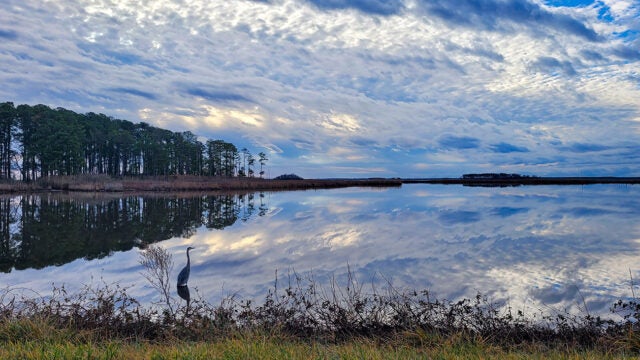
The Chesapeake Bay Program this week released its latest modeling on clean-up efforts, which showed significant declines in pollutants entering the Bay between 2009 and 2025.
Model results indicated that as of 2025, jurisdictions in the Chesapeake Bay watershed had met their goals for sediment reduction, hit 90% of their goal for phosphorus reduction, and met 57% of their goal for nitrogen reduction.
Wastewater treatment plant upgrades contributed to most of the gains in nitrogen and phosphorus reductions, and the agricultural sector was one of the largest contributors for sediment reduction, according to the models.
Excess nitrogen and phosphorus are harmful to Bay ecology, fueling algal blooms that cloud the water and use up oxygen when they die and decompose.
These numbers only tell part of the story. Monitored, real-world results and measurements—combined with rigorous modeling and other research—can ultimately provide a more complete picture.
Today, pollution is still fouling Baltimore Harbor, rivers like the Choptank are showing troubling signs, climate change is increasingly flooding communities like Norfolk as algal blooms surface in Virginia waters, and tens of thousands of miles of Pennsylvania’s rivers and streams remain impaired. Broad-based, continued efforts will be necessary to truly restore and save the Bay.
Cutting sediment, nitrogen, and phosphorus from flowing into the Bay are critical parts of the revised Bay Agreement, agreed upon last year, which has a uniform deadline of 2040 for meeting Bay restoration goals. States should put the investments and policies in place to meet those goals before 2040.
Chesapeake Bay Foundation President & CEO Hilary Harp Falk issued the following statement:
“There is real progress in these numbers, and it is worth celebrating. But modeled pollution reductions are only part of the story. What ultimately matters is what we see and measure in our rivers, streams, and the Chesapeake Bay itself—which indicates there is still significant work to be done.
“We need more monitoring to understand how the system is responding: where investments are improving water quality, where to best target resources toward the places and practices that deliver the greatest returns, and how to maximize accountability for measurable results.
“As we combat ever-shifting conditions from climate change, we need the courage to change course when the evidence tells us something isn’t working as expected.
“When it comes to the Bay, accountability matters most. Meeting the revised Bay Agreement’s 2040 deadline will require sustained investment, decisions driven by science, and accountability at every level of government.”
Facing persistent warning signs for menhaden in the Chesapeake Bay, the Atlantic States Marine Fisheries Commission (ASMFC) today advanced a proposal that could cut the Bay’s industrial menhaden harvest by up to half. The ASMFC expects to open the proposal to public comment in the coming weeks, with a final decision possible at the Commission’s annual meeting in November.
Menhaden are a key fish in marine food chains, feeding osprey, striped bass, and other wildlife. The menhaden reduction fishery is an industrial operation concentrated in the Chesapeake Bay, where a fleet of vessels catches more than 100 million pounds of the fish each year. The ASMFC is considering reforms to address ongoing concerns, including starving osprey chicks and plummeting bait catches for Bay watermen.
The proposal is part of the latest update to the plan for managing the menhaden fishery up and down the East Coast, known as Draft Addendum II. The new ASMFC document details several options for protecting menhaden in the Bay, including cutting the Chesapeake Bay reduction fishery harvest cap by up to 50 percent and spreading reduction fishing more evenly across the fishing season.
Currently, much of the industrial menhaden harvest takes place in the late spring and summer, when both osprey and crab fisheries need menhaden the most. Implementing quota periods to better spread the industrial menhaden harvest out throughout the season could avoid harm to osprey and protect the livelihoods of small-scale menhaden fishermen who catch menhaden for blue crab bait.
On a near-unanimous vote, the Commission’s Atlantic Menhaden Management Board approved the measure for public comment. Virginia was the only state that voted against moving forward.
The ASMFC is expected to open the addendum to public comments in the coming weeks, before making a final decision on any new protections at its annual meeting in November. Final action at that meeting means the new protections could be in place in time for the 2027 fishing season.
Chesapeake Bay Foundation Forage Campaign Manager Will Poston issued the following statement:
“The Chesapeake Bay is sending out an unmistakable call for help. Fisheries regulators are hearing the warning by wisely advancing new measures that could protect the Bay’s menhaden.
“Now the public must weigh in. Considering the flashing warning signs in the Bay, we need strong, conservation-minded reforms and look forward to engaging with all of our members, partners, and concerned stakeholders.
“We commend the ASMFC for advancing these proposals for public comment and thank the commissioners for their nearly two years of hard work on this. Everyone who cares about the Bay should speak up. We can’t afford to miss our chance to protect the fish that fuels the Bay. Now is the time for strong action.”
The Chesapeake Bay Foundation on Friday urged the Virginia Department of Environmental Quality (DEQ) to set meaningful targets to reduce harmful chemical discharges under a stormwater permit for Richmond International Airport.
The airport has been identified as a significant source of PFAS, yet a draft stormwater permit for the facility fails to place any limits on how much of these “forever chemicals” can be discharged.
For years, firefighters conducted training exercises at the airport using foam containing PFAS, which are widespread, toxic man-made chemicals that repeal heat, oil, grease, and water. They are also used in common products like packaging, cookware, clothing, and cosmetics. The scientific consensus is that there is no safe limit for these chemicals, which have been found in drinking water sources near the airport.
The Virginia legislature passed a law in 2019 aiming to stop this practice, but the PFAS from the foams already applied can persist on-site for years and reach groundwater, surface water, and stormwater.
PFAS has been detected in the White Oak Swamp near one of the airport maintenance facilities within the last five years. The swamp is a tributary of the Chickahominy River, which flows into the James River and supplies drinking water to Newport News. Nearby private wells that supply drinking water have also tested positive for PFAS, and Virginia has issued a fish consumption advisory for PFAS downstream of the airport.
The draft permit would provide for PFAS monitoring and would require the airport to submit a plan to minimize pollution, but it does not set any goals or targets for reducing PFAS discharges for the facility to aim for in its plan. Planning to cut pollution without setting a target for success will not protect public health or clean water.
“The Facility is essentially writing its own ticket with no defined guardrails or expectations, or minimum level of expected effort or investment” for the pollutant minimization plan, CBF wrote in comments to DEQ on the draft permit. The comments also note other upgrades planned for the airport, including a recently announced $880 million capital improvement and expansion plan.
DEQ should set clear targets on PFAS discharges in any final permit and should provide opportunities for meaningful public input during the process.
The deadline to submit comments on the draft permit is Friday.
Chesapeake Bay Foundation Virginia Staff Attorney Patrick Fanning issued the following statement:
“Virginia must take meaningful steps to control PFAS runoff from Richmond International Airport. These harmful chemicals can linger in the environment for years, and leaders should be making every effort to keep people and waterways safe.
“DEQ can take a necessary step by including clear targets on limiting PFAS discharges in any final stormwater permit for the airport. The department must also provide additional opportunities for the public to weigh in on the airport’s cleanup plan.
“Virginians have a right to know how prominent, high-traffic facilities are dealing with these harmful ‘forever chemicals’ that are already reaching our drinking water sources.”
After Years-Long Legal Battle, Environmental Partners Urge State to Step Up on Stormwater Runoff—Maryland’s Fastest Growing Pollution Source
Earlier this month, a Maryland judge issued a disappointing decision after environmental groups spent years fighting to protect people and the environment from harmful stormwater pollution, flooding, and contamination. The Circuit Court for Baltimore County upheld the Maryland Department of the Environment’s (MDE) 20-SW general industrial stormwater pollution permit, which environmental groups say does not adequately reduce pollution entering Maryland waterways.
The groups—including Chesapeake Legal Alliance (representing Blue Water Baltimore and Gunpowder Riverkeeper), Environmental Integrity Project (representing Potomac Riverkeeper Network), and the Chesapeake Bay Foundation—argued for years that MDE’s permit fails to keep up with more intense storms from climate change, allows toxic pollutants to reach rivers and streams, and threatens the most vulnerable Marylanders.
Stormwater pollution is the fastest growing source of pollution in Maryland. It occurs when rain washes toxic chemicals, oil, grease, and waste from Maryland’s roads, parking lots, and industrial sites into local waterways. When not managed properly, stormwater can cause flooding, safety concerns, and major damage to homes and businesses.
Maryland’s 20-SW general industrial stormwater permit is responsible for reducing pollution at over a thousand industrial sites across the entire state, including manufacturing sites, scrap yards, auto yards, coal handling facilities, and landfills.
MDE issued their initial 20-SW permit in November 2022 after a public comment period that garnered extensive concerns from environmental partners. In December 2022, the groups filed an initial challenge and began negotiations with the agency. MDE then released an updated permit in February 2025 which included little to no improvements. The environmental groups proceeded with their challenge to the legality of the permit and gave oral arguments in April 2026. After four years of court battles, a judge decided this month that MDE’s permit is within state and federal law.
As the environmental partners consider potential next steps in this case, they are also urging MDE and the Maryland General Assembly to reform the state’s stormwater pollution permits through policy changes.
Maryland has dozens of stormwater permits and programs that MDE and other state agencies can and should improve. Maryland has made zero progress reducing stormwater pollution between 2009 and 2023, and its current stormwater regulations are not keeping pace with the impacts of climate change.
There will be multiple opportunities over the next year for Maryland residents to speak up on stormwater pollution, including updates to Municipal Separate Storm Sewer System (MS4) permits for major jurisdictions, and new bills that will be introduced in the 2027 General Assembly session.
The environmental groups involved in the 20-SW permit challenge are committed to tackling Maryland’s growing stormwater pollution problem. They have each issued the following statements.
Chesapeake Bay Foundation Maryland Staff Attorney Matt Stegman said:
“This is a huge loss for clean water in Maryland. But the fight is far from over. Stormwater pollution is only getting worse from climate change and more development. The flooding, contamination, and damage that follows will continue to threaten our communities unless MDE and legislative leaders step up.”
Chesapeake Bay Foundation Litigation Staff Attorney Sheronda Rose said:
“The court’s decision undermines the intent of state and federal environmental laws enacted to protect communities and waterways from industrial stormwater pollution and hold industry to account for the impacts of their operations. To close these gaps, legislators must strengthen legal and regulatory requirements and ensure meaningful accountability.”
Chesapeake Legal Alliance Senior Attorney Evan Isaacson said:
“The health of tens of thousands of Marylanders living in the shadow of industry depends on dramatically reforming this single permit. Whether we’re talking about the safety of fenceline communities or restoration of urban waters, it all depends on having a functional Clean Water Act permit, which we do not have. Fortunately, the Department is beginning the process of rewriting the next generation of this permit and we are calling on them to work with the public as soon as possible to create a permit that actually protects people and their resources from the toxins leaching off all of these industrial sites.”
Abel Russ, Acting Director of Law and Policy for the Environmental Integrity Project, said:
“MDE is not paying attention to this huge source of pollution. There are no sampling requirements for four out of five years of each permit cycle, which means that MDE is choosing to ignore potential problems 80 percent of the time. The U.S. EPA, National Research Council, and affected citizens have all said that this isn’t good enough, but MDE has ignored them. What will it take for the Department to do its job?”
Alice Volpitta, Baltimore Harbor Waterkeeper with Blue Water Baltimore, said:
“Industrial pollution is choking the Patapsco and Back Rivers, and slowly killing the Chesapeake Bay. We are disappointed by the court’s decision, but this ruling doesn’t change the fact that Baltimore’s streams, rivers, and Harbor deserve stronger protections. That’s exactly what we’ll keep fighting for.”
Gunpowder Riverkeeper Theaux Le Gardeur said:
“The court’s decision to afford the agency deference with impunity by upholding a weak, boilerplate Clean Water Act permit fails to protect water quality and communities downstream. It’s hard for Gunpowder RIVERKEEPER to ignore MDE’s physical inspection rate of visiting only 26 of the 116 industrial sites over a 5-year term along the Bush, Gunpowder, and Middle Rivers.”
Betsy Nicholas, President of Potomac Riverkeeper Network, said:
“Industrial stormwater dischargers—airports, scrapyards, landfills, and chemical plants, among dozens of other industries—are facilities in our communities, near homes, schools, and public spaces. Marylanders deserve the protections of enforceable permit limits on facilities that discharge toxic contaminants to our neighborhood streams.”
For Information Contact
Valerie DiMarzio, Chesapeake Bay Foundation, vdimarzio@cbf.org, 215-900-5719
Evan Isaacson, Chesapeake Legal Alliance, evan@chesapeakelegal.org, 410-216-9441 x 207
Leanna Frick, Blue Water Baltimore, lfrick@bluewaterbaltimore.org, 301-602-0699
Fritz Schneider, Potomac Riverkeeper Network, fritz@prknetwork.org, 301-728-4811
The Virginia Department of Environmental Quality (DEQ) this week released a long-awaited report on groundwater supplies in eastern Virginia that lays bare troubling recent trends that could worsen without significant intervention and if unchecked data center development continues.
DEQ found that the Virginia Coastal Plain (VCP) aquifer system, which roughly covers the portion of the Commonwealth that stretches from Interstate 95 to the Chesapeake Bay, is stressed to the point where groundwater resources would be unlikely to support significant future growth or economic development in much of eastern Virginia.
Other key findings in the report include:
- Groundwater supply east of I-95 is constrained and current projections indicate declining availability in the near future
- Major withdrawals have caused inland groundwater levels to decline below sea level, conditions that cause land to sink and create the potential for salt water to move into freshwater aquifers
- There are no areas of the Virginia Coastal Plain where a new large groundwater withdrawal could pass the criteria necessary to get a groundwater withdrawal permit from DEQ
The report was mandated by legislation from Senator Richard Stuart (R-King George) that the General Assembly passed in 2024. The Chesapeake Bay Foundation supported the measure.
Chesapeake Bay Foundation Virginia Policy Manager Jay Ford issued the following statement:
“This report confirms what we have long known: Virginia’s groundwater and drinking water is increasingly at risk. Historic large industrial users, climate change, and the rapid proliferation of data centers have put us on an unsustainable path.”
“This is a system on the edge.”
“Without changes, Virginians could see escalating problems like accelerating saltwater intrusion, damaging the water supply and the broader Chesapeake Bay watershed ecosystem.”
“We cannot allow energy-guzzling data centers to continue depleting our drinking water supply and wreaking havoc on Virginia and the Bay. We urge the administration and the General Assembly to modernize the Commonwealth’s water resource laws and call on regulators to impose more stringent requirements on data centers’ water use.”
New legislation introduced today by Virginia Senator Mark Warner would require large data centers to publicly report their energy and water usage, emissions, and backup power generation. It would also provide incentives to data centers that operate more efficiently through the LEED certification process, the global standard for sustainable buildings.
This comes as plans for data centers are skyrocketing, especially in our region. Large facilities use massive amounts of water and energy, and many use backup diesel generators that create air pollution.
Across the Chesapeake Bay watershed, there is no consistent state or local requirement for data centers to publicly share how much energy and water they use. That’s a major problem. Without this information, leaders and the public can’t fully understand the risks posed by data centers and reduce threats to communities and the environment.
Sen. Warner introduced the bill under a new legislative framework rolled out today focused on artificial intelligence and data centers.
Chesapeake Bay Foundation Senior Policy Director Keisha Sedlacek issued the following statement:
“Our region faces unprecedented challenges from the data center boom, in part due to the lack of transparency around how much energy and water these facilities use. Communities desperately need this information to understand, plan for, and reduce the risks data centers pose to clean air and healthy waterways. We’re thankful for Senator Warner’s leadership in righting this wrong.”
“This bill would require reporting on energy and water usage and incentivize more efficient data centers through LEED Certification. We urge Congress to act quickly to pass these commonsense protections in the face of growing risks from data center growth.”
Guidelines Around Food Processing Residuals is a Policy Win, But Requirements for Data Centers Fall Short
HARRISBURG—Pennsylvania legislators passed a state budget over the weekend that proposed stronger requirements for applying noxious food waste to farm fields and required data centers to report water and energy use.
Governor Josh Shapiro signed the Commonwealth’s $50.8 billion General Fund budget for fiscal year 2026-2027 on Sunday.
Included in the budget were proposed new guidelines for food processing waste management, as well as required environmental reporting for data centers.
There is growing controversy in Pennsylvania around applying food waste as fertilizer to farm fields. This mixture of blood, meat scraps, fat, and other food waste is commonly called Food Processing Residuals (FPRs). When not properly handled, it leads to pollution and an overpowering stench. This substance is currently not regulated and does not require certain setbacks from streams and timely applications the way that traditional fertilizer does.
The budget included guidance for regulators to establish best management practices for the storage, processing and land application of food waste on agricultural lands, a set of guidelines that was last updated in 2001.
It also requires the State Conservation Commission, in collaboration with the Department of Agriculture and Department of Environmental Protection to create regulations to reduce harm from improper storage and use of this waste, which can create increased nutrient pollution to our local waters and harmful odors.
Data centers are already affecting Pennsylvanians by using significant quantities of public water resources, increasing electricity bills, and filling communities with noise and harmful air pollution from diesel generators.
The budget included a provision that requires data centers to report their energy and water use annually. Reports are to be filed annually to the Department of Environmental Protection and made public.
There were four other bills and provisions that the Chesapeake Bay Foundation supports regarding various guardrails on data centers that have passed the House. None of these were passed in the budget, and they still await action on the Senate floor, as CBF advocates to get them passed.
CBF Pennsylvania Executive Director Julia Krall issued the following statement:
“Guidance and regulations around applying noxious food waste to farm fields is long overdue.
“This provision helps farmers know what they are applying on their lands and adds guardrails to protect the soil, water, and health of the local communities.
“Required reporting on data centers is a step in the right direction, but we must move further. Pennsylvania needs more guardrails to ensure data centers are not an environmental and community threat. Creating reasonable rules for the responsible use of water and energy must be a priority for the General Assembly.
“Tracking and limiting water use for data centers is critical to ensuring the water in our state stays clean and available to the communities that need it. Without monitoring, risks go undetected, and our leaders cannot make informed policy decisions.
“We look forward to working with the General Assembly in the future to ensure that everyone in Pennsylvania can enjoy clean water and thriving communities, and the Commonwealth of Pennsylvania stays on track to meet our commitments in the revised Chesapeake Bay Watershed Agreement.”
A U.S. House committee advanced bipartisan legislation today supporting Chesapeake Bay science, restoration, and education work at the National Oceanic and Atmospheric Administration’s Chesapeake Bay Office.
The House Natural Resources Committee reported out the Chesapeake Bay Watershed Advancement for Training, Education, Restoration, and Science (WATERS) Act. The bill reauthorizes funding for NOAA’s Chesapeake Bay Office, which undertakes science that is vital to efforts from oyster restoration to fisheries management to climate change research.
The legislation also for the first time ever authorizes the Bay Watershed Education and Training (B-WET) program, which supports hands-on outdoor learning for students across the Chesapeake Bay region.
The WATERS Act was introduced by Virginia Representatives Bobby Scott, Rob Wittman, and Jennifer Kiggans, and Maryland Representative Sarah Elfreth.
The committee also advanced Rep. Wittman’s Advancing Water Research and Collaboration Act of 2025. This bill provides funding for federal-state partnerships to conduct research on state and regional water issues like nutrient pollution into the Chesapeake Bay. The bill is also supported by Virginia Representatives John McGuire, Morgan Griffith, and Jennifer Kiggans, and Maryland Representative April McClain Delaney.
CBF Senior Policy Director Keisha Sedlacek issued the following statement.
“The House just took a key step toward investment in the science, restoration, and education that’s essential to the Chesapeake Bay’s recovery.
“The NOAA Chesapeake Bay Office spearheads research key to cleaner water, healthier fisheries, and stronger local businesses. NOAA’s B-WET program gives students unforgettable outdoor learning experiences while building the next generation of Chesapeake Bay stewards.
“We’re grateful to House leaders for advancing the WATERS Act and look forward to action in the Senate on the companion bill.”
The long-awaited Chesapeake Bay blue crab stock assessment was officially released in June by the Chesapeake Bay Program. The final report, which looked at over 20 years of blue crab data, provides fisheries managers a better understanding of the Bay’s blue crab population.
Unfortunately, the assessment showed a concerning trend. There were roughly 50 percent fewer blue crabs in the Bay in 2023 than there were in 2011. Overall, the Bay is experiencing long-term declines in female, male, and juvenile crab populations.
The assessment looked at potential causes for the decline, including blue catfish predation, low-oxygen dead zones, and habitat loss. While no single culprit was determined, it’s clear the Bay’s most iconic species is under immense stress.
Each year, Maryland and Virginia publish results from their annual winter dredge survey, which estimates blue crab abundance in both states. It’s normal to see these results vary from year to year, because blue crabs have a short lifespan of only a few years.
For example, the 2026 survey released earlier this summer showed a slight bump in blue crab abundance. This was just one year after crab numbers hit a record low in 2025. While this year’s bump was encouraging, the declining long-term trends are concerning.
To support a strong blue crab population, focus needs to remain on three fronts: preventing pollution (including wastewater, stormwater, and agricultural runoff), restoring important blue crab habitats such as underwater grasses, marshes, and oyster reefs, and tackling the growing threat of blue catfish.
No new harvest limits are expected in the near-term. Maryland and Virginia will take the next year to determine how to incorporate results from the stock assessment into their blue crab fisheries management plans.
Chesapeake Bay Foundation Virginia Executive Director Chris Moore issued the following statement:
“Blue crabs need our help. And to support a strong blue crab population, we must first support a healthy Bay. That includes reducing pollution, restoring important habitats such as underwater grasses and oyster reefs, and tackling the growing threat of blue catfish.
“Blue crabs are sending us warning signs. The bigger picture trends are bleak, and there’s still great uncertainty as to why blue crabs continue to struggle.
“We’ll be working with fisheries managers and leaders across the Bay to chart a brighter course for blue crabs. It’s not too late to reverse course.”
Court Hears Arguments to Halt the Dam Project at Cuffs Run
Philadelphia, Pa. – Attorneys for the Chesapeake Bay Foundation (CBF) and partner environmental organizations argued in court today in support of an appeal filed last fall against the hydroelectric project that would be located in Cuffs Run.
Last November a coalition of conservation, recreation, and environmental organizations filed a petition for review in the U.S. Circuit Court of Appeals for the Third Circuit to challenge the Federal Energy Regulatory Commission’s (FERC) decision to grant a preliminary permit for a pumped storage facility at Cuffs Run in York County, PA.
The $2.3 billion project proposed by York Energy Storage LLC would involve construction of a 1.8-mile dam and power turbine pumped storage facility at Cuffs Run ravine and creek, a tributary to the Susquehanna River. The proposed facility would use 1960s era technology and consume about 30% more electricity to pump water than it would actually generate.
Water pumped from the Susquehanna would fill a reservoir and flood roughly 580 acres and homes, destroying farms and forests and displacing 40 families. Flooding and clear cutting of habitats will result in erosion along Cuffs Run and more pollution to the river. The proposal is in direct contradiction to Pennsylvania’s commitments under the 2025 Chesapeake Bay Watershed Agreement.
The landscape of the lower Susquehanna River gorge has been recognized by both state and federal governments as worthy of protection and investment. The state of Pennsylvania prioritized this area for protection as a Conservation Landscape in 2010, and the federal government designated the region a National Heritage Area in 2019.
The Lancaster Conservancy, Chesapeake Bay Foundation, Lower Susquehanna Riverkeeper Association, Farm & Natural Lands Trust of York County, and Susquehanna National Heritage Area joined together in this appeal. If it is successful, the York Energy Storage project’s permit approval would be vacated.
CBF Vice President for Litigation and General Counsel Paul Smail issued the following statement:
“This facility is the wrong project, in the wrong place, at the wrong time.
“Cuff’s Run is a wonder. This extraordinary landscape holds naturally reproducing brook trout. The surrounding countryside is home to farmers and families who value the land and what it provides.
“Together, we must stop the flooding of this one-of-a-kind Pennsylvania treasure. With our partners, we will continue fighting for a healthy Susquehanna River and the stewardship of Cuff’s Run and its communities.”
