Forty Years of Clean Water Work Across Pennsylvania
This month marks the 40th anniversary of CBF’s Pennsylvania office and with it comes great progress for clean water across the Commonwealth.
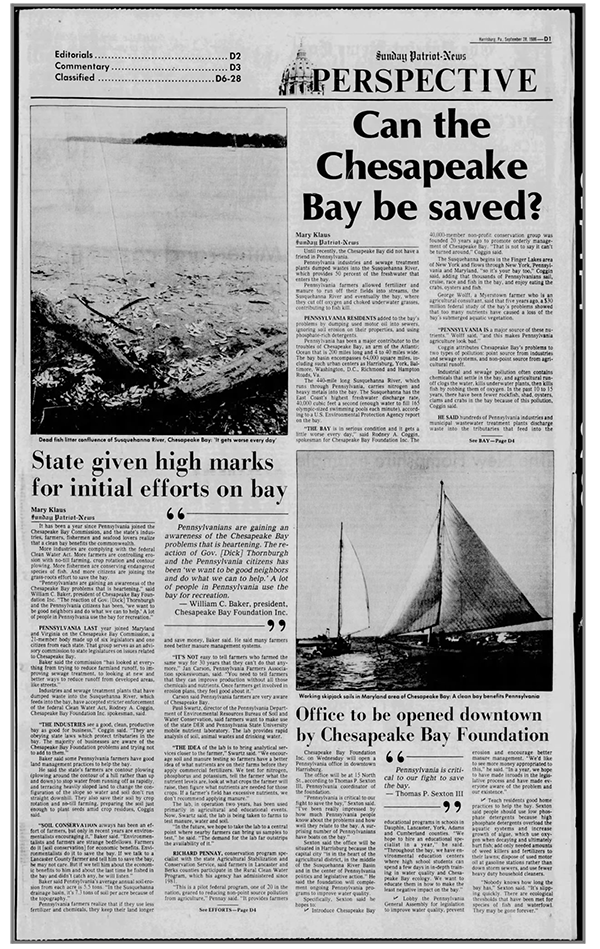
The Pennsylvania office opened its doors in Harrisburg in 1986, the same year the state became a full partner in the Chesapeake Bay cleanup effort. It is nearly impossible to fit 40 years of hard work across the state into a single story, but we will take this opportunity to reflect and celebrate a few of the big wins for our Pennsylvania rivers and communities.
The Chesapeake Bay may not be the first thing to spring to mind when thinking about Pennsylvania, but the mighty Susquehanna River that flows right down the middle of the state is the source of roughly half of the fresh water that enters the Chesapeake estuary. And the work in Pennsylvania has long been key to restoring the Bay while creating healthier waterways in the Commonwealth. Programs have focused on making farms more resilient to both climate change and rain events, educating the next generation of conservation leaders, and advocating for policies that keep our rivers, streams, and communities healthy.
Pennsylvania Executive Director Julia Krall is excited about the momentum the office has gained in the state. “Pennsylvania rivers and streams are healthier today because of the thousands of people who have come together for clean water over the course of four decades. From farm conservation work in Lancaster County, to advocating for smart policies in Harrisburg, to paddling canoes with students on the Susquehanna, together we’re creating healthier waterways for the next generation.”
Helping Farmers Apply Best Practices
We helped build the framework of the Agricultural Conservation Assistance Program, also referred to as ACAP. This program pulls money from the Clean Streams Fund to assist with water impaired by agricultural practices, stormwater runoff, and acid mine drainage. In just the first 16 months after the creation of the program, more than 280 projects were completed statewide with ACAP funds. It is an important statewide tool that is still being used today to assist with projects across the state.
 (C) Neil Ever Osborne/ILCP
Restoring the Health of Local Streams
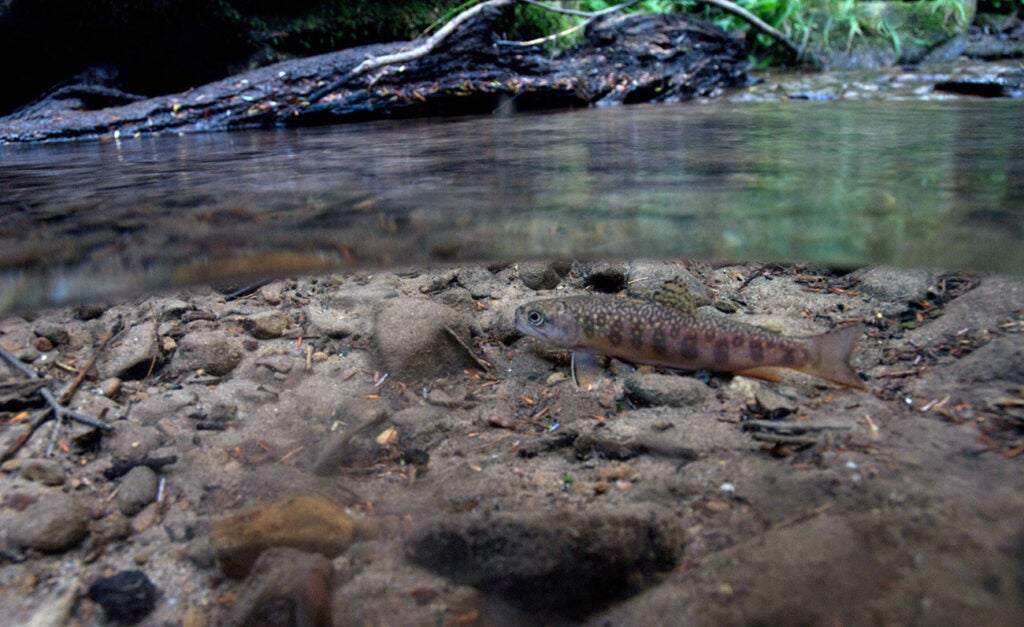
In the last five years, we have been working with partners on critical renewal projects in the Pequea Creek, Halfmoon Creek, and Marsh Creek watersheds. These projects are accelerating the implementation of key practices to bring streams back to health, improve wildlife habitat critical to critters like the brook trout, and enhance local appreciation of local waters. They use a multi-pronged approach to help restore the health of streams impaired by nonpoint source runoff resulting from certain agricultural activities. Currently, CBF is also working on a management plan for the Upper Conestoga which will be completed by the end of this year.
 Alex Johnson/CBF Staff
A Successful Collaboration to Reduce Pollution in Pennsylvania Waterways
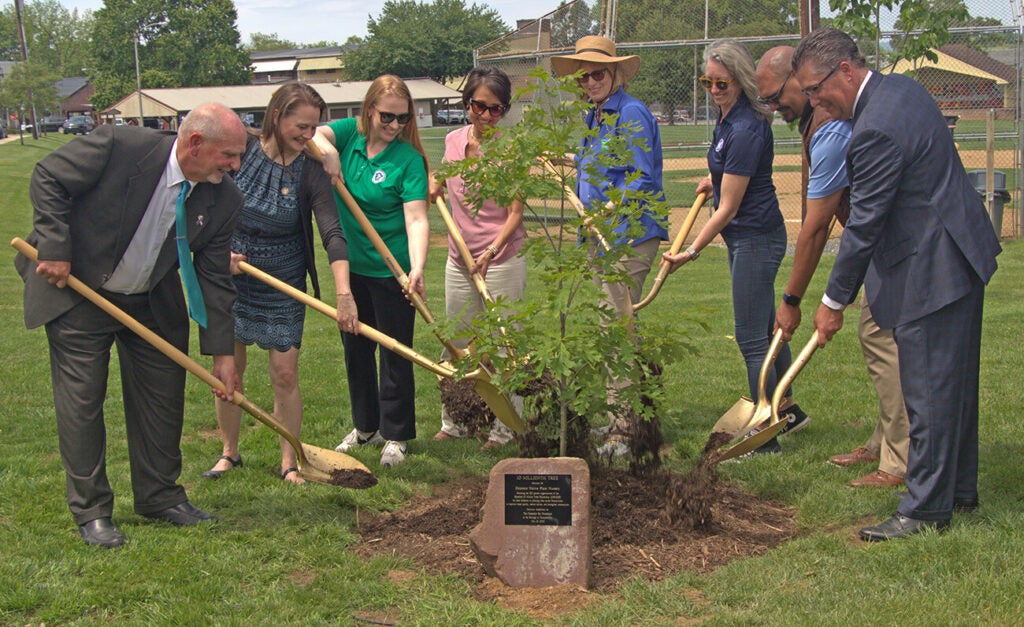
This past May, the Keystone 10 Million Trees Partnership initiative—of which CBF is a founding partner—came to a completion. As part of CBF’s Making History Campaign, we set a goal of adding 10 million new native trees throughout the state of Pennsylvania by the end of 2025. Roughly 30,000 miles of streams in Pennsylvania are considered impaired, and planting water-filtering trees along rivers and streams are a cost-effective way to reduce pollution in our waterways. To realize this goal, CBF worked with more than 320 organizations, representing federal, state, and local partners to get it done. Tree nurseries, farmers, volunteers, students and government officials all came together with a shared goal. On May 26, partners came together to plant the symbolic ten millionth tree in Hummelstown to celebrate the collective effort of the K10 Partnership. We are especially proud of this accomplishment, because it directly involved so many people coming together to make a great impact for Pennsylvania and for clean water.
 B.J. Small/CBF Staff
Students Raise Awareness of a Key Critter
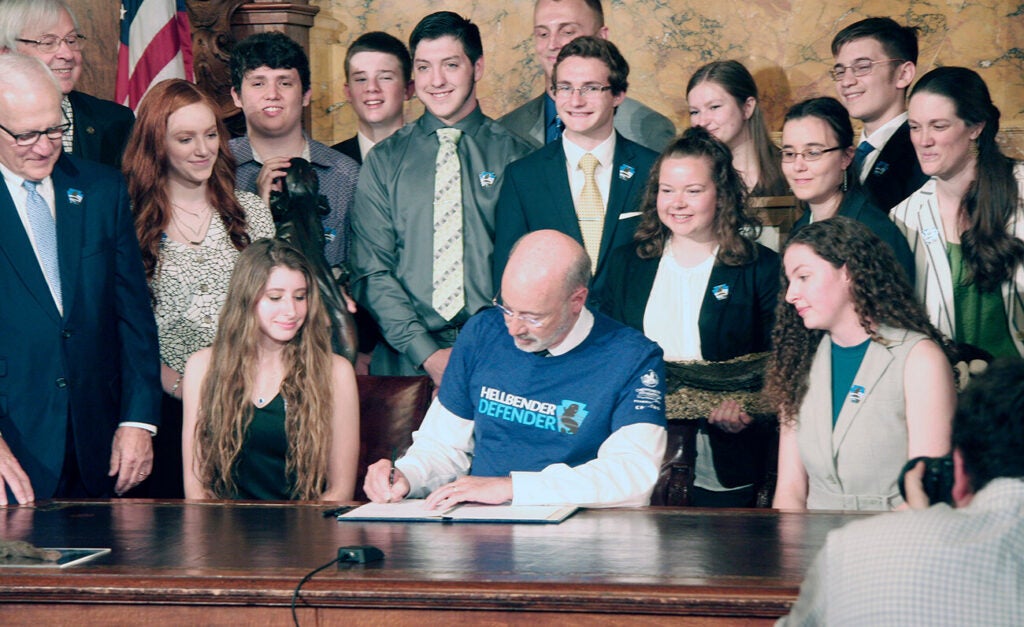
Another successful project CBF took on in Pennsylvania was led by a group of high school students involved in CBF’s Student Leadership Council program. These students were on a mission to make the Eastern Hellbender, a large salamander with an unnerving stare and loose lasagna-like skin, the official state amphibian. They took this issue straight to the state legislature, found a sponsor for their bill, and persevered through two attempts to get the bill passed in 2019. In the process, these students and their hellbender campaign were featured on the front page of the Wall Street Journal. Today, these salamanders are not only the state amphibian, they make great advocates for better water quality, as they need cool, clean streams to thrive. One of the best ways to spot a Pennsylvania CBF staff member in the field is to be on the lookout for a “Hellbender Defender” T-shirt.
 Copyright 2026 Newspapers.com. All Rights Reserved.
Throughout our years in Pennsylvania, we have successfully advocated for clean water legislation, had a seat at the table and a voice in setting policies and regulations, and helped support communities with on-the-ground restoration. Those years of efforts have contributed to the momentum that Pennsylvania is realizing in meeting their clean water and Bay-focused goals.
Often times change comes slowly, and then all at once. Our focus for the next 40 years, and beyond, is to continue to create and strengthen our partnerships, implement projects, advocate for policies that reduce pollution and increase investment in programs that restore water quality. Together we can ensure a legacy of clean water now and for generations to come.
Krall hopes that the Pennsylvania team can continue their hard and thoughtful work in the state to strengthen their programs and increase their impact even more. “Forty years of progress shows that Pennsylvania can restore its rivers and streams by working together,” said Krall. “To face the challenges of the next forty years, we’ll need an even greater dose of that same determination, investment, and collaboration. Together we can ensure a future where Pennsylvania’s waters flow clean and clear and our farms and communities continue to thrive.”
