Save the Bay News: Why Menhaden Matter
This month we bring you a special menhaden edition to our Save the Bay newsletter. We explore why this tiny fish is so critical to our entire ecosystem, the extreme threats they face, and what we can do to help.
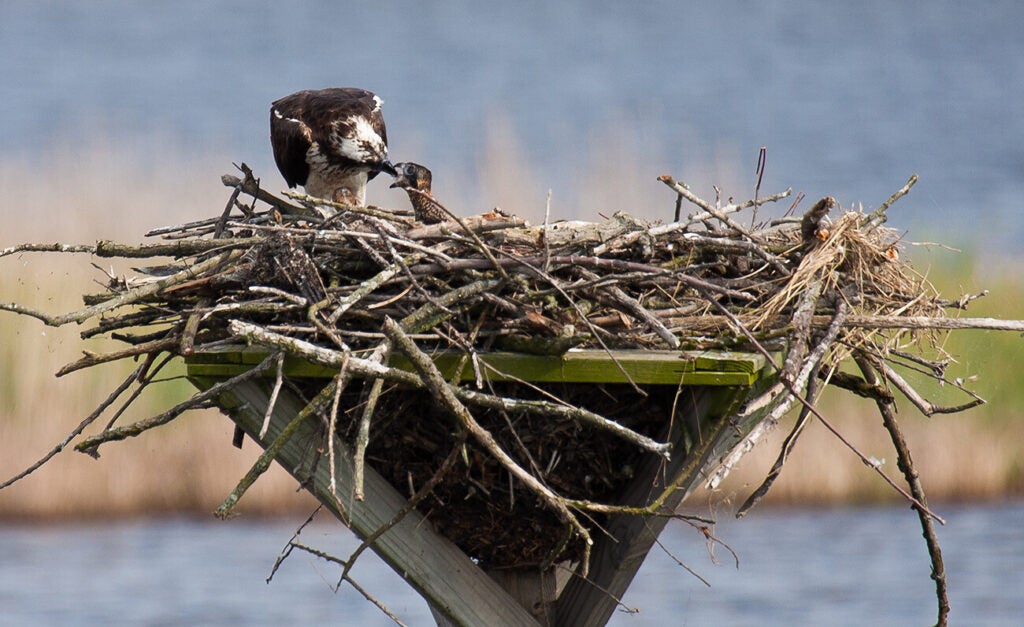
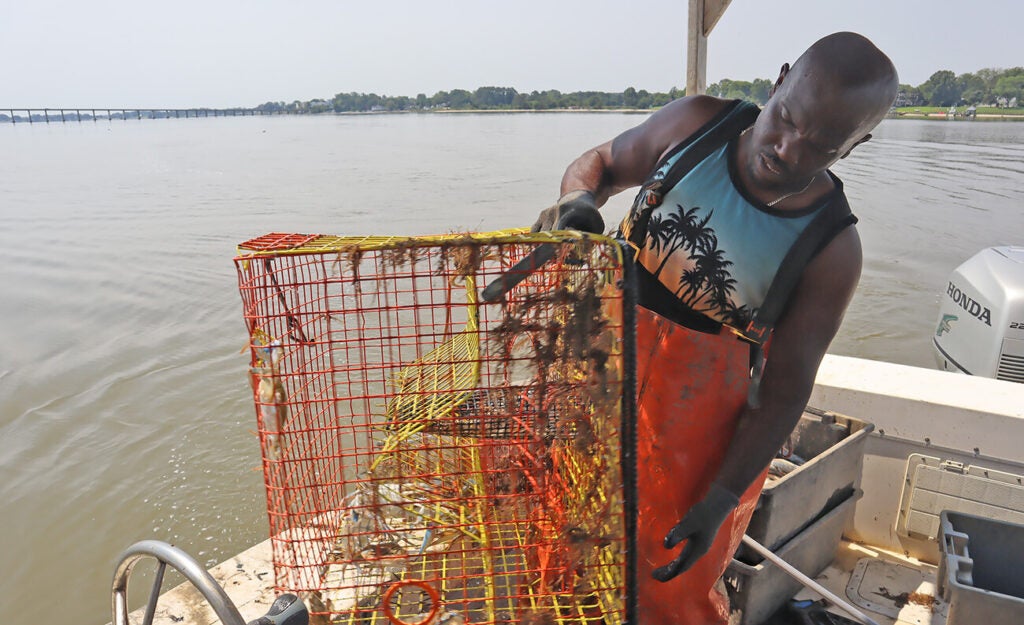
“The contrast between what we witnessed when we first arrived at Colonial Beach and what we are seeing today is heartbreaking,” says Joanie Milward as she recalls skies filled with osprey above the small Virginia town she moved to nearly a decade ago. Now, she and other observers see chicks starving in their nests. Osprey reproduction reached a record low this year in the Chesapeake Bay region, and many signs point to a shortage of menhaden—a small oily fish the birds rely on for food—as a key driver. Osprey aren’t the only ones struggling. Commercial watermen are also coming up empty. “Where did the fish go? That’s what I don’t understand,” says Willie Dean, a Maryland waterman who has seen his catches of menhaden bait decline dramatically and knows other watermen who have gotten out of the business entirely. In Virginia, waterman Tyree Smith has also seen fewer menhaden on the Rappahannock, where he uses them to catch blue crabs. “There’s been a big decline—a big increase in price, too,” he says. “It’s making it less lucrative for people actually working the river.”
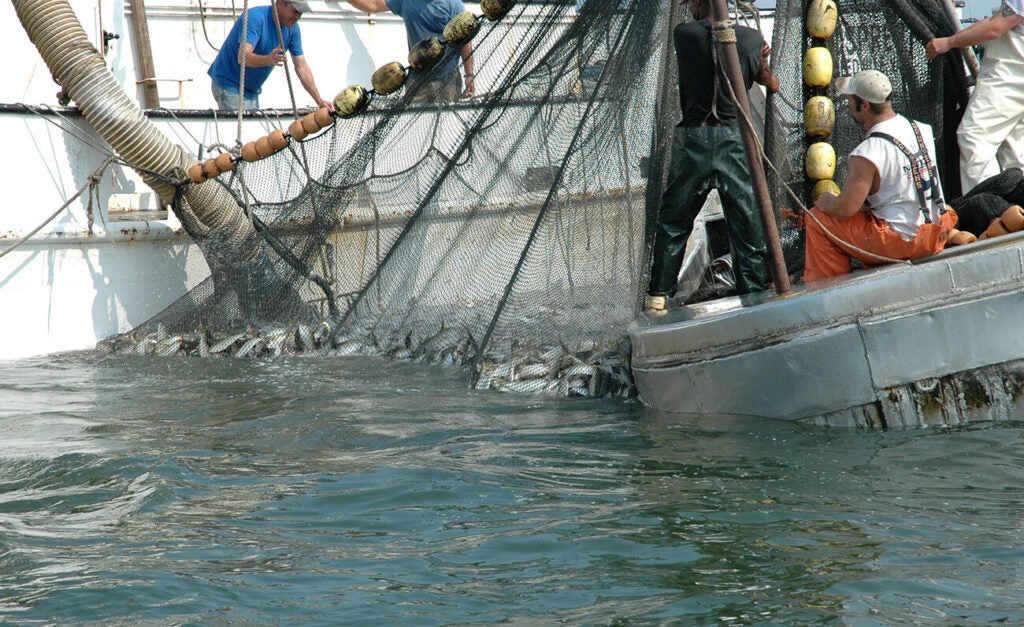
The decades-long debate over Chesapeake Bay menhaden is often cast narrowly as a tussle between the recreational fishing industry—which relies on menhaden to support gamefish like striped bass, bluefish, redfish, and bluefin tuna—and the last large-scale industrial reduction fishery on the East Coast—which catches approximately 70 percent of the menhaden harvest coastwide and turns it into fish meal and oil. But the recent stories from small-scale commercial watermen in Virginia and Maryland, as well as the alarming research on osprey nesting failures, show the true scale of what’s at stake: an ecosystem at risk of buckling. “Does it make sense to pull hundreds of millions of pounds of a cornerstone baitfish a year, grind them into meal and oil, and ship some of them to Indonesia, Vietnam, and elsewhere?” asked Journalist, fisherman, and author Mark Robichaux in a recent Washington Post op-ed. Fisheries managers have an opportunity to answer: the Atlantic States Marine Fisheries Commission is currently seeking public comment on a proposal that could cut the Chesapeake Bay’s industrial menhaden harvest by up to half. While CBF still believes the wisest course of action is a complete pause of industrial menhaden fishing in the Bay, we will be supporting the 50 percent reduction as the best option currently on the table through the proposal, known as Draft Addendum II. “Evidence of a crisis is impossible to ignore,” CBF’s Will Poston wrote in response to Robichaux’s article. “Everyone who cares about thriving waterways should tell the commission to approve conservation-minded reforms to protect the Bay, coastal communities and the thousands of jobs that depend on a healthy ecosystem.”
 Robert Quinn
Silent Summer: Osprey Chicks in Trouble
Nearly 70 years ago, the widely used pesticide DDT nearly wiped out osprey populations across the country. Strong conservation efforts saved them, and today the Chesapeake Bay is home to the largest breeding population of ospreys in the world. But now their chicks are starving and reproduction rates are plummeting, a loud warning that there aren’t enough fish. According to osprey biologists, if osprey reproduction does not improve, the Bay could lose 50 percent of its osprey.
 Will Poston/CBF
“Where Did the Fish Go?”
For centuries, menhaden have been used as bait to catch everything from blue crabs to lobster. Now, the commercial fishermen who supply those fisheries with menhaden are catching far fewer of them here in the Bay. Willie Dean, a waterman who has worked on the Potomac River for more than 50 years, describes the changes he’s seen and the effect they’ve had on his business.
 David Sherfinski/CBF Staff
The Hidden Cost to Crabbers
The blue crab fishery, the most valuable commercial fishery in the Chesapeake Bay, often uses menhaden as bait. As bait catches plummet, though, it’s been hard to find menhaden locally. Tyree Smith, a waterman on the Rappahannock River, said the price he pays for menhaden bait has doubled since he started working 14 years ago, and he sometimes has to use catfish instead.
 CBF Staff
“The Only Question Left”: Will Managers Act?
Journalist, fisherman, and author Mark Robichaux asked in a recent Washington Post op-ed, “Does it make sense to pull hundreds of millions of pounds of a cornerstone baitfish a year, grind them into meal and oil, and ship some of them to Indonesia, Vietnam, and elsewhere?” In a letter to the editor supporting Robichaux’s argument, CBF’s Will Poston responded with a resounding ‘no.’
In the News
Trump executive order takes aim at Chesapeake Bay restoration: In repealing a foundational Obama-era order that strengthened restoration efforts, the administration is jeopardizing decades of progress. Take action now to stand up for the Bay!
2026 marks historic lows for breeding ospreys in Chesapeake Bay, research shows: It’s been the worst year ever recorded, continuing a yearslong trend of struggling reproductive rates that researchers have linked to lack of menhaden for food.
Chesapeake Bay underwater grasses up, but some rivers see trouble spots: Underwater grasses, which are strong indicators of the Bay’s overall health, reached their highest point Bay-wide since 2018, though parts of the Potomac, Patapsco, Gunpowder, Rappahannock, and James Rivers have experienced dramatic drops.
Gov. Spanberger unveils strong new data center requirements: The framework would impose significant new guardrails on energy-guzzling data centers by boosting transparency and promoting requirements for clean energy and public water usage.
Eastern Shore faces fish kills, massive algal blooms that threaten Bay health: Officials continue to track a “red tide” along the Eastern Shore of Virginia that came at the same time as reports of widespread fish kills.
Chesapeake Bay Program must recognize and include Tribal leadership in restoration efforts: A coalition of Indigenous tribes announced they are suspending talks with the Bay Program after being met with delay after delay in their more than year-long effort to secure meaningful inclusion.
New Maryland program prioritizes regenerative farming on state land: The first-of-its-kind program will help farmers who lease property from the state to prioritize and scale regenerative practices that improve soil health, biodiversity, and climate resilience while reducing water pollution.
U.S. congressional leaders tour CBF’s new oyster restoration center in Maryland: Construction has begun at CBF’s Truman T. Semans Center for Oyster Restoration and Innovation, which is set to open in spring 2027 as a new Bay-wide hub for oyster science, restoration, and volunteer opportunities.
The challenges on Tangier color Gov. Spanberger and Chesapeake Bay Commission visits to the island: Elected officials from Maryland and Virginia, including the governor, reaffirmed their commitment to both broader Bay restoration and efforts to preserve and protect the island from erosion and rising seas.
Virginia panel highlights need to modernize vital agricultural cost-share program: A new report shows the popular program has contributed significantly to improving local water quality and cutting pollution to the Bay, but it could benefit from changes to prioritize the most cost-effective practices.
SHOP THE CBF STORE
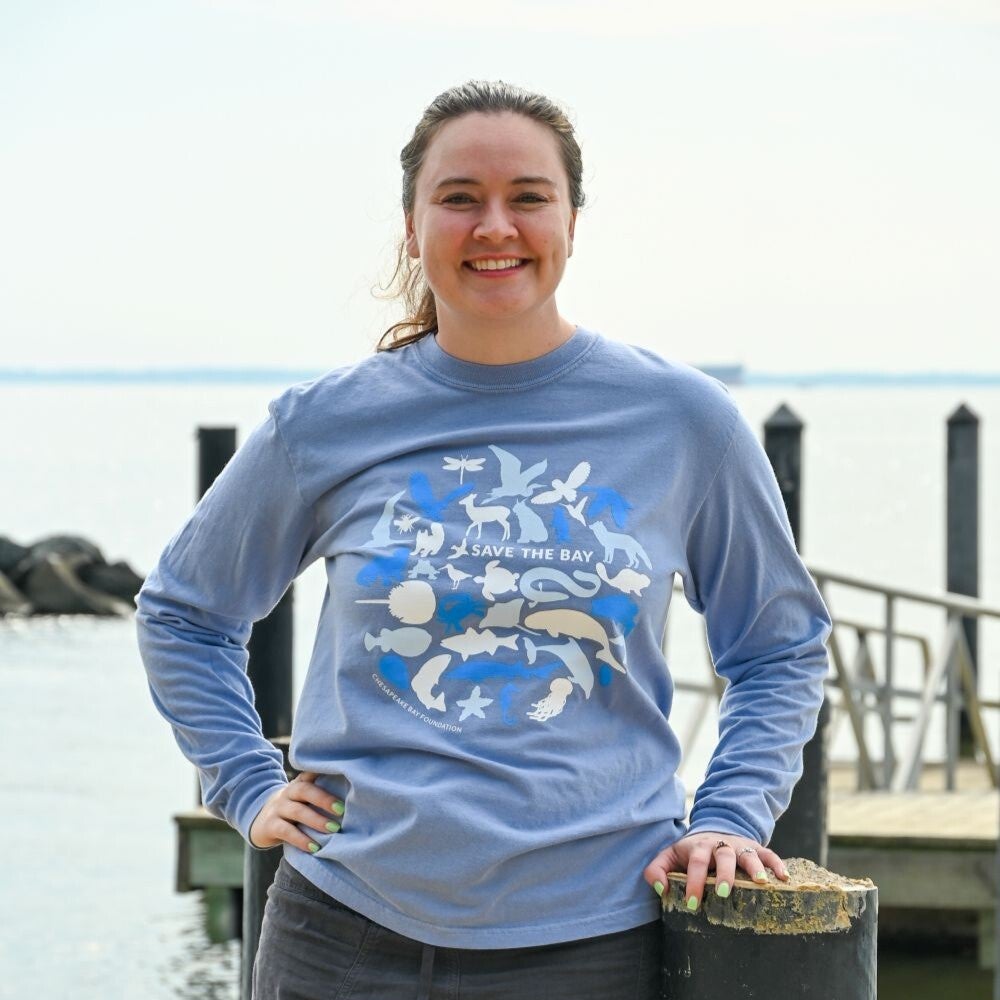
Your New Favorite Long-Sleeved
Fall is officially here! Our new critter long-sleeved shirt is the perfect piece for layering on those cool fall nights, all while showing your love for the Bay and the wildlife that call it home.
What You Can Do
- Stand up for menhaden! The Atlantic States Marine Fisheries Commission (ASMFC) is considering important changes to menhaden management in the Bay. Take action before the October 9 deadline to urge ASMFC to approve conservation-minded reforms that better protect menhaden and support a healthy Chesapeake Bay ecosystem.
- Did you know that fall is an ideal time to plant trees because cool air temperatures and warm soil create the perfect conditions for root growth without above-ground stress? Join us this fall at tree plantings across the watershed, including Richmond, Virginia and Woodsboro, Maryland.
- Join us in Maryland as we angle for oyster restoration with the 2026 Maryland Rod & Reef Slam! This unique fishing tournament is underway and runs until October 3, so there’s plenty of time left to cast your rod and celebrate restored oyster reefs and the difference they make for healthy, diverse populations of Chesapeake Bay reef fish.
- Calling all clean water lovers in Charlottesville, Virginia! We have two new in-person events coming your way in October. On Monday, October 12, join CBF and leading experts for an engaging discussion on Virginia’s evolving energy future. Then on Tuesday, October 13, join us for all-you-can-enjoy raw oysters from aquaculture partners across Virginia at the Charlottesville Oyster Social!
- Match Alert: Right now, your gift to save the Bay can go 2X as far thanks to a generous match from a CBF donor. Donate today, while your gift is worth DOUBLE.
If you would like to receive these periodic updates directly to your email, sign up for our Save the Bay newsletter!
