Save the Bay News: Trout, Reef Balls, and the Lowdown on Vibrio
In this month’s newsletter, we talk blue crabs, menhaden, the rise of vibrio, and much more.
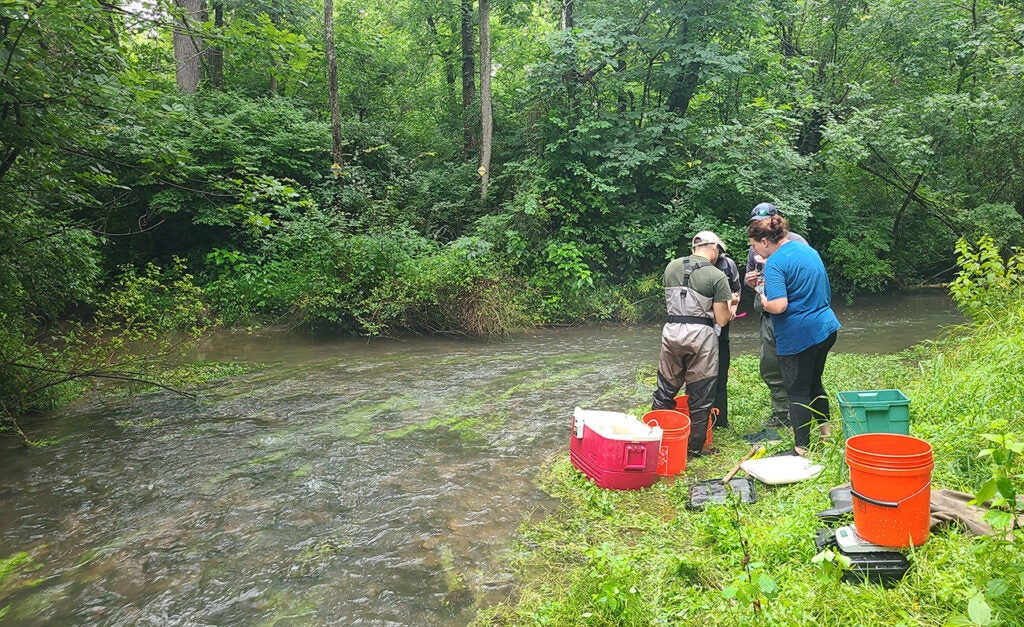
Even in thick rubber waders, the current felt cold against my legs . . . the creek was murky and moving fast. Was this stream clean enough for [fish]? Cold enough? So writes CBF’s Valerie DiMarzio, who went looking for trout in western Maryland’s Beaver Creek this month alongside CBF Maryland Restoration Scientist Rob Schnabel and researchers from the Maryland Department of Natural Resources and Coastal Resources Inc. Their survey of the small stream that flows to the Potomac River is one way to help answer a deceptively simple question: Is restoration working?
The Chesapeake Bay Program recently released its latest assessment of Bay-wide cleanup efforts, showing a significant decline in pollutants, according to computer models. But monitoring efforts like those in Beaver Creek, which measure real-world results and provide a more complete picture than the models can capture, are incredibly important. So, too, are stories like Tyree Smith’s—a crabber on the Rappahannock River who is struggling to find menhaden for bait. And ongoing concerns about rare-but-increasing cases of Vibrio vulnificus (a “flesh-eating” bacteria) as well as the tenuous state of the blue crab population, are also signs that broad-based, continued efforts are necessary to truly restore the Bay. To that end, you can help us advocate for stronger protections for menhaden, stand up for oyster sanctuaries (check out these photos and videos showing reef-building in action), or take part in one of our CBF Learning Series, where upcoming events will focus on menhaden and resilience.
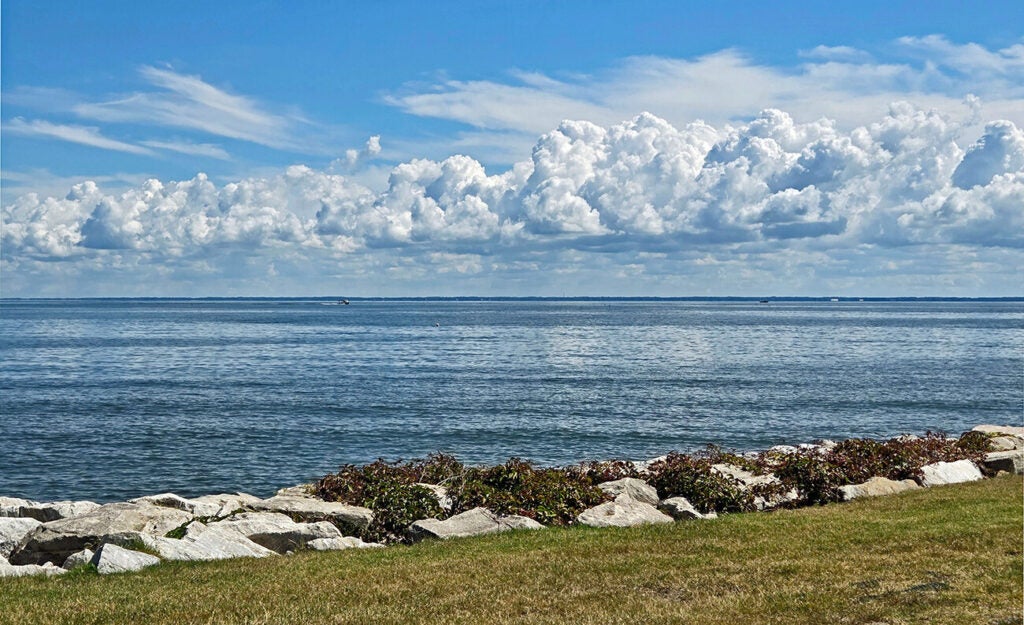 David Harrah
What to Know About Vibrio
August is prime time for many people who live in the Chesapeake Bay region to get out on—and in—the water. But as climate change helps push water temperatures higher, cases of a rare “flesh-eating” bacteria called Vibrio vulnificus are rising as well. What’s behind the risk, how can people minimize it, and how can reducing pollution help?
 Carrie B. Grisham
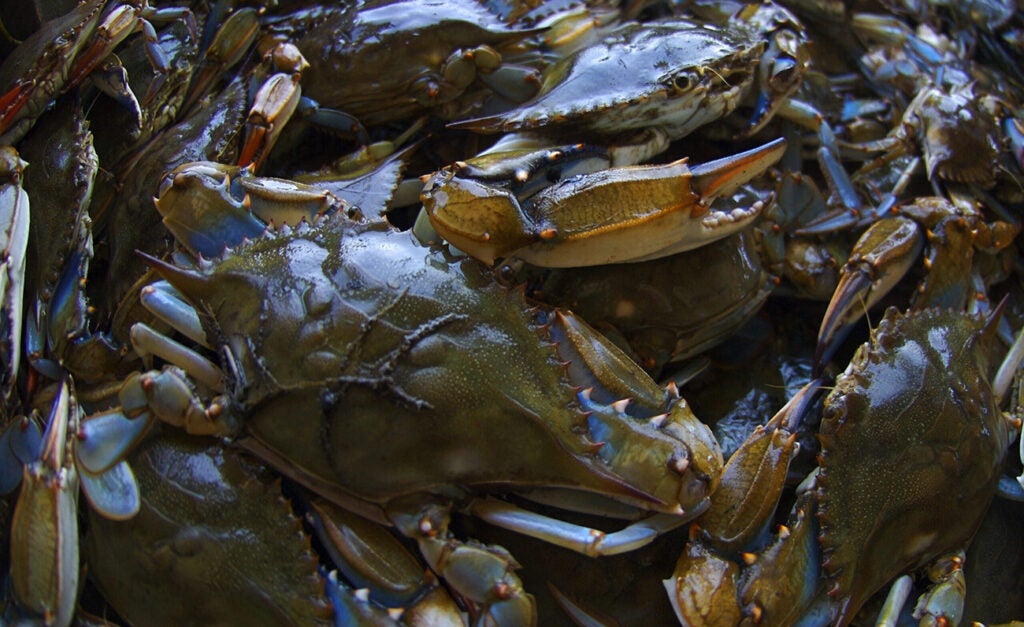
Are Blue Crabs Still Crashing?
A year after blue crabs in the Chesapeake Bay seemed headed for a full-on emergency, reassuring news came out this past May (crabs are up!) . . . followed by less-reassuring news that the long-term population of blue crabs in the Bay is half what it was a decade ago. We break down what’s driving these two apparently conflicting stories.
 David Sherfinski/CBF Staff
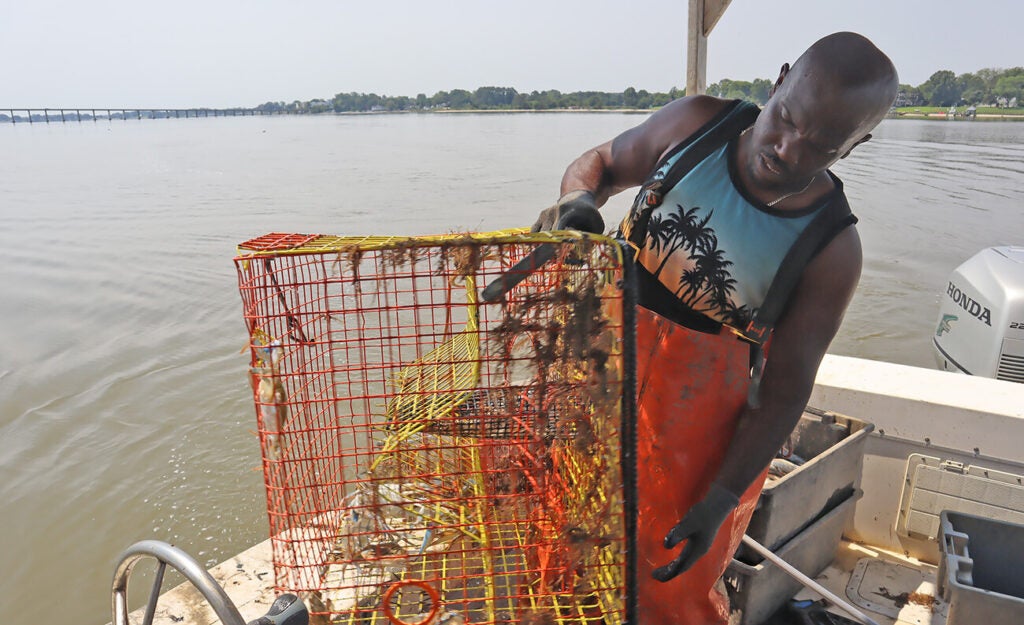
Menhaden on the Rappahannock
Tyree Smith, a 14-year veteran waterman raised in Tappahannock, Virginia, knows crabbing and knows local fish. And he knows there’s something wrong with the Chesapeake Bay’s population of menhaden, which Smith and other crabbers frequently use for bait. As menhaden catches have plummeted in the Bay, it’s affecting business and raising concerns about the long-term sustainability of the critical fish.
 Codi Yeager/CBF Staff
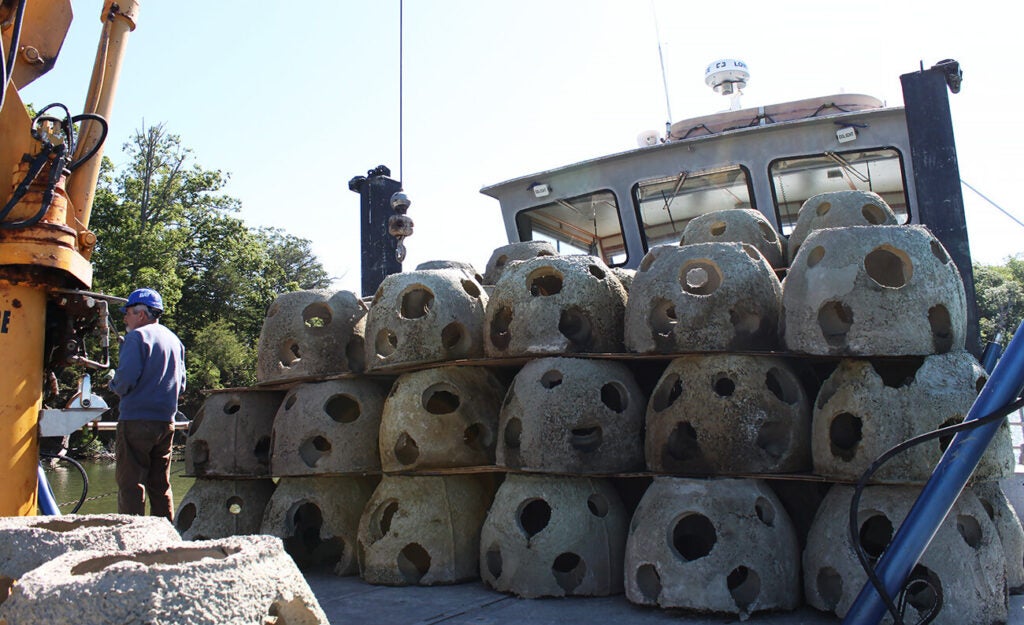
Field Notes: Building an Oyster Reef
How do nine crew members, 108 concrete reef balls, and a 60-foot restoration boat create a new oyster reef? See how a reef was born offshore from Quiet Waters Park in Annapolis, Maryland, this summer. CBF deployed the reef balls as part of a living shoreline project led by Arundel Rivers Federation that will help protect the shore from erosion.
 Valerie DiMarzio/CBF Staff
Can A Fish Live Here?
Since 2002, CBF has been doing restoration and tree plantings along Beaver Creek, a tributary of the Potomac River. CBF’s Valerie DiMarzio joined a team of researchers earlier this month as they set out to monitor how well the stream’s fish are doing as a result. Their findings? More than 10 unique species, including brown and rainbow trout, dace, and sculpin.
In the News
Chesapeake Bay Program releases latest assessment of cleanup progress: While it showed significant declines in pollutants entering the Bay, CBF cautioned that the modeled numbers only tell part of the story, and real-world monitoring indicates there is still significant work to be done.
Atlantic States Marine Fisheries Commission advances proposal for Chesapeake Bay menhaden protections: The proposal, now open to public comment, could cut the Bay’s industrial menhaden harvest by up to half.
Threat of PFAS in stormwater at Richmond airport needs strong action: CBF urged the Virginia Department of Environmental Quality to set meaningful targets to reduce harmful chemical discharges under a stormwater permit for Richmond International Airport, which has been identified as a significant source of PFAS.
Maryland residents strongly support oyster sanctuaries, despite proposals to roll back protections: More than three in four voters support keeping the state’s oyster sanctuaries protected as state and federal efforts threaten to open the reefs to harvest.
Pennsylvania executive order details new requirements for data centers: The new requirements, included in an executive order signed by Gov. Josh Shapiro, will help communities better understand potential threats and support efforts to protect clean drinking water, healthy air, and quality of life.
Court ruling is a huge loss for stormwater solutions in Maryland: Last month, a judge issued a disappointing decision to uphold a wide-reaching state permit that environmental groups—including CBF—argued for years fails to keep up with more intense storms from climate change.
Report highlights major problems for Eastern Virginia groundwater supply: The Virginia Department of Environmental Quality found that the Virginia Coastal Plain aquifer system, which roughly covers the portion of the Commonwealth between Interstate 95 and the Chesapeake Bay, is stressed to the point where groundwater resources would be unlikely to support significant future growth or economic development.
What You Can Do
- Menhaden are a small, nutrient-packed forage fish that play a large role in the Bay ecosystem and economy. But they are also the target of the huge reduction industry that catches and processes millions of wild menhaden and grinds them down to use in other industries. The Atlantic States Marine Fisheries Commission (ASMFC) is considering changes to menhaden management in the Bay that would protect this vital fish and the ecosystem that depends on it. Stand with CBF and call on the ASMFC to approve conservation-minded reforms that better protect menhaden and support a healthy Chesapeake Bay ecosystem. Take action now!
- If you’d like to learn more about menhaden, why they matter, and why they need your help right now, join us for an upcoming event in Maryland or Virginia next month, or connect virtually at our October 6 webinar.
- Join us for a virtual CBF Learning Series, Resilience in Practice, focused on highlighting the practices, policies, and projects that support climate adaptation and community resilience across Virginia. The first session is September 16.
- Sustain our fight to save the Bay! Become a Chesapeake Guardian today and we’ll send you a special gift to say thanks.
If you would like to receive these periodic updates directly to your email, sign up for our Save the Bay newsletter!
Related Stories
-
 Blog Story
Save the Bay News: Oyster Sanctuaries at Risk, Climate Rollbacks, and Celebrating Soft-Shell Crabs
In this month’s newsletter, we discuss threats to oyster sanctuaries, climate rollbacks, and favorite watershed spots to explore this summer.
-
 Blog Story
Save the Bay News: The Potomac, Climate Change, and Searching for Spring Peepers
This month, we go searching for spring peepers, debrief on legislative sessions in Maryland and Virginia, learn more about the threats to the 'Nation's River' and what we can do about them, and so much more.
