Port Isobel Island East & West Environmental Education Programs
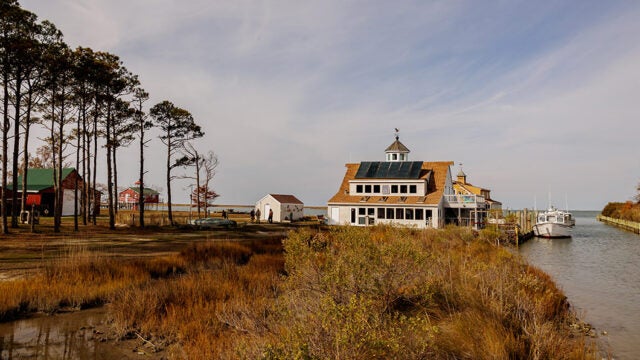
Port Isobel is a 250-acre island east of Tangier Island and is home to two of CBF's residential island education programs.
Directions | Program Overview (PDF) | Information for Parents & Guardians
Port Isobel is a 250-acre island east of Tangier Island. It is the southernmost point between the Tangier Sound and the Chesapeake Bay proper. Referenced on nautical charts as East Point Marsh, this Virginia island was named Port Isobel to honor the wife of one of its residents. In the 1800s, it was inhabited by families from Tangier Island, but rising sea levels in the 1920s forced them to abandon their homes. The majority of the island was donated to CBF in the late 1980s, when it became one of CBF’s residential education centers.
Bring the watershed to life before and after your CBF Student Field Program using our curated list curriculum-based Resources for Teachers and Students.
Port Isobel East
Program Capacity: 30 participants (grade 6 and above).
All buildings have electricity, central air and heating systems, and Clivus Multrum composting toilets that use no water or chemicals. The dorm and meeting spaces were architecturally adapted from working barns in Pennsylvania to become some of CBF’s first environmentally friendly buildings. Facilities include meeting spaces, dorm-style bedrooms, screened porches, and a full kitchen with a stove, microwave, refrigerator, and oven. Dorm facilities: one room with two beds, four rooms with four beds, and two rooms with six beds. Boats include 11 canoes, a 24′ Carolina skiff, and the Mary P. a 50′ U.S. Coast Guard inspected vessel.
Port Isobel West
Program Capacity: 24 participants (grade 6 and above).
All buildings have electricity, central air and heating systems, and running water. Facilities include dorm-style bedrooms, living room, dining room, outside porches, and a full kitchen with a stove, microwave, refrigerator, and oven. Dorm facilities: two rooms with six beds, one room with eight beds, and one room with two beds. Boats include 11 canoes, a 24′ Carolina skiff, and the Walter Ridder a 40′ jet-drive U.S. Coast Guard inspected vessel.
Meet Our Team
-
 Education
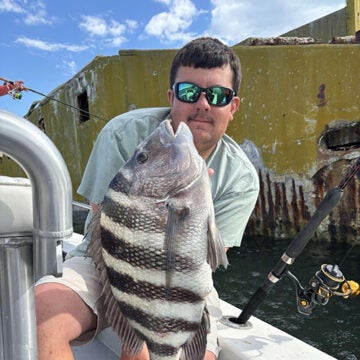
Thomas Haynie
Port Isobel East Environmental Education Program Captain/Educator
-
 Education
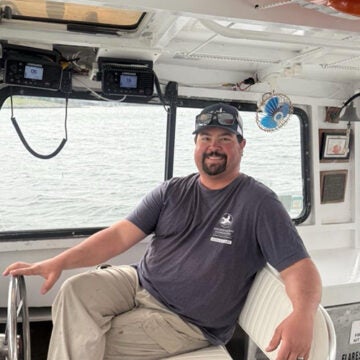
Terry Parks
Port Isobel West Captain/Educator
-
 Education
Soorya Thaivalappil
Port Isobel East Program Manager/Educator
-
 Education
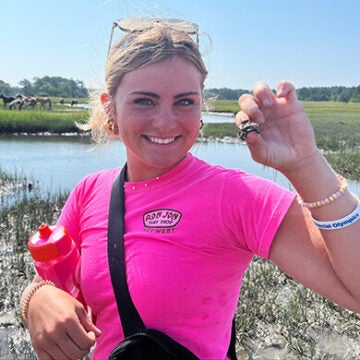
Olivia Tullous
Port Isobel West Assistant Manager/Educator
-
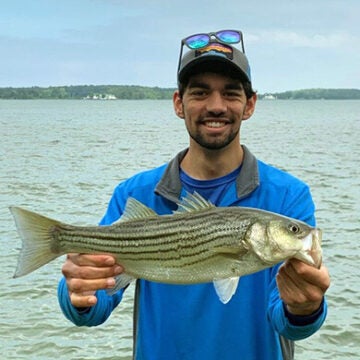 Education
Quinn Lipetz
Port Isobel West Program Manager/Educator
Related Resources
Related Stories
-
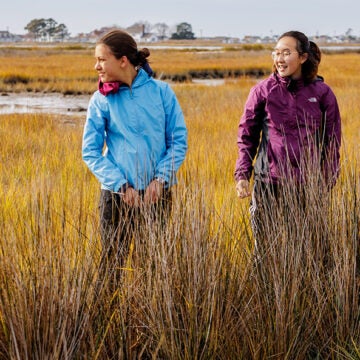 Blog Story
Our Bay, the Perfect Classroom
As Virginia teacher Tonya Humphrey knows first-hand, environmental education is critically important to her students and their futures
-
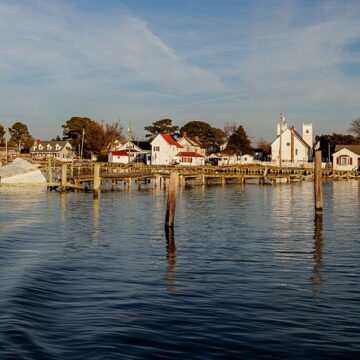 Blog Story
Learning to Think Like a Watershed
By forging human connections, watershed communities uncover the environmental connections that bind them to each other and their waterways.
